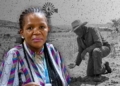
This Women’s Month, Dr Siphe Zantsi, an agricultural economist at the Agricultural Research Council (ARC), urges us to do more than simply watch from the sidelines, as women continue to fight for their place in agriculture.
Women are a great asset to our country. They bear children, raise them – often on their own – and hold families and communities together with warmth and resilience. In South Africa, August is dedicated to honouring women, in remembrance of the approximately 20 000 women who bravely marched against pass laws and apartheid’s brutal rule.
I remember the stories my grandmother used to tell me about those times. When they visited their men in the Cape Flats to collect money to take back home to the former homelands – money that was often invested in farming activities like fencing arable land, buying a heifer, or purchasing a plough – police would sometimes arrive in the middle of the night.
Women would have to flee into the bushes and sleep there until morning. Sometimes they were caught and spent nights in jail. Their “crime”? Visiting their partners without permission.

As we commemorate these struggles, the agricultural community has much to reflect on – especially regarding how power relations, women’s contributions, and their recognition in the sector have evolved over 30 years of democracy.
There have certainly been improvements across the board. Working conditions for women, both as farmworkers and in professional roles, have improved somewhat. Today, we have women journalists covering agriculture on platforms like Food For Mzansi.
We see more women, especially from previously disadvantaged backgrounds, owning commercial farmland. Affirmative policies have helped some women buy land independently, while others have benefited from land reform programmes.
In the smallholder sector, it is mostly women-led households engaged in agriculture. There, too, access to land for women has improved. Before 1994, in the former homelands, women could not access land unless associated with men. Unmarried women without children were denied land for any purpose. However, a recent survey we conducted across seven former homelands found that this practice has largely declined.
Related stories
- From backyard to 650 ha: Malete’s farm feeds more than families
- Gogo’s fat in a jar! Duo turns tallow into treasure
Why telling her story matters
Food For Mzansi has played a crucial role in ensuring women in agriculture receive the recognition they deserve by telling their stories. One such story is “Farming teacher Nobuntu turns failures into A+ success.”
These inspiring accounts spotlight women from humble beginnings, whose journeys may have gone unnoticed without such platforms.
These stories not only motivate aspiring women farmers but also attract potential funders.
While we have made progress, much work remains to be done to build an agricultural sector where anyone – regardless of race, gender, family background, or location – can thrive through hard work.
Sadly, many farmworkers still labour under inhumane conditions, often perpetuated by male farm managers. According to the latest commercial agriculture census, over 80% of farm managers are men.
Cultural norms also play a role. In many families, women are expected only to support men by caring for children and preparing meals. But this poses a risk to generational wealth if only men understand the farming business, especially if the children are still young. With farm attacks on the rise, this becomes a pressing concern.
In smallholder farming, men often dominate livestock operations, and in some cultures, women are even prohibited from entering kraals. When men – who statistically die earlier than women – pass away, families are left vulnerable. Studies show male mortality rates are 50% to 80% higher than those of females across most age groups.
Dismissed just for being a woman
Women researchers also face challenges. During surveys or livestock assessments, they may be denied access to kraals or met with scepticism from male farmers. Imagine your daughter working as an animal health technician or veterinary doctor, only to be dismissed because of her gender.
We all have a role to play in women’s empowerment and gender equality. Each of us, in our own corner, can make a difference in levelling the playing field. In my corner, I mentor young women in academic writing by co-authoring research papers and contributing to popular publications like this one.
Now is the time for action, not just words. That’s how we change the world.
What are you doing in your corner to empower women?
- Dr Siphe Zantsi is an agricultural economist at the Agricultural Research Council (ARC). The views and opinions expressed in this article are those of the author and do not necessarily reflect the views or positions of Food For Mzansi.
READ NEXT: A new breed of farmer: Mmadipilo blends Brahmans and tourism