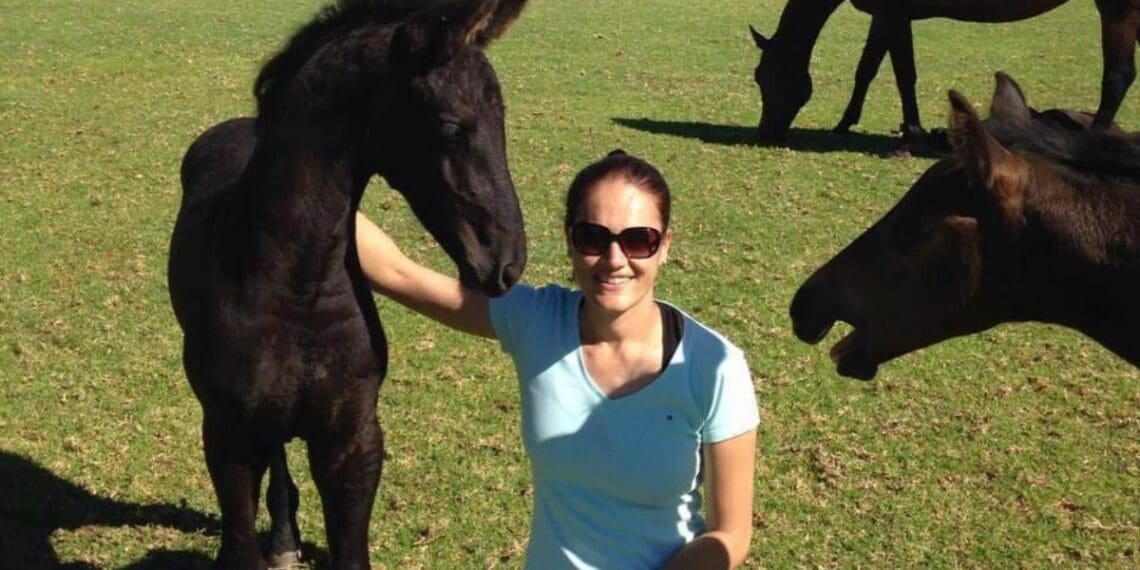
With over 20 years of veterinary experience, Dr Priscilla Muradas is still as passionate about her work as ever. Although she works long hours, she relishes working as an animal health professional, especially in the challenging agriculture industry.

Muradas is the founder of Douglas Veterinary Clinic and Vetshop in the Northern Cape, where she hopes to change people’s attitudes around animal health.
When Muradas, who was born and raised in Brazil, first moved to South Africa, she had already been a veterinarian for over a decade. She had always had a passion for animals and decided at a young age that she would become a vet.
Best of both worlds
“When I was little, I already had a passion for animals, especially horses. I grew up in [both] the city and farm environment. My family was farming with cattle, but we lived in a big city, so I had the opportunity to experience both worlds.”
Muradas has a doctorate in horse reproduction which she obtained in Brazil, and decided, after 15 years, to start her career again in South Africa.
“I moved to South Africa in 2015. I came to work for Pela Graca, the stable that breeds Friesian horses here, and I met my husband in that time. Because of him, I decided to move to South Africa and restart my professional life here.”
Her husband, who manages the animal clinic, could not move to Brazil as he did not speak Portuguese, but as she already spoke English, it simply made sense for her to move to South Africa.
Changing perceptions around animal health
One of her primary challenges, says Muradas, is that farmers in her area do not value the role veterinarians play in disease prevention.

“I don’t know if it’s like everywhere in South Africa, but in the area that I live in, the mentality of farmers here is very different than the farmers in Brazil. Technology is a very high [priority] and [there is lots of] infrastructure. The veterinarian partners with the farmer and is needed for everything.”
In her town, she says, farmers only enlist her help in the most dire circumstances.
“in this area where I am, cattle [farming] is a sideline [business]. [Farmers] don’t use it as the main profit of the farm, so they don’t invest in infrastructure. They don’t want to call the veterinarian for prevention nor do they want to vaccinate or deworm [their animals]. They only want to treat when the animal is nearly dying.”
She says this reluctance to be proactive about animal health is her biggest struggle as a veterinarian.
“It is very difficult to make them understand that prevention costs less and does less damage to the farmer.”
Still, Muradas continues to be passionate about her work. She says that South Africa’s agricultural sector is one with a bright outlook, and while many people are reluctant to change their viewpoints, there as just as many who are willing to change.
“I think the country in general has a lot of potential to grow, and that motivates me to carry on and to try to change the mentality for better. And I think there is a lot of space and a lot of people willing to change, especially the youngsters, who want to learn and want to do better. I think the future is bright.”
Veterinary science is not for the faint-hearted
Aspiring to be a health worker, whether it is animal health or human health, requires a deep dedication to the job, says Muradas. In all fields of veterinary science, spare time is a luxury.
“If you want to work with animals, whether [you do] farm work or city work, as a veterinarian, you need to be very dedicated to your job because you don’t have any extra time. You work a lot of extra hours so your family, and everything, takes second place. The profession becomes priority.”

She says that people who are very attached to their personal lives will struggle to do the job.
“You need to be very passionate about the profession because the profession must come first. Otherwise, you can’t do it right.”
A day in the life of a vet
A typical work day for Muradas starts at six in the morning and officially ends at around five in the early evening. More often than not, she also does after-hours work.
“My day is a mix between farm work and clinic work with small animals. At night, we do the after-hours calls and emergencies because I’m the only vet within a 100-kilometre radius. So I have to work after-hours every day and every weekend.”
Being a mom to a small child, the long hours are difficult to deal with, Muradas adds. However, she says she is blessed to work with her husband as he understands the pressures of the job.
As a woman who works in agriculture, Muradas says she only ever experienced challenges related to her gender in Brazil. In South Africa, farmers respect her knowledge, something that is related to the quality of her work.
“After so many years working, I know how to behave and to receive respect. You only receive respect by showing results. So I always prove to my clients that I can do the job by showing results and being professional and polite.”
ALSO READ – Agricareers: He helps farmers to get robust results