When Perdeberg winemaker Natalie Kühn traded Gauteng’s city lights and high-rise buildings for the vineyards of Stellenbosch, she instinctively knew that hers would become a love story of a lifetime.
She moved to pursue a career in science, but the glorious views, architecture, and ambience of the winey valley stole her heart during her varsity days. “I fell in love with the vineyards around the campus and the surrounding areas,” she says, explaining her decision to major in winemaking. And, as they say in the movies, the rest is history…
Today, Kühn works for Perdeberg Cellar situated at the foothills of the Paardeberg Mountain in Paarl in the Western Cape. The hallmark and most differentiating quality of Perdeberg wines is its predominant use of unirrigated vineyards, termed dry land vines.
Overcoming difficult growing conditions, dry land vines yield small berries with concentrated flavour and colour which in turn create superior wines. The winery’s rich history dates back to 1941 when a visionary wine farmer named Jan Rossouw suggested the area’s farmers begin producing their own wine.
Kühn’s journey at Perdeberg
Perdeberg adopted its distinguishing name from the scores of Cape Mountain zebras that once roamed the Paardeberg area, mistaken for wild horses by local inhabitants. In many ways, this was the ideal employer for Kühn who first started working in the wine industry as an assistant.
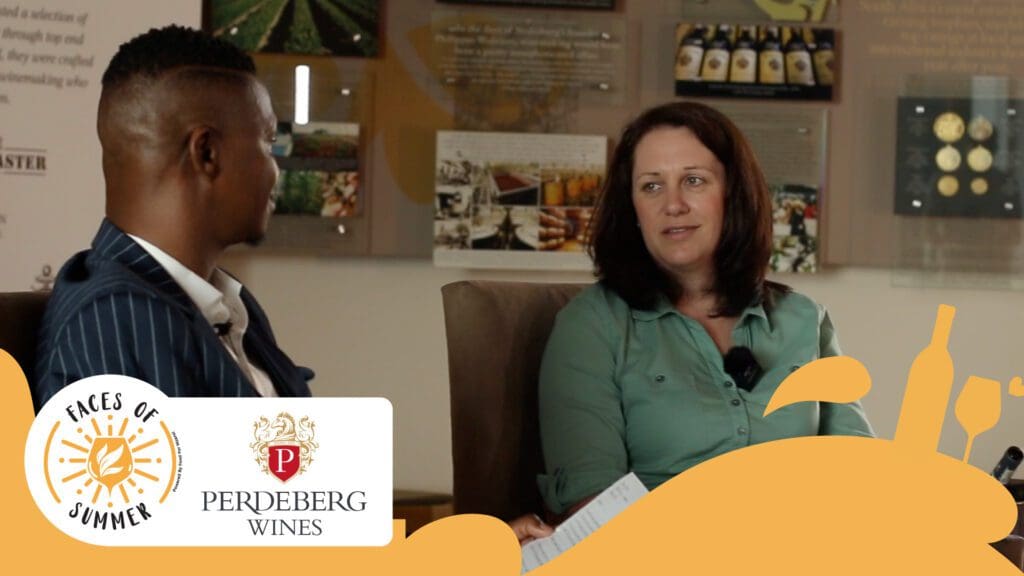
Speaking to Brian Mahanke as part of Food For Mzansi’s Faces of Summer campaign, Kühn expresses her love for winemaking. She says, “To the date, seven years along, [I am] still very happy and it has been quite an interesting journey, taking over the boutique cellar and going into more of a different direction.”
Making wine in dry land vines can be tricky, she adds. “But what makes the vines so interesting is that they go and find water. If you look at the roots, they are fairly long and deep into the grounds to go and find water and still produce the best quality grapes.”
She further mentions that the process of winemaking is equally interesting in the cellar. The berries are much smaller resulting in more concentrated fruit because of the dry land concept. Kühn believes this ensures greater quality. “We work with eight tonnes per hectare which makes it very interesting and more complex to work with.”
Summer wine selection
So, with February being the hottest month of the year in Paarl, what did Kühn pick as her fave two summer wines?
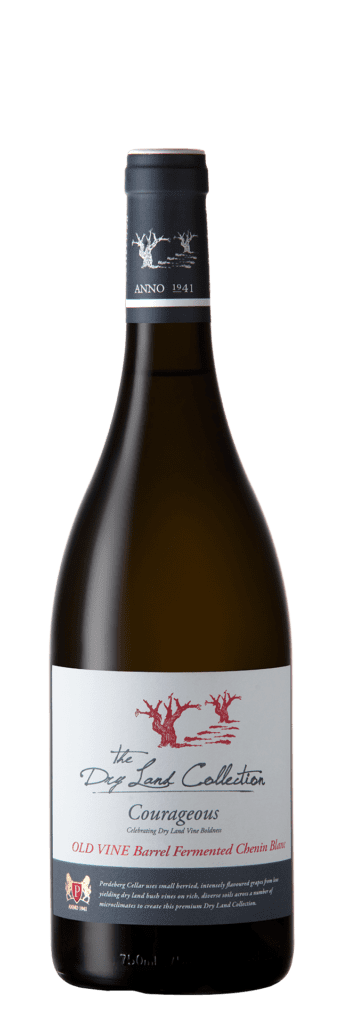
Her first choice is Courageous, an old-vine barrel-fermented chenin blanc. The ultra-premium Perdeberg Wines Dry Land Collection range started way back in 2013. And the aim was to simply showcase what dry land vineyards can produce.
Kühn explains, “With the smaller berries and more structured grapes, we can get, we can produce exceptional wine with those specific vineyards.”
Chenin blanc is also a personal favourite of hers. “It’s got beautiful flavours of peach, litchees, a little bit of vanilla on the back nose and it’s still a very nice fruity wine.”
Her second choice is an Endura Winemaker’s Selection Cape Blend 2017. The red wine pays tribute to the “enduring battle” between old and dry land vines to be able to produce such an exceptional wine. It is also rated among the top six Cape blends.
“It is a blend of pinotage, cabernet sauvignon and malbec,” adds Kühn.
Each cultivar is handled and produced separately. The cultivars also go into separate battles, mainly french oak barrels, for a period of 18 months.
It takes Kühn and her team a further two weeks to go through all the barrels to select the best ones to produce the Endura blend. “It’s 100% French oak, 100% new barrels and we only make a select amount of bottles,” she says.
- As part of its popular “Faces of Summer” campaign, Food For Mzansi featured some of South Africa’s finest winemakers and ambassadors.
READ NEXT: Bas’s malva pudding brings smiles to the table
Get the Mzansi Flavour newsletter: A weekly serving of craveable recipes and handy lifestyle tips.