Even after months of Covid-19 restrictions and alcohol sales bans, Mzansi’s barley farmers are holding their heads high and seeing opportunity ahead. This, according to The South Africa Breweries (SAB) on the eve of South Africa’s National Beer Day festivities this weekend.
#SANBeerDay is “a collection of small-scale events, promotions, educational sessions, pairings, specials and mini festivals held across the country” on the first Saturday in February and this year the tone is expected to be a welcome post-lockdown lift.
SAB corporate brand director Sphe Vundla says despite the challenges thrown at the growers of one of the main ingredients in South African beers, its farming community has risen above the setbacks.
He tells Food For Mzansi that farmers remained adaptable and understood the pressures the industry had to endure during hard lockdowns. “Clear and concise communication is a key function to bridge any crisis, which enabled all stakeholders to adapt.”
Now farmers are even shifting their focus to a long-term vision.
Farming for the future
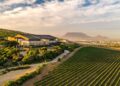
“In the Western Cape, where 80% of our local barley is produced, farmers have greatly shifted to conservation agricultural practices such as less disturbance or tillage of the soil in order to preserve soil moisture, texture and organic matter. This has enabled our farmers to produce sustainable yields in years where we experience low rainfall.”

Vundla tells Food For Mzansi that sustainability is a key element of growing barley in the country, to ensure that there is job creation and continuity over many years. “Sustainability is at the core of our farmers’ decisions when they produce barley. They want to enable their children and grandchildren to farm on the land in future.
“About 90% of farmers who produce malting barley for us follow a conservation or no-till system. Further to that, the barley industry has invested heavily into varieties that show resilience to extreme weather conditions like droughts.”
SAB corporate brand director Sphe Vundla
“These days the frequency of extreme weather events taking place is more, and therefore we need to adapt our farming systems accordingly. This is shown by converting to conservation agriculture or optimising irrigation scheduling.”
He says despite the enormous challenges, there is still opportunity for growth. “Opportunities that we see are to focus on local production and to build partnerships with our local institutions to manage the challenges the agriculture industry face.”
Vundla says South Africa plants more or less 100 000 hectares, or football fields, of barley in Mzansi every year. A local barley breeding company develops barley varieties adapted to local climate conditions.
SAB is the South African business of the international company AB InBev, which has a dedicated agriculture team of 40 employees who specialise in agricultural sciences (soil science, agronomy, economics, plant pathology and plant breeding), which further helps farmers take on current and future challenges.
An opportunity to celebrate small-scale farmers

Meanwhile Aron Kole, managing director of FarmSol, says that #SANBeerDay is an important event on the national calendar. “We celebrate Beer Day and the role that beer plays in supporting the livelihoods of many smallholder farmers participating in our FarmSol programme.”
FarmSol was established in partnership with SAB and has linked almost 1 000 smallholder farmers to a valuable multi-national market through supplying barley to SAB, among other successes.
Kole says Beer Day will also go a long way to appreciate the efforts taken by role players in the industry to keep the sector going amid the crippling challenges of Covid-19.
ALSO READ: ‘Mzansi craves black-owned craft beer and wine’
Sign up for Mzansi Today: Your daily take on the news and happenings from the agriculture value chain.