Monday, September 7, 2026
SUBSCRIBE
22 GLOBAL MEDIA AWARDS
Food For Mzansi
  • News
  • Changemakers
  • Lifestyle
  • Farmer’s Inside Track
  • Food for Thought
No Result
View All Result
  • News
  • Changemakers
  • Lifestyle
  • Farmer’s Inside Track
  • Food for Thought
No Result
View All Result
Food For Mzansi
No Result
View All Result
in Food for Thought

Beyond covid-19: Shoots of realism emerging for land reform

by Theo Boshoff
7th December 2020
Land reform: Good corporate governance is key

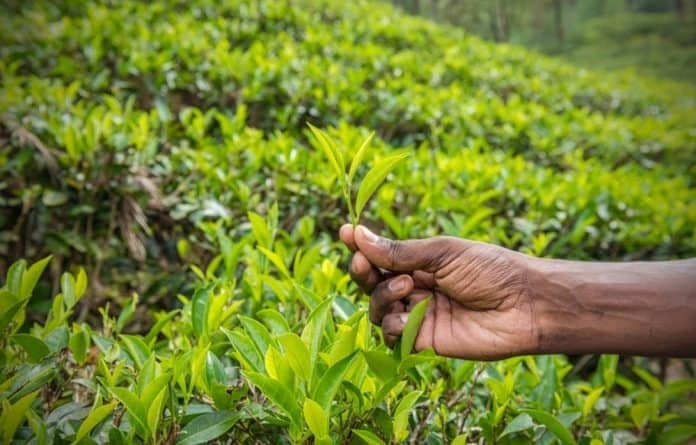
No need for new things, work with what you have on land reform, expert urge. Photo: Supplied/Food For Mzansi

Share on FacebookShare on TwitterShare on WhatsApp
It may be a bit of a cliché, but if there is a silver lining to be found in the post-covid economic situation it is the following: policymakers and the industry must put aside ideological differences and adopt a more practical approach to land reform, agricultural development and other economic policies. Theo Boshoff, the head of legal intelligence at Agbiz, weigh in on the matter.

South Africa simply cannot afford to throw money behind experimental projects that may end up becoming white elephants.

To government’s immense credit, the last six months have seen some real strides towards practical solutions for land reform and farmer development that seeks to make the best of what we have at our disposal as a collective.

The combination of blended finance, a comprehensive approach to producer support and the Minister’s recent pronouncements on the release of state land together hold great potential towards growing the agricultural sector.

Theo Boshoff is the head of legal intelligence at the Agricultural Business Chamber  (Agbiz). Photo: Twitter

South Africa’s struggle to achieve an equitable dispensation for land ownership is well documented and much has been written about the pros and cons of various land reform models.

One aspect which has consistently been overlooked, however, is that the state owns significant tracts of unused land.

To be clear, the state will always be the largest landowner as public land is required for infrastructure works, conservation, defence and numerous other purposes.

However, despite these legitimate requirements, the state was still able to identify almost 700 000 hectares of land that can be made available for beneficiaries to farm without encroaching on the legitimate needs of the state. This is indeed low-hanging fruit (pun intended) and is a welcome development.

Land may be the biggest hurdle for new entrants, but finance is also required for various factors that go into production.

“Land reform beneficiaries have largely been starved of capital as the state grants can only reach a few beneficiaries and can result in unwanted dependencies on state funding.” – THEO BOSHOFF, AGBIZ

On the other hand, insecure tenure rights awarded to beneficiaries mean that they cannot use the land as collateral and hence credit legislation prevents commercial financiers from providing commercial loans. Blended finance seeks to address both challenges by ‘blending’ commercial finance with a state grant to provide a hybrid for of finance at subsidised rates.

Industry and government have used the lockdown months productively to thrash out the details and government is currently consulting with broader stakeholder groupings on the proposal. Essentially, the scheme seeks to give effect to chapter six of the National Development Plan by sharing the risk between lenders, the government and the beneficiaries themselves to provide affordable finance to accelerate land reform and the commercialisation of new entrants to the agricultural sector.

Finally, the comprehensive producer development support policy seeks to leverage all available expertise by creating partnerships between government extension services, agribusinesses and commodity organisations to provide new entrants with a comprehensive support system. This can include training and skills development, mentorship, extension services, etc.

Admittedly, both government and the private sector have been offering these services for a long time. What the policy seeks to change is merely to coordinate efforts and ensure that all farmers registered in a single farmer register has access to support from one source or another.

It may be early days and the various programmes and policies will invariably run into challenges and need tweaking to address problems, but the building blocks seem sound. These three initiatives hold great potential to be the practical, results-driven programme which land reform and farmer development is crying out for. Watch this space!

  • Theo Boshoff is the head of legal intelligence at the Agricultural Business Chamber  (Agbiz). He writes in his personal capacity.

Theo Boshoff

Theo Boshoff is the head of legal intelligence at the Agricultural Business Chamber  (Agbiz). He writes in his personal capacity.

Tags: AgbizAgricultural Business Chamberland ownershipLand reformTheo Boshoff
Farmers rethink water use as shortages threaten food production
News

Farmers rethink water use as shortages threaten food production

by Vateka Halile
5th September 2026

What happens when the taps run dry? Farmers know the answer all too well. Experts and farmers at the Water...

Read moreDetails
Honoured roots: A father’s legacy, a daughter’s farming dream

Honoured roots: A father’s legacy, a daughter’s farming dream

4th September 2026
Gauteng farmers urged to harness massive urban market

Gauteng farmers urged to harness massive urban market

4th September 2026
ONCE-OFF USE; DO NOT REPUBLISH

Foot-and-mouth crisis hits SA dairy industry with R1-billion loss

4th September 2026
Tough times, hardy cattle: Why Mzansi farmers are choosing Nguni

Tough times, hardy cattle: Why Mzansi farmers are choosing Nguni

3rd September 2026

Strategic support sparks record-breaking growth at WC grape farm

Tough times, hardy cattle: Why Mzansi farmers are choosing Nguni

Chicken is booming, but the real money is in the supply chain

BenicaTheFarmer: The nurse who built an agricultural empire

RSVP now: Emerging farmers’ programme at Nampo Cape

Join Food For Mzansi's WhatsApp channel for the latest updates!

JOIN NOW!
Next Post
Stellenbosch University law professor Thuli Madonsela, prof. Erwin Schwella from the Hugenote Kollege School of Social Innovation and Food For Mzansi editor: audience and engagement, Dawn Noemdoe: Photo: Food For Mzansi

‘Build resilience so the poor can liberate themselves' - Madonsela

THE NEW FACE OF SOUTH AFRICAN AGRICULTURE

With 21 global awards in the first six years of its existence, Food For Mzansi is much more than an agriculture publication. It is a movement, unashamedly saluting the unsung heroes of South African agriculture. We believe in the power of agriculture to promote nation building and social cohesion by telling stories that are often overlooked by broader society.

Young farmers need structured opportunities, not just open doors

BenicaTheFarmer: The nurse who built an agricultural empire

Rural safety under fire as stock theft and farm violence persist

This week’s agri events: 07–11 September

Tiger Brands CEO calls for stronger food value chain

Plant, pick, protect: The rising potential of urban foraging in SA

  • Awards & Global Impact
  • Our Story
  • Contact Us
  • Cookie Policy
  • Privacy Policy
  • Copyright

Contact us
Office: +27 21 879 1824
News: info@foodformzansi.co.za
Advertising: sales@foodformzansi.co.za

Contact us
Office: +27 21 879 1824
News: info@foodformzansi.co.za
Advertising: sales@foodformzansi.co.za

  • Awards & Global Impact
  • Our Story
  • Contact Us
  • Cookie Policy
  • Privacy Policy
  • Copyright

Chat Options

I'm Lerato, your AI assistant!
No Result
View All Result
  • News
  • Changemakers
  • Lifestyle
  • Farmer’s Inside Track
  • Food for Thought

Copyright © 2024 Food for Mzansi

This website uses cookies. By continuing to use this website you are giving consent to cookies being used. Visit our Privacy and Cookie Policy.