Most citizens can barely afford nutritious meals. More disturbingly, even those who produce the food – farmers and farmworkers – cannot afford the very food they produce, yet the pockets of food retailers and processors never cease to grow. Magnificent Mndebele reports.
“I have bad news for you, cynical reader. Every word of this story is true. It is the story of something just as critical to our survival … food,” writes Tracy Ledger, a researcher in the field of economic development.
She wrote An empty plate, a book published in 2016, investigating South Africa’s agri-food system. It depicts how a blend of ill-advised government policy and consumer apathy has given birth to the most life-threatening menace to the prospects of a more equitable society.

Ledger asks pertinent questions. Why is it that food prices are so high that millions of South African families go hungry, while the prices paid to farmers for that same food are so low that many cannot stay in business? Why are some of the people who produce our food – farmworkers – among the most food insecure of all? And what about the deepening levels of hunger and poverty at the expense of corporates whose pockets keep becoming richer and richer in the food sector?
When the country transitioned into democracy, government introduced many policies intended to curb inequalities inherited from apartheid. But to this day millions languish in poverty. Why? Answers could be found in our flawed economic system.
Despite the misguided government policies, the agri-food system is still being controlled by the few. These elites have managed to make themselves invisible, yet they are so visible. They decide who eats and who doesn’t and how much one affords to and not to.
“There are clear winners and losers in our agri-food system: farmers and consumers are mostly on the losing side, while big corporates – processors and supermarkets – are on the winning side,” Ledger contends.
“This has serious implications for poverty, food security and the future of farming in South Africa… Most people do not make connections between the failure of land reform and the growth of supermarkets and food-processing companies.”
A focus on production

An empty plate embarrassingly undoes the magic trick and explains how the South African agri-food system was constructed and elucidates the devastating ramifications on land, people and poverty.
The government of the day – supposedly governing in the interests of the majority – only implemented make-up changes to the economic system of the few. Essentially, it did a terrible job at changing the soul and heart of the agri-food system so that it can benefit the majority.
“Land restitution and redistribution got underway, and a number of programmes designed to provide support to new farmers were initiated. Most of these shared one outstanding (and ultimately suicidal) feature: they focused almost entirely on production.
“That is, they included financial support for buying land and equipment, and they had a strong focus on farmer education and training on almost every aspect of agronomy and farm management,” says Ledger.
But what was amiss in these land reform policies, was market access: that is, how exactly, to whom and at what price would the produce of these farms be sold? The only measure for success as a farmer was to produce something, rather than to sell it for a price at which you’d make a decent living.
“After the initial investment has been made and farming activity commences – it is ‘discovered’ that the price that the main buyer will pay for the produce is insufficient to cover the cost of production,” writes Ledger.
Scrutinise the entire system
The government has created an entire agricultural policy based on the blind faith in a free-market system. When things yield erroneous results, the government and right-wing policy developers whose voices make more sense to the government’s ears, never look for the reasons for this failure in the system itself, but rather in the farmers.
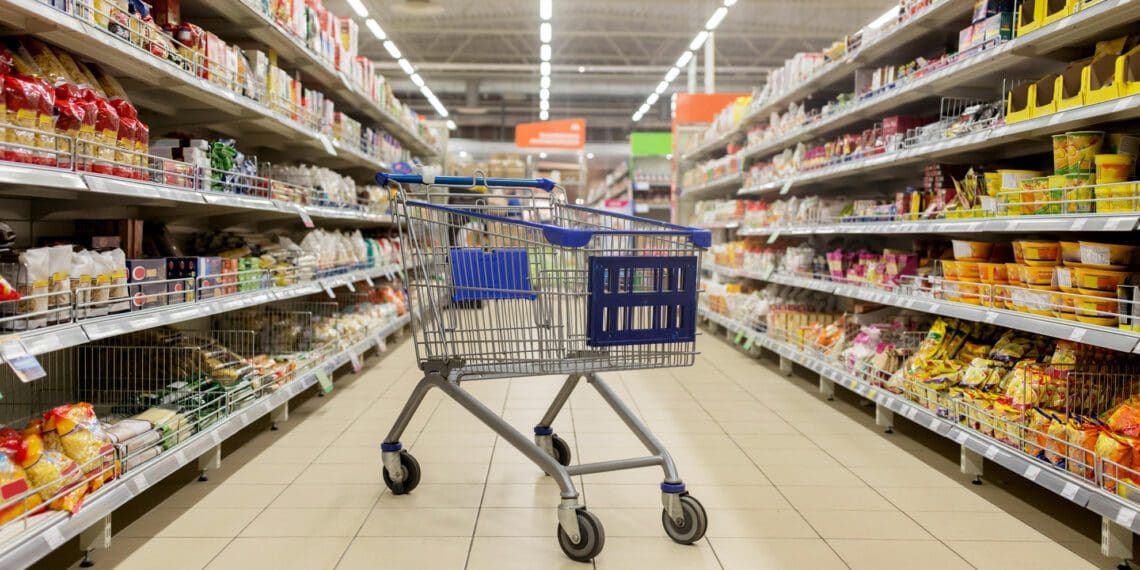
Almost every one of us gets our food in a similar fashion – from the supermarket. Many of us have never set a foot on the farm.
“And yet … we act as if the main players in the food system are farmers and consumers, as if it is these two groups that determine what is produced, what it costs, where is it available for sale and to whom is it available … It is time to wake up,” urges Ledger.
Almost all the retail food sales go to the big four – Shoprite, Pick n Pay, Spar and Woolworths. The tragedy with our food system is that farmers sell their produce at prices that almost all of us could afford, but the big guys make it impossible for most people to buy food at an affordable rate.
Had farmers received a fair share from supermarkets, most of their farms would be viable and farmworkers would also earn a decent income.
“In the absence of a state that prioritises access to food and rural development, and consumers who seem happy to go along with whatever they are offered, big corporates have simply assumed the power to govern our agri-food system,” says Ledger.
Among others, Ledger argues that one of the reasons why we’re losing the war against poverty, is because there is no single government department or agency that oversees our agri-food system.
“It is very likely that the big picture – that is, the workings of the system – will go entirely unnoticed. Instead, individual departments of government will look only at their part of that big picture, from their point of view … Sadly, this is the story of food security, nutrition, and rural poverty-alleviation policy in South Africa,” highlights Ledger.
Alternative governance structures
Ledger suggests the urgent and radical need to look away from the existing system if we are to find social justice inclined solutions.
“If we create a different governance structure – effectively, replacing the structure that we have at present – the rules of the game will change … What I am advocating is that we create space for the real alternatives built on the foundation of care; that government stops avoiding its constitutional obligations in respect of the right to food; that we curb the excessive power of the corporates; and that every consumer starts to think about others in the food system from the perspective of an ethic of care.”
She adds, “I need to make myself clear on one point: … I do not believe that … the big supermarkets and big food processors and manufactures can be part of an alternative system that is based on the ethic of care … I do not believe that they can voluntarily migrate from being the problem to the solution … Their real reason for existence is the maximisation of profits.”
ALSO READ: The good doctor: a young vet saving and changing lives
Sign up for Mzansi Today: Your daily take on the news and happenings from the agriculture value chain.