Saturday, September 5, 2026
SUBSCRIBE
22 GLOBAL MEDIA AWARDS
Food For Mzansi
  • News
  • Changemakers
  • Lifestyle
  • Farmer’s Inside Track
  • Food for Thought
No Result
View All Result
  • News
  • Changemakers
  • Lifestyle
  • Farmer’s Inside Track
  • Food for Thought
No Result
View All Result
Food For Mzansi
No Result
View All Result
in News

Black farmers to embrace ‘untapped grain opportunities’

A Free State farmer and miller pleads with government to back young agriculturists who wish to explore new opportunities in the maize industry. From fertilisers to distribution, there is room for transformation, says Phaladi Matsole

by Tiisetso Manoko
14th February 2022
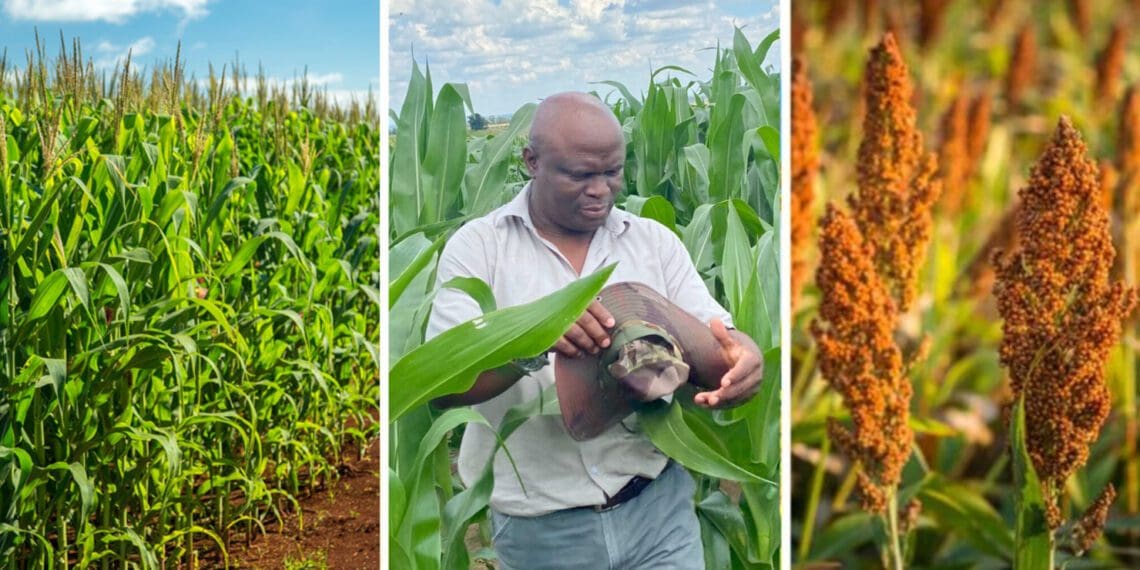
Development programmes should empower farmers to not merely be dependent on the next phase of state handouts, believes Free State farmer Phaladi Matsole. Photos: Supplied/Food For Mzansi

Development programmes should empower farmers to not merely be dependent on the next phase of state handouts, believes Free State farmer Phaladi Matsole. Photos: Supplied/Food For Mzansi

Share on FacebookShare on TwitterShare on WhatsApp

An up-and-coming Free State miller, Phaladi Matsole, has called on government to amend its intervention strategies to accelerate the development of black grain farmers in the country.

Matsole Phaladi of FS
Phaladi Matsole, a grain farmer in the Free State. Photo: Supplied/Food For Mzansi

Matsole is the owner of Sebata Maize Milling. He believes that development programmes should empower farmers to not merely be dependent on the next phase of state handouts. It should also inspire others to join the grain industry.

“Development and growth will only come when us, [as] black farmers, start operating the fertiliser and distribution companies in the sector. That will be the only way we can see growth,” he tells Food For Mzansi.

“Government should stop pumping money into the same farmers year in and year out who are doing the same thing without actual development being visible. Black farmers must be shareholders of distribution and fertiliser firms. That will be [real] development.”

The Frankfort-based producer first started farming in a mixed operation in 2009. He later also ventured into milling because he wanted to embrace opportunities in the agricultural value chain. The fact that he had little government support actually enabled him to enlarge his footprint, says Matsole.

“Sebata Maize Milling came as a result of wanting diversification and value add. We currently utilise a private mill with a day shift of 18 employees. We are supplying local retailers, schools… Our clients are in KwaZulu-Natal, Gauteng, North West, the Eastern Cape, Free State, Mpumalanga and Lesotho.”

Untapped opportunities

Matsole adds that many grain farmers are currently crippled by rising fuel, electricity and fertiliser prices. Many now have to rely on livestock to stay in business.

Phaladi Matsole with some of the maize meal he has grown and packed. Photo: Supplied/Food For Mzansi

“If we, as black farmers, can come together, especially in this industry, and allow our money to rotate amongst ourselves, we will really go a long way. Government only pumps money in white-owned or -led organisations which wants us to go there for training or disperse our vouchers, which means money goes to the same people while we remain with nothing. That is what is holding us back.”

Furthermore, Matsole hopes government will take stock of the bad state of infrastructure in the Free State. Farmers are losing business because, among others, roads are not being maintained. Also, more should be doing to truly transformer agriculture.

“The maize sector is still far from being transformed. The people who control the sector are our white counterparts based on huge volumes they are contributing. We need clear and certain policies that support crop farmers. Without state support transformation will remain a dream.”

He believes there are many untapped opportunities for in agriculture. “Once the sector is fully viable, other farmers can venture into machinery supply, chemicals, seeds, fertilisers, transport, feed making and manufacturing other maize by-products.”

ALSO READ: Is a Land Redistribution Bill on the cards for Mzansi?

Sign up for Mzansi Today: Your daily take on the news and happenings from the agriculture value chain.
Tiisetso Manoko

Tiisetso Manoko is a seasoned journalist with vast experience in community media. He possesses diploma in media studies majoring in journalism, certificate in civic leadership. He loves news from all angles with particular interest in local government, agriculture and politics. He is a staunch Mamelodi Sundowns Football club supporter.

Tags: Black farmersFarmer developmentgrain farmers
News

Aucamp outlines strategy for biosecurity, trade, and infrastructure

by Tiisetso Manoko
2nd September 2026

In an exclusive interview with Food For Mzansi, agriculture minister Willie Aucamp outlines his vision to accelerate the AAMP, tackle...

Read moreDetails
Tobias Doyer, CEO of Grain SA. Photo: Supplied/Grain SA Facebook

Rising costs, climate risk push Swartland wheat farmers to the brink

2nd September 2026
Sick spuds: No need to panic as SA’s potatoes are banned in Zim

Potato turning point ahead as onions double in price year-on-year

1st September 2026
Early calf care: Key growth targets every cattle farmer must track

Early calf care: Key growth targets every cattle farmer must track

1st September 2026

How to align your farming cycles with long-term financial success

1st September 2026

Early calf care: Key growth targets every cattle farmer must track

Tough times, hardy cattle: Why Mzansi farmers are choosing Nguni

Strategic support sparks record-breaking growth at WC grape farm

Stats SA: Food sector income rises 8.4% as takeaways surge

How to align your farming cycles with long-term financial success

Join Food For Mzansi's WhatsApp channel for the latest updates!

JOIN NOW!
Next Post
The Mamahlola Communal Property Association was among the first to be established in 2000, but due to underinvestment, their land soon turned into a symbol of government’s land restoration failure. Photo: Supplied/Food For Mzansi

Communal property associations 'often dysfunctional'

THE NEW FACE OF SOUTH AFRICAN AGRICULTURE

With 21 global awards in the first six years of its existence, Food For Mzansi is much more than an agriculture publication. It is a movement, unashamedly saluting the unsung heroes of South African agriculture. We believe in the power of agriculture to promote nation building and social cohesion by telling stories that are often overlooked by broader society.

Honoured roots: A father’s legacy, a daughter’s farming dream

Gauteng farmers urged to harness massive urban market

Foot-and-mouth crisis hits SA dairy industry with R1-billion loss

Tough times, hardy cattle: Why Mzansi farmers are choosing Nguni

Dragon fruit thrives in KZN valley despite tough national season

Government hikes sugar import price, but industry warns of gap

  • Awards & Global Impact
  • Our Story
  • Contact Us
  • Cookie Policy
  • Privacy Policy
  • Copyright

Contact us
Office: +27 21 879 1824
News: info@foodformzansi.co.za
Advertising: sales@foodformzansi.co.za

Contact us
Office: +27 21 879 1824
News: info@foodformzansi.co.za
Advertising: sales@foodformzansi.co.za

  • Awards & Global Impact
  • Our Story
  • Contact Us
  • Cookie Policy
  • Privacy Policy
  • Copyright

Chat Options

I'm Lerato, your AI assistant!
No Result
View All Result
  • News
  • Changemakers
  • Lifestyle
  • Farmer’s Inside Track
  • Food for Thought

Copyright © 2024 Food for Mzansi

This website uses cookies. By continuing to use this website you are giving consent to cookies being used. Visit our Privacy and Cookie Policy.