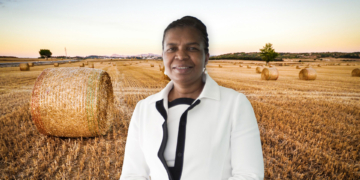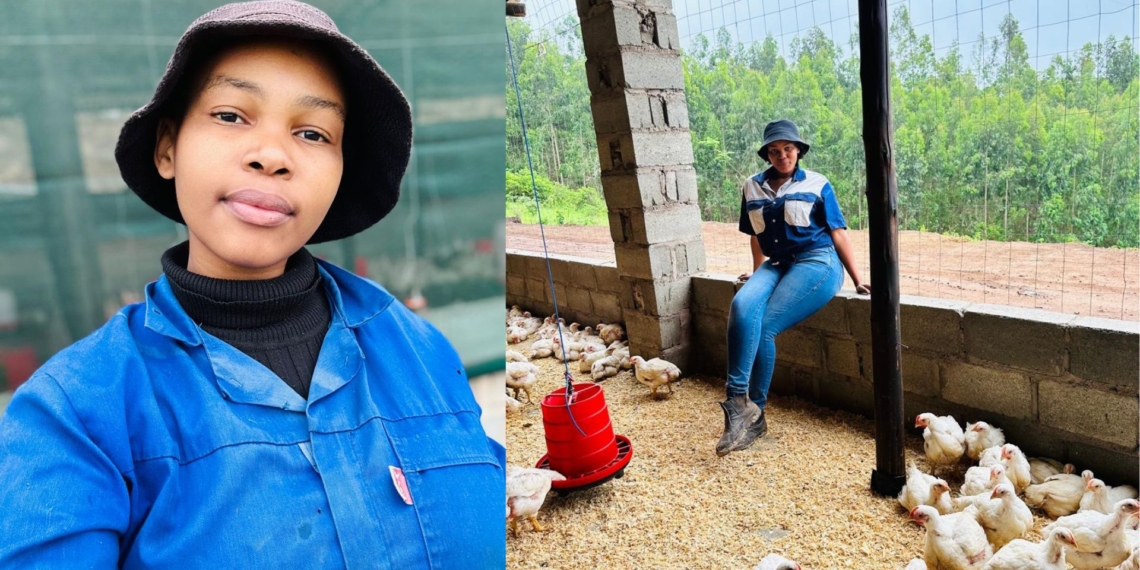
Ever since she can remember, entrepreneurship has been part of Bongeka Vilakazi’s daily life. Growing up with both parents and grandparents between Umlazi and Ndwedwe in KwaZulu-Natal provided structure, consistency, and practical guidance from two generations.
Now, the founder of Asandanathi Poultry Farm Pty Ltd applies those early lessons to building a business that demands routine, planning, and accountability, values that continue to guide how she runs her operation.
Her late grandfather, Gonolothi Mbatha, was well known in the community for selling live chickens and running a tavern. He sold almost anything that could generate an income, Vilakazi recalls.
This environment exposed her to both a quiet rural setting and a strong, community-driven business culture.
Turning childhood lessons into legacy
From an early age, she learned practical skills such as counting money, tracking sales, and understanding profit. These lessons shaped her independence and business thinking.
After completing matric, her interest in farming was already established. She enrolled at Coastal College of Agriculture from 2015 to 2017, studying primary agriculture, a combination of crop and livestock studies.
Home life, she says, was stable and supportive. She grew up with her parents, two brothers, a sister, and her niece.
“I learned the importance of entrepreneurship from my grandfather,” she says. “He was hardworking, intentional, and thoughtful in how he did business.”
She adds that business was never only about money. “It was a way of learning and supporting the community. That is what stayed with me.”
Related stories
- Kwakwa cracks the egg market and builds a growing poultry empire
- Mpumalanga duo rise and shine with mixed farming operation
- Solar success: Poultry farmer turns setback into comeback
- Limpopo poultry farmer soars from 100 to thousands of chickens
Family support and community
She founded her poultry business after completing an internship at National Chicks in Camperdown, Cato Ridge, in 2019. By saving around R30 000 from her intern salary, she was able to build a basic structure, purchase materials, and start her first production cycle with 100 broiler chickens.
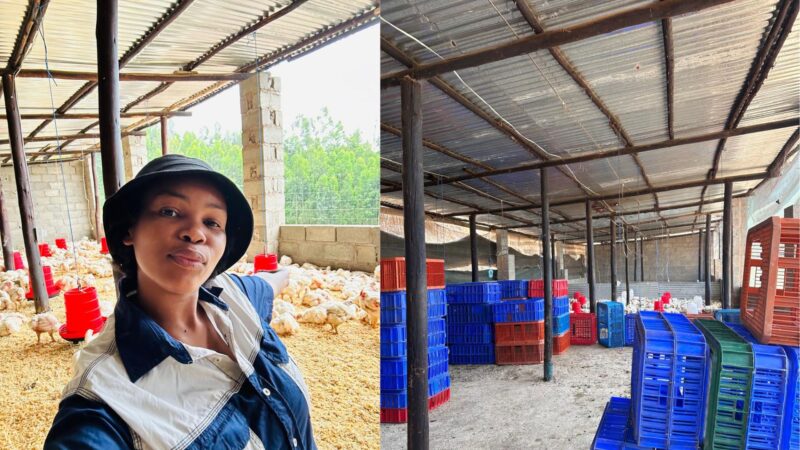
Vilakazi tells Food For Mzansi that she initially started her poultry business in her grandmother’s backyard as a pilot project. Her grandmother, Gatrude Mbatha, saw how dedicated she was and allowed her to run the business full-time from home. It soon grew from 100 chicks per cycle to selling over 3 000.
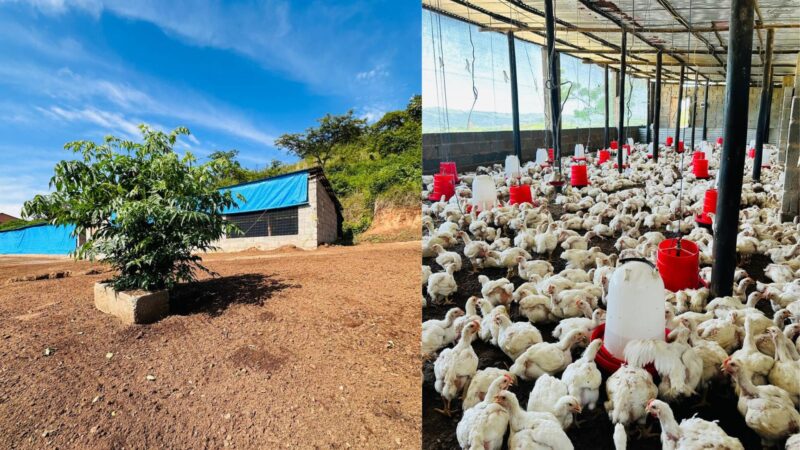
“I have two poultry structures that accommodate 2 000 chickens. I make sure they are not overpopulated, and that all can feed and grow properly.”
Vilakazi adds, “With the support from my family, especially my mom and siblings, that is what has kept me going until today.”
She explains that they sell chickens in bulk orders starting from 50 birds, supplying resellers, the wider community, and also providing slaughtered chickens to cooperative workers.
“Broilers take up to six weeks to grow, but we start selling at five weeks using quality Epol feed.”
She notes that they disinfect the poultry houses before chicks arrive, clean their feet every time they enter the chicken area, and spray the chickens to prevent disease contamination.
However, raising chicks requires constant observation, especially in the first week when mortality can be high. Weather is another challenge, she adds.
“Broilers are very fragile. If it’s too hot, they can die, and if it’s too cold, their growth slows. It’s very important to balance these conditions carefully,” she says.
Where routine and care meet revenue
Every day, she follows a set routine on the farm. In the morning, she first checks for any mortality, recording any dead chickens. She then adds fresh feed and ensures all water containers are clean and full.
During the day, she continues to monitor the water and carries out general farm maintenance, including cleaning, small repairs, and making sure the chickens remain healthy and comfortable.
Vilakazi also checks for customer orders for the week or month. “Another part of my routine is weighing the chickens, checking their weight, and recording it.”
She explains that her broilers should reach about 2.2 kg. If they are around 1.9 kg after five weeks, she inspects for disease outbreaks and adjusts the feeding schedule.
As her business has grown, Vilakazi has received general farming training from the department of agriculture in KwaZulu-Natal. She also received chicks, feed, drinkers and feeders from SE Holdings in 2023, while iLembe Enterprise funded her with chicken coop curtains, a JoJo tank and mesh wire.

“I haven’t reached formal supply yet, but it’s something I am working on,” she says.
She adds that her community has been extremely supportive, and surrounding areas like Inanda and Verulam are becoming regular clients, ordering in bulk or for household meat.
In 2024, she registered at the University of South Africa to study public relations, a qualification she is currently completing.
Looking ahead, Vilakazi hopes that as Asandanathi grows, she can employ more youth, not just seasonally, but full-time, helping them gain experience running a business, not just serving local markets, but potentially expanding nationally.
READ NEXT: Flagstaff farmer keeps hope growing when the rain stops