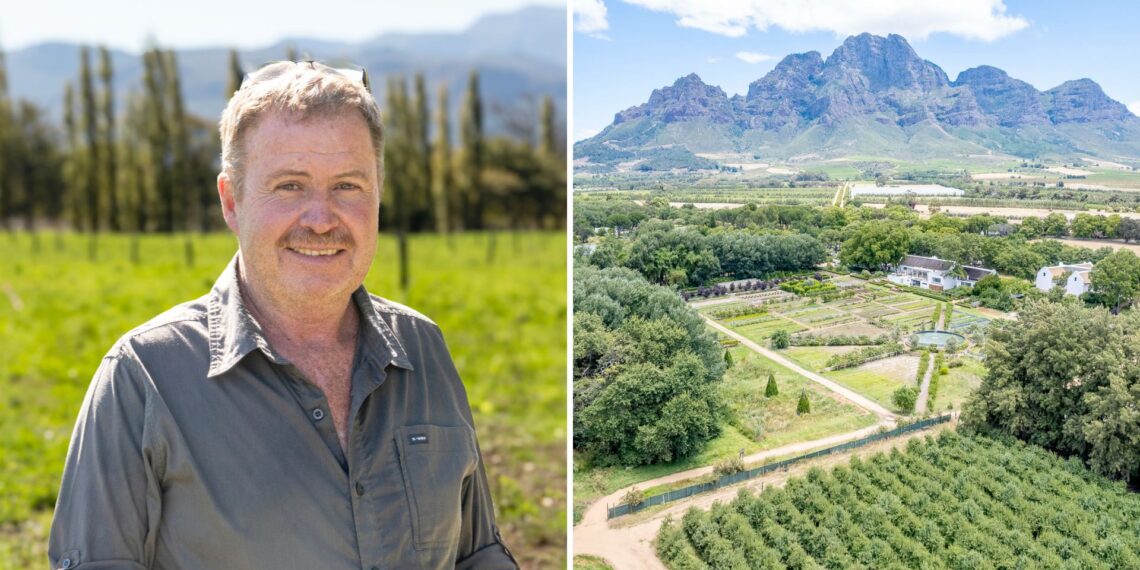
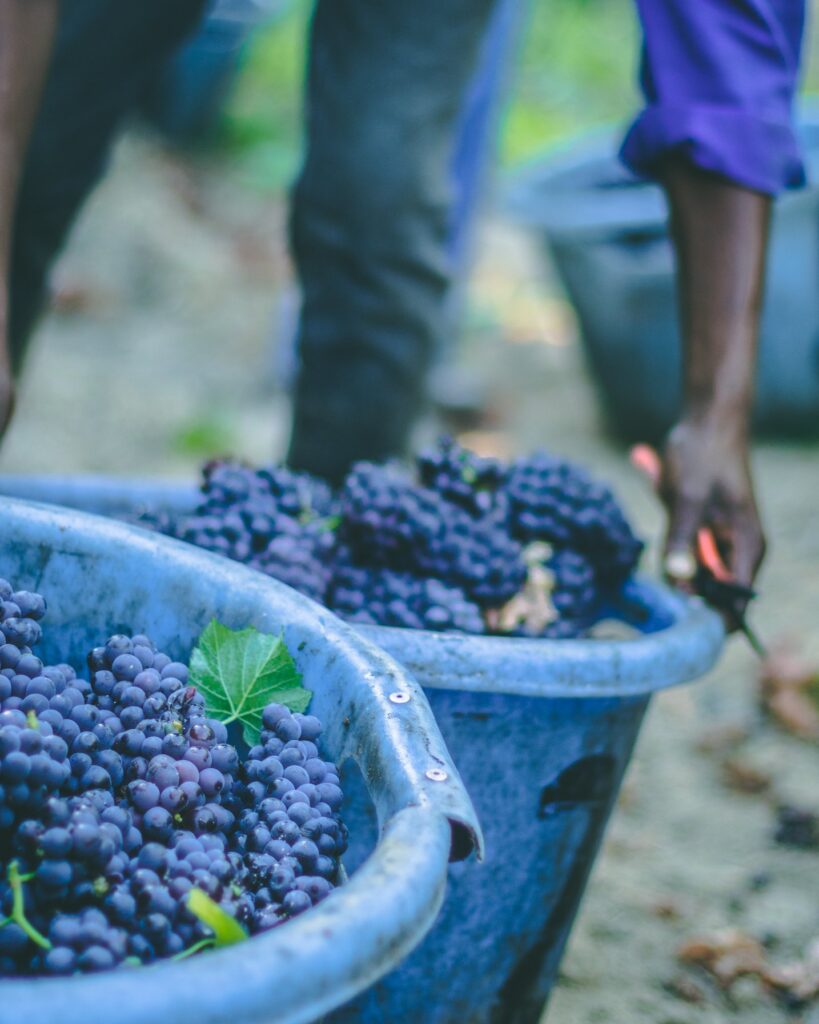
Boschendal is perhaps best known for its wines – the estate was founded in 1685 and has been making wine for more than three centuries. However, vineyards are only a small part of an extensive farming operation including pome and stone fruit, citrus, blueberries, proteas, and livestock.
“We’re harvesting something 11 months of the year,” says Charles Edmonds, managing director of farming at Boschendal Estate. “Down the line, we’ll be harvesting 12 months of the year, and livestock production is already 12 months.”
Visitors to Boschendal’s farm-to-fork restaurants and shops can enjoy some of the Estate’s produce but this accounts for a minimal portion of fruit sales – Boschendal’s orchards are commercial and export-orientated.
Accelerating soil health
“In the past, we used to put compost and mulch in the tree row,” recalls Edmonds. “It comes at a high cost, and the soil improvement was slow. When profit margins keep shrinking, these costs are questioned.”
After joining Boschendal in 2021, he adopted the more radical approach of intensive full-surface soil regeneration and has already achieved soil organic-matter gains of up to 5%. He unlocked these rapid improvements by deploying cover crops and livestock.
This year, Edmonds will establish Boschendal’s first low-chill cherries on land that underwent a three-year regenerative process. He started by grubbing the existing unproductive orchard and installing drainage so that the soil would not have to be disturbed again. The grubbed trees are chipped and spread back on the open land, which returns their carbon to the soil.
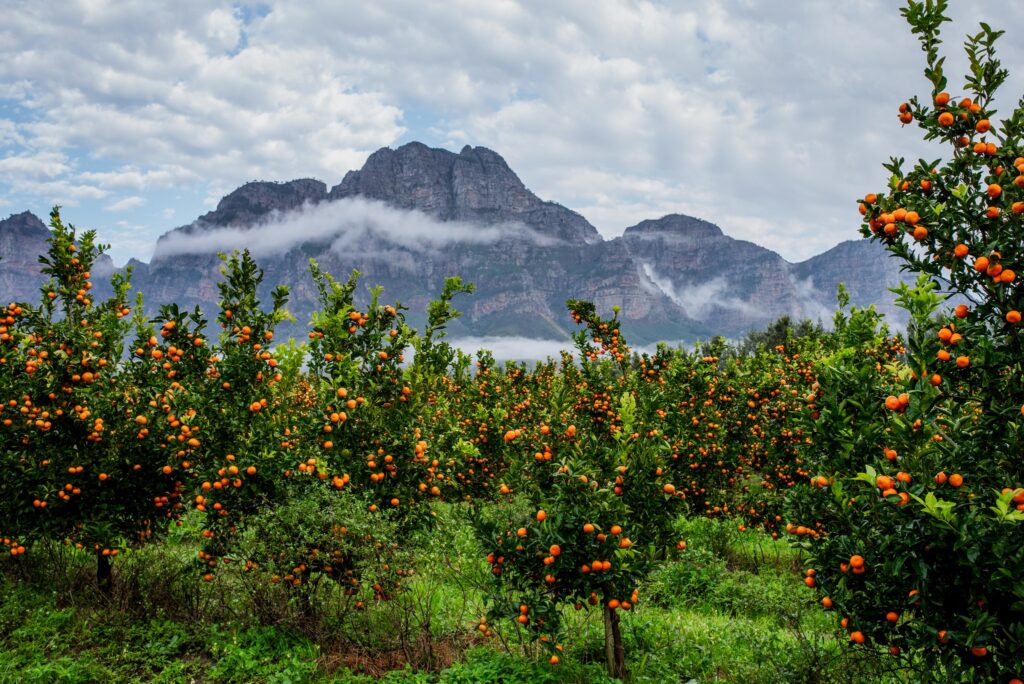
Next, Edmonds employed a minimum-till planter to sow annual cover crops – factors such as carbon-to-nitrogen ratio and rooting depth influence cover-crop species selection.
“In the beginning, we fell into the trap of sowing too many species because we wanted diversity, and half of them got overshadowed,” he says. “Now we’re more balanced but try to stay with annuals. The idea is that the land is being improved for future orchards, so I don’t want tough grasses.”
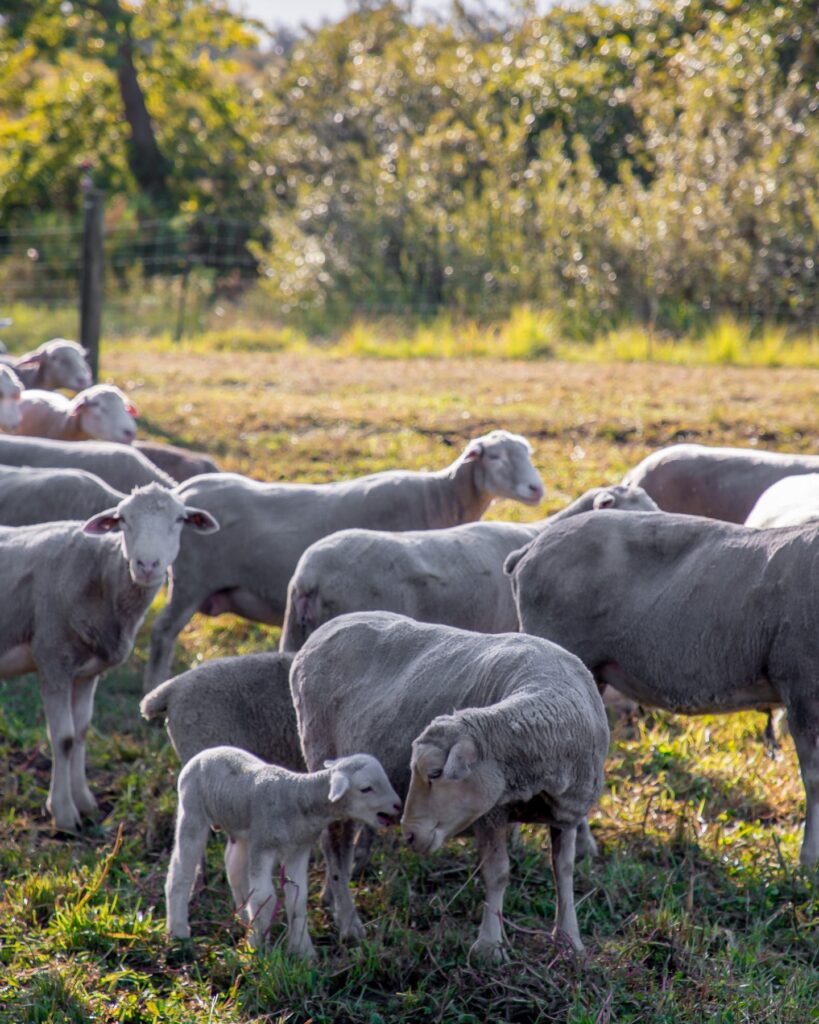
Once the cover crops are established, Boschendal’s livestock move in, starting with cattle. Each cow recycles the grazing into about 27 kilograms of soil-enhancing manure daily. Sheep or chickens follow the cattle in a high-intensity rotational grazing system.
Boschendal has around 4 000 pasture-raised laying hens that travel in mobile arks, and about 1 000 sheep. Edmonds notes that the carrying capacity of the cover crops increases over time as soil health improves, creating a virtuous circle to generate even more manure.
“We’ve had the manure analysed. There’s a big variation in the mineral content of the manure of different types of livestock,” he says. “We now use it as a tool. For example, if the soil has a zinc deficiency, it’s better to graze chickens, as their manure has a higher zinc content.”
The sheepless option
Soil regeneration with grazing animals has proven effective and profitable, but Edmonds has also seen excellent results without livestock. After grubbing an old Packham’s orchard, he established cover crops but deliberately excluded grazers from one section to monitor the soil health.
“We call that block the mow and grow,” he says. “We wanted to see how cover crops compare to livestock because we want to know how we can continue regenerating soil health once we replant the orchard.”
At the start of each regenerative project, and every six months after that, Boschendal has the soil tested for organic matter, organic carbon, active carbon, water-retention capacity, nematodes, and health indicators.
Testing showed that the cover-crops-only soils initially lagged behind the grazed areas but have begun to catch up, with nearly equal soil organic-matter levels.
In another part of the farm, a 4.5-hectare second-leaf Bingo Gala orchard on M.9 indirectly benefits from livestock. The Elle-pot trees were planted at 3.5 x 0.9 metres in the spring of 2022 under 15% shade netting. After planting, they were mulched with partially composted wood chips.
Wood chips generated by chipping old orchards were initially spread out, and chicken arks were placed on top. The chicken manure adds nitrogen that accelerates decomposition, preventing nitrogen lock-up when chips are used for mulch.
Edmonds maintains a permanent full-surface cover crop in the orchard. Weevils aren’t a problem at Boschendal — their biggest challenge is guinea fowl that scratch open tree roots.
The Bingo Galas yielded 15 tonnes per hectare this year. With the trees already at their full height in the first leaf and still going strong, Edmonds must crop at least 50 tonnes per hectare next season to check excessive vigour.
“This soil wasn’t even fully regenerated,” he says. “But we’ve never used any form of herbicide here.”
Related stories
- ‘Prioritise soil health and improve fertiliser use in Africa’
- Enhance soil health by intercropping indigenous vegetables
More than sustainability
Boschendal’s strong focus on working with nature has allowed the gradual reduction of synthetic fertilisers and crop protectants. One of their considerations is consumer resistance to chemically treated food.
“What will the market want in five to ten years?” asks Edmonds. “They’ll want fruit that has been ethically produced. We’ve tried to include all these aspects in our holistic approach to regenerative farming.” He elaborates that Boschendal’s holistic approach rests on seven pillars: soil, water, climate, biodiversity, economy, society, and people.
Boschendal is fortunate to have sufficient water, but Edmonds doesn’t take it for granted. “I think some people underestimate the importance of water,” he says. One benefit of higher soil organic-matter levels has been water-retention improvements of 30%–40%.
Even though, like most growers, Edmonds tends to err on the side of caution, he is still irrigating about 20% less than previously on the regenerated soil. Water savings are one reason why he believes in full-surface soil regeneration.
“If we’re claiming that a 1% increase in soil organic matter means we can store 170 000 litres more water per hectare, then we have to regenerate the full hectare,” he says. “If we only regenerate the tree row, it’s 25% of that hectare.”
Besides storing water, healthy soils capture carbon. Boschendal works with international partners to monitor carbon sequestration, water retention, and biodiversity as part of the Estate’s efforts to combat climate change, which include the annual generation of around 1 100 MWh of solar energy.
Considering that Boschendal is a WWF Conservation Champion and enjoys GlobalG.A.P. accreditation and SIZA certification, it might seem odd that Edmonds dislikes the term sustainability.
“Sustainable means maintaining something at a certain rate or level,” he says. But when it comes to soil, 70% of the world’s soils are already degraded.”
Instead of striving to maintain already damaged soils, Edmonds embraces regenerative practices that improve soil health, thereby increasing agricultural productivity and environmental quality while building climate resilience.
Although better soil health makes financial sense, this isn’t his – or the Boschendal Estate’s – primary motivation for regenerative agriculture. “This is a generational decision,” affirms Edmonds. “We should do this to make things better for future generations. We want to leave the land in a better condition than we received it.”
- This article was first published on Hortgro.
READ NEXT: Tradition meets tech: For Jurie, precision farming is everything
Get Stories of Change: Inspirational stories from the people that feed Mzansi.