Tuesday, July 21, 2026
SUBSCRIBE
22 GLOBAL MEDIA AWARDS
Food For Mzansi
  • News
  • Changemakers
  • Lifestyle
  • Farmer’s Inside Track
  • Food for Thought
No Result
View All Result
  • News
  • Changemakers
  • Lifestyle
  • Farmer’s Inside Track
  • Food for Thought
No Result
View All Result
Food For Mzansi
No Result
View All Result
in News

Bumper canola crop opens oil export opportunities

by Duncan Masiwa
29th January 2021
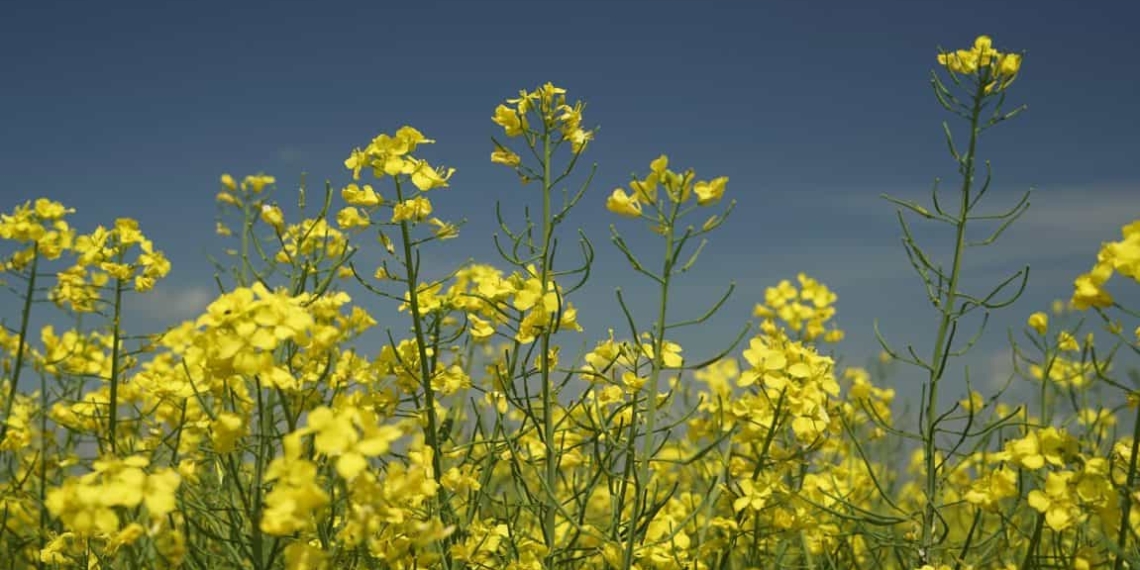
With more than enough to supply the local market, SA's canola oil industry has its eyes on international market opportunities. Photo: Supplied/Unsplash

With more than enough to supply the local market, South Africa's canola oil industry has its eyes on international market opportunities. Photo: Supplied/Unsplash

Share on FacebookShare on TwitterShare on WhatsApp

With South Africa having recorded its largest canola harvest in history last year, farmers are set to benefit from great export opportunities.

According to agricultural role players, the canola oil market is still growing in South Africa and not nearly big enough to absorb the oil from last year’s crop. This was reportedly at least 75% bigger than a year ago, and 37% bigger than the previous record.

Kellie Becker, Southern Oil’s managing director. Photo: Supplied/SOILL

However, poor harvests in international markets presents a golden opportunity for Mzansi farmers to replace traditional sunflower oil markets overseas.

According to Southern Oil’s (SOILL’s) managing director Kellie Becker the 2020 canola season will be remembered for a long time as the year that not only camps, but also canola farms harvested three tons of canola per hectare.

Camps are farms that occasionally plant canola as part of their crop rotation.

SOILL, represented by Becker, is an oil extraction plant and edible oil refinery with relations with over 500 local canola producers.   

“In September our crop estimate was adjusted from 122 000 tonnes to 144 000 tonnes. Now, we are already harvesting 161 734 tonnes of canola. A total of 73 680 hectares were planted, thus achieving an average yield of 2.20 tonnes per hectare for the entire Western Cape,” Becker explains.

Where will all that canola go?

Most of South Africa’s canola is produced in the Western Cape. Only a few farmers in North West and Limpopo have also started planting it.

Meanwhile, the biggest question industry leaders are asking is what will happen to all the canola?

“The canola oil market in South Africa is growing well, but is not nearly enough to absorb the oil from last year’s crop.

“However, since September, sunflower oil developed a significant premium against canola oil due to poor harvests in Eastern Europe and Russia, which gives us the opportunity to do replacement in traditional sunflower oil markets,” says Becker.

Industry resilience

Ruan Schutte, an economist and marketer with Grain SA, explains that last year’s positive rainfalls in production areas led to the extraordinarily high yield.

Although in some regions the rains were below the long-term average, the timing of rain could not have been better.

Ruan Schutte, Grain SA economist and marketer. Photo: Supplied/GrainSA

“The temperatures during the production season played along very well also, although at the end there were some regions that had little rain in harvesting time and got pre-germination on the crop,” says Schutte.

This leads to feed-grade quality canola, he explains, “but it was a very small amount, not enough to impact the bumper crop we had.”

Despite these challenges faced by producers, South Africa still achieved its highest yield average in the history of canola production.

Schutte is excited about the future of canola production in the country. “Canola has a bright future and has a very important role to play in the crop rotation systems that are being followed in the Western Cape.”

Better days ahead

According to SOILL’s agricultural resource manager, Zander Spammer, even better days are ahead for South Africa’s canola oil market.

Zander Spammer, agricultural resource manager at SOILL. Photo: Supplied/FoodForMzansi
Zander Spammer, agricultural resource manager at SOILL. Photo: Supplied/Food For Mzansi

With canola oil being very competitively priced against sunflower oil, the demand should remain strong under current prices, he predicts.

Spammer is, however, concerned about the impact of ever-changing weather conditions on the industry going forward. Unstable weather patterns remain the industry’s biggest challenge.

“Canola is a smaller or niche crop that is only planted in the Western Cape, so if we experience a bad planting season the whole crop and year is compromised,” he explains.

Ultimately, the less barley, the more wheat and canola.

Meanwhile SOILL says it took note of producers’ 2021 planting intentions, which indicate significant increases. This is largely due to the restriction on barley quotas as well as the relatively good gross yields that canola offered in 2020.

The longer the Covid-19-induced alcohol sales ban continues, the less barley will be malted for beer-making and the smaller the demand will be for the following year.

Ultimately, the less barley, the more wheat and canola, Spammer says.

“We have already started a large capital investment programme that provides for storage and increased processing capacities at both Swellendam and Moorreesburg. We are preparing for sustainable, larger plantings and larger yields and are constantly working to grow the canola oil market,” says Becker.
Duncan Masiwa

DUNCAN MASIWA is the assistant editor at Food For Mzansi, South Africa’s leading digital agriculture news publication. He cut his teeth in community newspapers, writing columns for Helderberg Gazette, a Media24 publication. Today, he leads a team of journalists who strive to set the agricultural news agenda. Besides being a journalist, he is also a television presenter, podcaster and performance poet who has shared stages with leading gospel artists.

Tags: Canola oilcanola oil producersGrain SA
The Forest of Renewal at Rustlers Valley celebrates the intertwined legacies of Frik Grobbelaar, Anton Chaka and Riky Rick, inviting South Africans to restore the land while cultivating hope, belonging and community. Illustration: ChatGPT
Food for Thought

Rustlers Valley offers a blueprint for South Africa’s renewal

by Ivor Price
18th July 2026

As the Rustlers Valley Memorial Forest is launched in the eastern Free State this weekend, Ivor Price reflects on why...

Read moreDetails
Grain SA appoints Mabuza to lead farmer development

Rising stars: 2026 PGP finalists redefining SA grain farming

18th July 2026
Rooibos heads to space in groundbreaking Mzansi experiment

Rooibos heads to space in groundbreaking Mzansi experiment

18th July 2026

Seriti Institute CEO wins prestigious Best Woman 2026 CSI award

17th July 2026
Farmers and brewers call for budget that builds, not breaks

Minister details Land Bank’s success in boosting black farmers

17th July 2026

Rustlers Valley offers a blueprint for South Africa’s renewal

Minister details Land Bank’s success in boosting black farmers

Mother’s legacy, neighbour’s grace: Venessa Simelane’s farm story

Rooibos heads to space in groundbreaking Mzansi experiment

This week’s agri events: 20 – 24 July

Join Food For Mzansi's WhatsApp channel for the latest updates!

JOIN NOW!
Next Post
Michael Vorster is one of many commercial farmers in South Africa who are working to break the stigma that farmers do not care for their workers. He has introduced a new strategy to ensure the safe transportation of his farmworkers. Photo: Supplied/Food For Mzansi

Transportation: Your farmworkers aren't cattle

THE NEW FACE OF SOUTH AFRICAN AGRICULTURE

With 21 global awards in the first six years of its existence, Food For Mzansi is much more than an agriculture publication. It is a movement, unashamedly saluting the unsung heroes of South African agriculture. We believe in the power of agriculture to promote nation building and social cohesion by telling stories that are often overlooked by broader society.

Smart vineyard irrigation starts below the ground

Treat food processing as essential national infrastructure – Khoury

Farmers urged to embrace uncertainty and build resilience

SA poultry industry calls for urgent bird flu vaccine rollout

Mother’s legacy, neighbour’s grace: Venessa Simelane’s farm story

Deadline looms: Register water use by 23 July or risk penalties

  • Awards & Global Impact
  • Our Story
  • Contact Us
  • Cookie Policy
  • Privacy Policy
  • Copyright

Contact us
Office: +27 21 879 1824
News: info@foodformzansi.co.za
Advertising: sales@foodformzansi.co.za

Contact us
Office: +27 21 879 1824
News: info@foodformzansi.co.za
Advertising: sales@foodformzansi.co.za

  • Awards & Global Impact
  • Our Story
  • Contact Us
  • Cookie Policy
  • Privacy Policy
  • Copyright

Chat Options

I'm Lerato, your AI assistant!
No Result
View All Result
  • News
  • Changemakers
  • Lifestyle
  • Farmer’s Inside Track
  • Food for Thought

Copyright © 2024 Food for Mzansi

This website uses cookies. By continuing to use this website you are giving consent to cookies being used. Visit our Privacy and Cookie Policy.