
A Western Cape farmer, Michael Vorster, is pleading his fellow agriculturists to also prioritise the safe transportation of farmworkers. Across South Africa, many are still transported on the back of trucks that do not meet the requirements of the National Road Traffic Act. Noluthando Ngcakani reports.

They are Mzansi’s lowest-paid labourers; the unsung heroes who play a critical role in the feeding of our nation. Yet, in a post-apartheid South Africa, many of them are left silenced as their right to humane transportation are squandered daily, often by farmers with good intensions.

In January 2021 alone, more than 130 farmworkers in the Western Cape alone were injured after they were flung from the back of trucks transporting them to work.
In these two accidents, 13 workers died. In the past, similar accidents have also occurred in other parts of the country.
Thoko Didiza, the minister of agriculture, land reform and rural development, believes that the sector should prioritise the matter, saying, “The death of one farmworker is one too many and we need to avoid such accidents at all cost.”

Western Cape minister of agriculture Dr Ivan Meyer shares this sentiment.
Earlier, he told Food For Mzansi, “I want to thank those farmers who are using buses and more decent and humane types of vehicles to transport farmworkers. But transporting farmworkers on trucks is no longer on…”
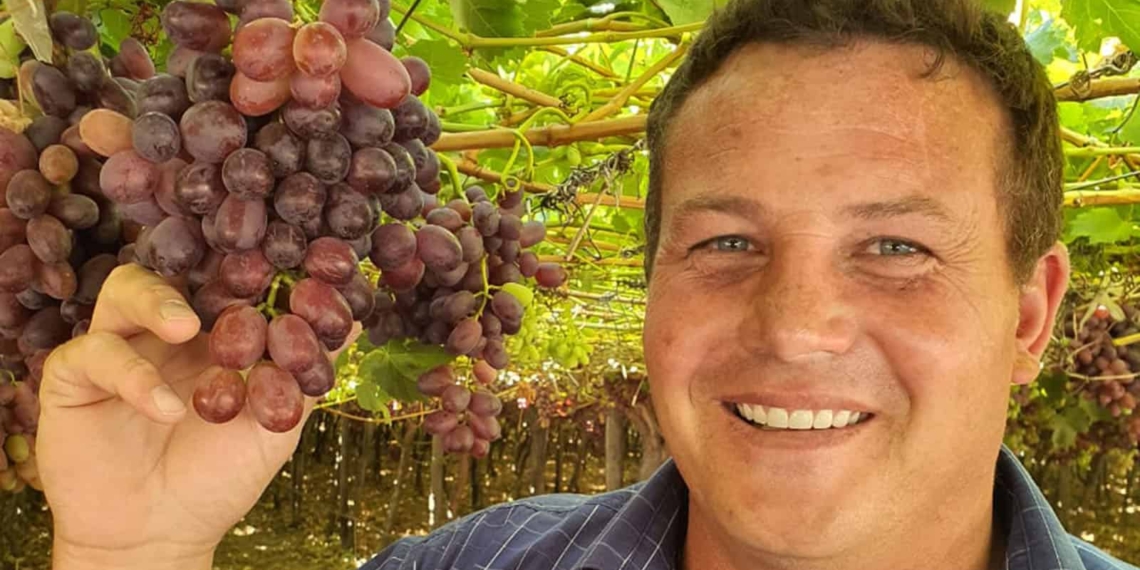
Now a commercial farmer, Michael Vorster (39), has also decided to speak up, saying that he hopes a compromise on the safe transportation of workers will be reached soon.
On his Hex River Valley farm, trucks used for getting workers to and from work were equipped with removable seats and a roll-bar canopy to make it safer.
Cost-effective solutions
This has proven to much more cost-effective than hiring buses or even minibus taxes, he says. “It’s a cost-effective way for us, but we are also trying to create a safe way for our workers.

“You have to look after the people that work for you. We decided that on trucks, it’s just (a) decent thing to cover them up, so they (the trucks) have cabs on, and we have steel benches that people (can) sit on in the (back of) trucks.”
Growing up on a farm in Graaf-Reinet in the Eastern Cape, Vorster says the dignity of farmworkers always came first.
“We have always been close to our workers,” he recalls his days in the Great Karoo.
His own farming journey, however, began in 2003. Vorster dropped out of university after his parents were involved in an accident.
“I started off because I had to. I had to up my studies and look after them.”
With more than 18 years’ experience in the agricultural sector, today Vorster is a proud shareholder in Cape Orchard Company, one of Mzansi’s largest table grape exporters. Besides this, he farms with three grape units in the Western Cape’s Hex River Valley.
“My wife calls herself a grape widow,” he laughs. “At this stage, I am farming for myself. I am a shareholder and manager of the units at the Cape Orchard Company.”
“WORKERS ARE NOT GOING TO BE ABLE TO STOP USING TRUCKS BECAUSE THEY WON’T BE ABLE TO GET TO WORK OTHERWISE.”
Vorster is adamant that human dignity should be prioritised above all else on a farm. “Farming experience, to me, is almost like life (itself). Everybody is working towards one goal. We are creating something out of the ground.”
‘Doing the right thing’
The table grape industry is labour intensive and employs many seasonal workers who need assistance to get to work. The transportation issue, Vorster explains, is however as old as the mountains.
“We work with about three workers per hectare, which is very intensive, and we source our workers locally,” he tells Food For Mzansi.

The Hex River Valley’s most famous town is De Doorns, which has become the centre of a thriving grape growing region with more than 200 table grape farms.
According to the Breede Valley Municipality, only 9% of people in its municipal borders actually live in De Doorns.
Vorster says, “One of our biggest challenges is transportation because there is quite a big number of workers in the region. We have 4 500 hectares and there are between 14 500 to 16 000 workers in a season,” he says.
Prior to the recent accidents, transport infrastructure and protocol has been nearly non-existent in rural and farming communities, he admits. He believes government should lay down the law, and work in unison with farmers to ensure the human dignity of farmworkers.

“You can imagine what the transport challenges are. Transport is one of the aspects where a lot of development is needed.
“Government understands the challenges of transport in the rural areas, and they are looking at safer ways of transporting workers, but (it should) also (be) manageable.
“People are not going to be able to stop (using) trucks because they are not going to be able to get to work (otherwise).”
When dealing with your employees on your farm, Vorster advises fellow farmers to find the most cost-effective way that can maintain the dignity of their workers. He has been actively involved in discussions with government to try and find solutions to this challenge.
“We asked government to give us regulations that they would like things to be built on, and what safety measures they would like to be implemented, like a safety belt or lap belt. Eventually it is about what is right. Government can give guidance about what is acceptable.”
ALSO READ: 80 farmworkers flung from back of truck

What does the law say?
- Truck drivers transporting farmworkers must ensure that the combined weight of their passengers does not exceed 50% of the total vehicle carrying capacity.
- The Covid-19 lockdown regulations, however, says no more than 50% of the licensed capacity of the vehicle or vessel must be exceeded. All directions in respect of hygienic conditions and social distancing must be adhered to.
- The number of farmworkers allowed on a vehicle is limited by the maximum weight the vehicle can carry as stipulated by the manufacturer of the vehicle. Remember that during the lockdown there is a 50% capacity restriction.
- The driver must be in possession of a valid driver’s licence suitable to the type of vehicle.
- The driver may not be under the influence of any intoxicating drug or substance which will affect their ability to drive. The driver must also be in possession of an operational permit allowing the transportation of people.
- The back of the vehicle, on which people are being transported, must be enclosed by proper sides to at least a height of 350mm above the surface on which they will be sitting.
- When transporting people under these circumstances, they are required to be seated on the floor. They may not stand or sit on the edges of the side structures.
- However, to enable people to stand on the vehicle, the sides must be covered to a minimum height of at least 900mm.