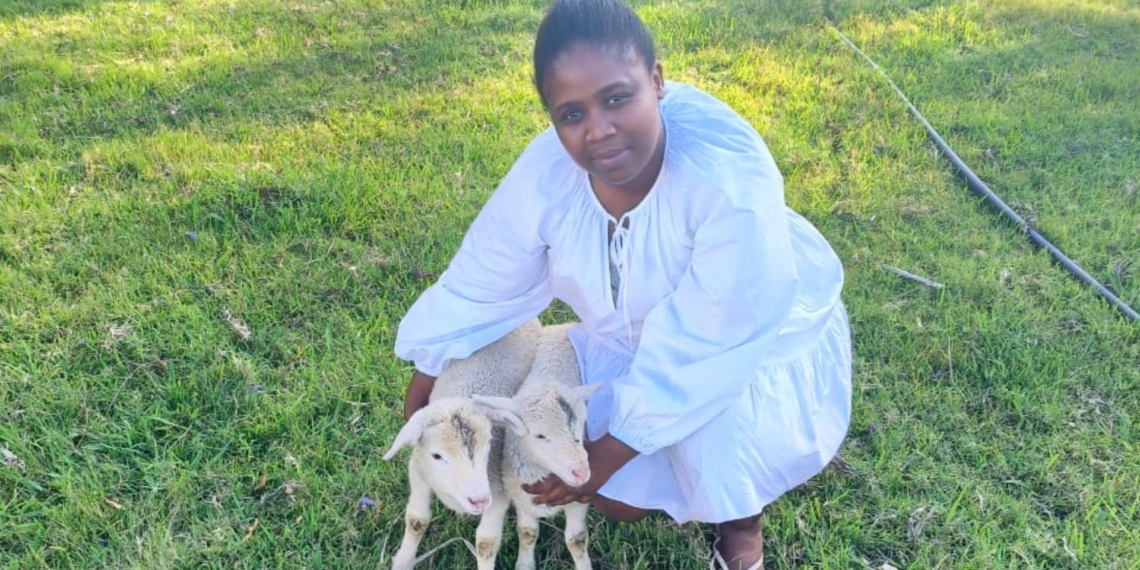
Qawekazi Fadana’s journey as a commercial farmer is a powerful story of resilience, ambition, and innovation in the face of numerous challenges. She believes self-development cannot be over-emphasised to grow in the farming business.
Fadana farms free-range poultry, cattle, sheep, and vegetables on 230 hectares in Haga Haga near East London.
She is following in the footsteps of her mother, Philiswa Fadana. They worked together for several years before she took over the reins.
Fadana entered the Small Business Academy (SBA) programme as an established business looking for growth strategies and working smarter.
Business training pays off
“Positive change started for me in just the first week when we had lectures on organisational culture. I had some people issues in my business and those sessions gave me the practical advice and confidence to restructure my entire business, and it is already paying off,” Fadana said.
She said her journey would benefit not only herself and the business but the community in which her farm operates.
“The farm runs a full value-chain operation in free-range poultry, with about 3 000 chickens at any one time supplying other farmers with day-old chicks, and supermarkets with eggs and fresh meat.
“We also breed Brahmin and Bonsmara cattle both for slaughter in the on-site abattoir and sale of weaners to breeders, as well as a thriving Merino sheep herd of about 300 for both wool and meat.”
Fadana said she intends to grow not only the size of the land but also the business and its wider impact to stimulate the local economy and community.
“The SBA programme is opening my eyes to smarter ways of doing things, to see what is missing, why business is not moving, how to rectify that, and also how to pursue my bigger picture,” she said.
Related stories
- Daybreak Foods says YES to youth empowerment in agriculture
- Agri-Edu Symposium to unlock agricultural colleges’ potential
- Small-scale farmers show the way to sustainable agriculture
Fedana noted that the challenges they encountered in the operations have made her even more resilient to conquer anything that comes their way.
“We have survived the setbacks of Covid-19, load shedding and avian flu, to the extent that our sheep operation can’t keep up with demand and we are applying for more land to avoid over-grazing as we currently have too many animals per hectare.”
Fadana said the programme is incredible for people who are in business but lack the educational background.
“It has been a masterclass on compliance and the documents one needs to have in hand to apply for government grants and the many business-funding opportunities out there,” she said.
Bridging the education gap
Meanwhile, the head of the programme Dr Armand Bam said they aimed to counter the high failure rate of small businesses in South Africa by equipping small business owners with the tools they need to defy the odds and succeed.
“Small businesses have been the backbone of our economy, both in the past and today. SMEs contribute over 60% of employment and nearly 34% of gross domestic product in South Africa. The ripple effect of their impact on families, communities and socio-economic development is immeasurable, but without solid business knowledge and support, too many of them fail.
“The SBA is designed to bridge the gap between education and economic empowerment, by providing formal business education, practical skills, and ongoing mentoring and development opportunities,” Bam said.
According to Bam, the programme aims to foster a mindset of adaptability and innovation in an ever-changing world.
“The programme also seeks to empower participants to use their businesses to contribute meaningfully to local socio-economic development and the broader economy as profitable, sustainable enterprises,” he said.
READ NEXT: ‘Agricultural colleges must take rightful place in higher education’
Sign up for Mzansi Today: Your daily take on the news and happenings from the agriculture value chain.