Research conducted by the department of water and sanitation has revealed that North West has experienced a continuous decline in its surface water storage which is sitting at 56.7%, while at the same time last year, it was sitting at 75.8%.
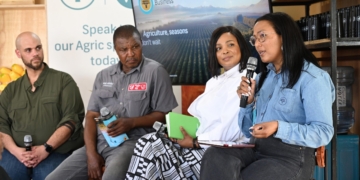
At the recent North-West University symposium on water and climate change held in Mahikeng, the department stated that the province has 28 dams. Fourteen of them are below the 50% mark and only one dam, the Elands Dam in Swartruggens River, is at a low level with 10%.
Professor Sylvester Mpandeli, senior manager at the Water Research Commission, said they have produced technology that will see the farming community reduce water consumption.
“However, by us saying the farming community must use less water we are cognisant that they must produce highly nutritious food and in some commodity groupings, we have seen that because of their interest in exporting to countries around the globe, they are forced to use less water.
“We have collaborated with them to say for a particular crop you need to use this type of water. That is important and we urge others to come on board for us to help each other,” he said.
Water governance crucial
Mpandeli noted that climate change also poses a significant challenge to the farming community and by extension, to food security.
He urged North-West University to take the lead as a knowledge partner to find solutions for the water challenges in the province.
“That is why we call on government to create a conducive environment for all stakeholders to find common ground. We are reaching out to the farming community because we know how critical the sector is for the economy and jobs being offered to communities,” he said.
Related stories
- SA to prioritise climate adaptation, urges global support at Cop29
- UFS and ARC launch new research chairs to tackle climate change
- Collaboration and fighting climate change are key to quality seed
Mpandeli urged partners to continue producing knowledge products that yield tangible results and partnerships that are key to fight challenges faced not only by North West but by the entire globe.
John Dini, the research manager responsible for governance at the Water Research Commission, said for the country to proactively deal with climate change and water scarcity, filling gaps in scarce skills for water governance research and development is key.
“There was a research that we commissioned in 2019 and it was basically looking at the state of water governance in South Africa. There were 511 papers being published on water governance and the disciplines that were dominating were natural science and engineering – little on governance itself, which was quite unusual actually,” he said.
Heatwaves fuel water scarcity
Water Institute of South Africa chief executive officer, Dr Lester Goldman, said they are ready to assist municipalities with getting the right skills to do the job to ensure water access for communities.
“It is important for municipalities to have the right people. We can help you (municipalities) to find those people because as the institute we want to make sure there are skills for our country,” he said.
Meanwhile, the research manager for climate change at the commission, Dr Brilliant Petja, said their research showed heatwaves are the new norm going forward.
“So we will be having regular heatwaves in the future, and we also know that global warming continues to increase and this has a negative impact on different sectors like agriculture.
According to the Water Research Commission, they have prioritised North West due to it being one of the water-scarce provinces in South Africa.
“The province is a semi-arid area with very few rivers running annually. The province experiences rapid climate change and relies heavily on underground water for both its domestic and industrial water requirements.
“Major industries that have environmental impacts on both surface and underground water are mining and agriculture. Mining is one of the key economic sectors of the economy of the province,” the commission stated.
READ NEXT: Mpumalanga champions climate-smart farming strategies
Sign up for Mzansi Today: Your daily take on the news and happenings from the agriculture value chain