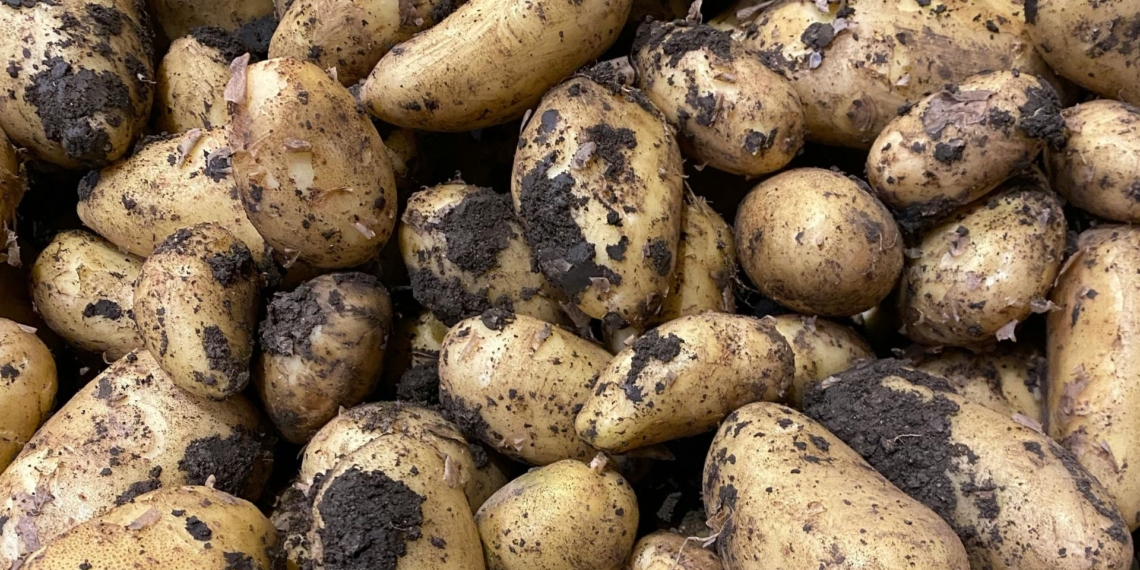
Falling potato and vegetable prices are offering relief to consumers, but for producers, the current market downturn is creating severe financial strain, particularly for those who have recently expanded operations.
In the Eastern Cape, commercial producer Thulani Magida says the present price environment threatens the survival of his growing enterprise.
“The current potato prices are extremely concerning for a business that has just scaled up from three hectares last season to 10 hectares this year. At these levels, this could break the business, and recovery may not be possible,” Magida said.
Magida’s production figures illustrate the pressure many growers are facing. With yields of approximately 4 000 bags per hectare and total production costs of about R120 000 per hectare, his break-even price sits at R30 per bag.
He is currently receiving an average of R34 per bag, leaving a margin of just R4 per bag, insufficient to cover overhead costs or generate a sustainable profit.
Soil type further complicates the situation. Producing on relatively heavy soils, Magida explained, means his potatoes lack the cosmetic appeal typically associated with premium-producing regions such as the Sandveld.
Related stories
- Relief for chips lovers as potato prices fall
- Legacy lives on: Mathidi finds purpose in potato farming
- Grandfather’s garden unlocks big dreams for FS potato farmer
- How to spot and manage cutworm infestations in potato fields
“We don’t always achieve that perfectly clean appearance. While our potatoes are still graded Class 1, they struggle to command a premium price. I’ve taken the decision to pause harvesting for a week to see if prices recover. But we are a small vegetable business; we must keep planting. Cash flow is critical. We are in an extremely tight position,” Magida said.
He noted that potato prices have largely remained below R50 per bag since October last year. Although there was a slight improvement in December, prices declined again in January. Without a meaningful recovery, the business faces the real risk of closure.
Market data confirms a downward trend
Recent market data support Magida’s concerns. According to a latest commodity report from Standard Bank, in week seven of 2026, potato prices declined by 7% week-on-week to R4 147 per tonne, driven by slower demand. Market volumes also decreased by 16% to 22 827 tonnes.
The report warns that prices are likely to remain under pressure in the coming weeks, as demand shows little sign of improvement, while supplies may increase. Lower-quality produce entering the market could further suppress prices.
“Tomatoes have experienced even sharper deflation. Prices fell 40% week-on-week to R5 820 per tonne, while volumes increased by 13% to 6 485 tonnes, a clear indication of supply outpacing demand. Bearish conditions are expected to persist if higher volumes continue,” the report stated.
The situation is not unique to South Africa. According to Potatoes South Africa, the global potato market is currently experiencing one of its most unsettled periods in recent memory.
“Despite good production seasons in several regions, oversupply has become the dominant theme. Declining prices, rising input costs, and increasing uncertainty are affecting producers across the United States, Europe and parts of Asia,” Francois Strauss, regional coordinator for the Western and Eastern Cape, said.
Potatoes SA noted that the imbalance between supply and demand has disrupted trade flows, complicated contract negotiations and strained profitability throughout the value chain, with ripple effects reaching South African growers.
Paul Makube, senior agricultural economist at FNB Commercial, said the combination of higher carryover stock from last year’s bumper harvest, the outlook for another decent crop due to the higher planted area and favourable rains, a stronger rand exchange rate, and the bulging global supply outlook was a good sign.
“Vegetable inflation remained in deflationary mode after falling by 3.2% year on year, reflecting the increased availability,” he said.
Consumers benefit, producers absorb the cost
Magida further explained that for consumers, lower vegetable prices provide short-term relief amid broader cost-of-living pressures. However, for farmers grappling with escalating input costs, including fertiliser, seed, electricity, fuel and labour, deflation erodes already thin margins.
“The reality is that we cannot control the market price. But our input costs continue to rise. That imbalance makes it incredibly difficult to build a resilient farming business,” Magida said.
READ NEXT: Strong biosecurity, vaccination urged as FMD threatens exports