Wednesday, July 22, 2026
SUBSCRIBE
22 GLOBAL MEDIA AWARDS
Food For Mzansi
  • News
  • Changemakers
  • Lifestyle
  • Farmer’s Inside Track
  • Food for Thought
No Result
View All Result
  • News
  • Changemakers
  • Lifestyle
  • Farmer’s Inside Track
  • Food for Thought
No Result
View All Result
Food For Mzansi
No Result
View All Result
in News

Strong biosecurity, vaccination urged as FMD threatens exports

Frans Dolamo of RMIS warns that a single FMD outbreak can undo years of hard work. From 28-day quarantine periods to strict visitor logs, simple daily habits are your farm's best defence

by Patricia Tembo
23rd February 2026
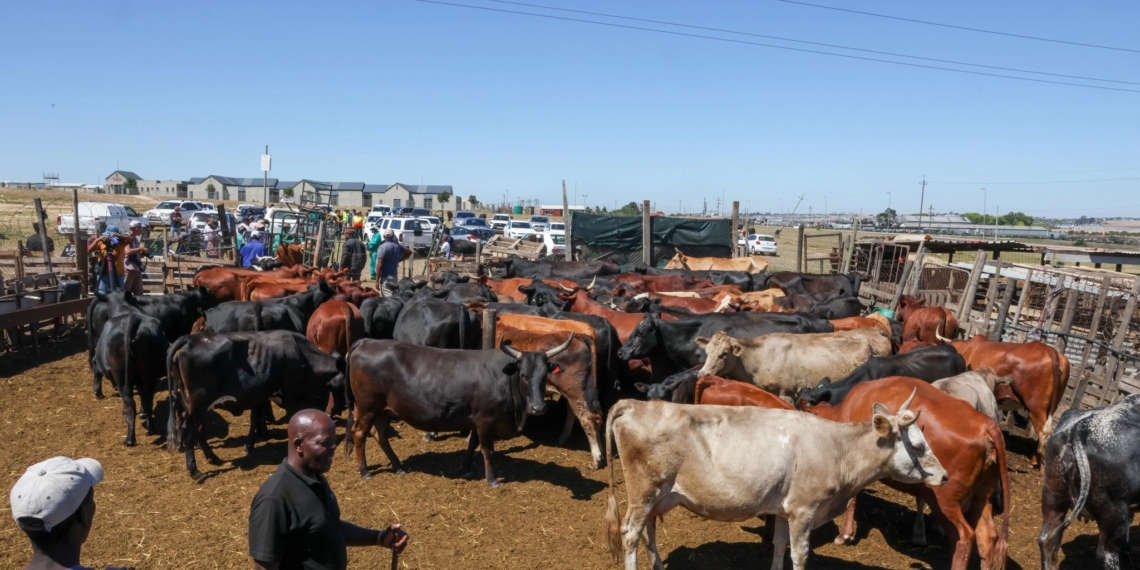
Farmers are urged to implement consistent biosecurity measures and participate in the national FMD vaccination programme to protect livestock, livelihoods, and South Africa’s red meat and wildlife industries. Photo: National Department of Agriculture

Farmers are urged to implement consistent biosecurity measures and participate in the national FMD vaccination programme to protect livestock, livelihoods, and South Africa’s red meat and wildlife industries. Photo: National Department of Agriculture

Share on FacebookShare on TwitterShare on WhatsApp

As the country battles against the foot-and-mouth disease outbreak and runs out of time to ensure exports are not banned, experts have called for long-term biosecurity measures to avoid a catastrophe.

Practical, consistent biosecurity measures remain the livestock industry’s strongest defence against costly disease outbreaks, according to Red Meat Industry Services (RMIS) livestock technical advisor, Frans Dolamo.

While the focus is on getting vaccines to farmers across the country as soon as possible, farmers cannot ignore adapting to realities and working towards sustainable farming practices free of diseases, Dolamo said during a recent RMIS webinar.

Battle of survival

He urged farmers to adopt simple, daily practices to protect their animals, income, and long-term viability. “We must align ourselves with the current disease situation in our country. Biosecurity is not optional. It is essential.”

Dolamo explained that biosecurity means protecting a farm from diseases that can enter and spread among animals. He emphasised that effective biosecurity is straightforward and involves consistently taking the right steps each day to prevent disease from entering the farm.

Disease outbreaks are costly, affecting veterinary fees, treatments, animal losses, and movement restrictions. “One outbreak can undo years of hard work,” he warned.


Related stories
  • Meat is safe to eat despite FMD outbreak, assure experts
  • Ramaphosa pledges 28m FMD vaccines, 10 000 extension officers
  • ARC rolls out first locally produced FMD vaccine amid industry tensions
  • Pork prices rise as disease outbreaks tighten supply

How diseases enter farms

Most diseases are introduced through routine farm activities rather than by chance. Dolamo explained that every time a new animal is brought onto a farm, whether from an auction or a neighbour, its health history comes with it, and healthy-looking animals may still carry infections. 

He highlighted that in communal grazing areas, when animals mix, diseases do not discriminate between farms, stressing the need for coordinated action among farmers. He also noted that livestock trucks, feed deliveries, shared equipment, and even mud on tyres can carry pathogens, making strict clothing changes and disinfection protocols essential.

Prevention, Dolamo emphasised, is far cheaper than a cure. “One sick animal can cost more than a year of good biosecurity.”

Dolamo recommended these practical measures for farmers:

  • Controlled access: Keep a visitor logbook, limit unnecessary visits, and manage entry through a single main gate.
  • Quarantine: Newly purchased animals should be isolated for 28 days, monitored daily, and kept away from the main herd.
  • Record-keeping: Track animal movements, treatments, vaccinations, and camp allocations to enable rapid trace-back during an outbreak.
  • Hygiene: Footbaths, disinfectants, and consistent PPE use are essential.

He noted that workers are the farm’s first line of detection, and training them to recognise early signs of disease while encouraging prompt reporting is essential for effective biosecurity.

National FMD response

In beefing up the FMD task team, minister of agriculture John Steenhuisen has appointed Dr Gary Bauer to represent the wildlife sector, ensuring the role of buffaloes, natural carriers of the FMD virus, is integrated into national disease control.

“The stakes are extremely high. If we do not get this right, the consequences for both livestock and wildlife will be long-lasting. But if we stay disciplined, science-driven and united, we can restore our status and protect the entire value chain.

“The wildlife sector must be fully integrated into our FMD recovery plan. Buffaloes are central to the epidemiology of this disease in Southern Africa. Any serious strategy to restore our status must account for that reality,” he said.

A dedicated FMD support line has been launched to provide farmers with advice on symptoms, movement controls, vaccination updates, and biosecurity protocols. Contact 0860 246 640, with a complementary WhatsApp channel for real-time updates.

READ NEXT: How to set up grazing camps and cut feed costs

Sign-up for the latest agricultural news delivered straight to your inbox every day with Mzansi Today!

Patricia Tembo

Patricia Tembo is motivated by her passion for sustainable agriculture. Registered with the South African Council for Natural Scientific Professions (SACNASP), she uses her academic background in agriculture to provide credibility and technical depth to her journalism. When not in immersed in the world of agriculture, she is engaged in outdoor activities and her creative pursuits.

Tags: Animal BiosecurityCommercialising farmerFMDFoot-and-mouth diseaseRed Meat Industry Services (RMIS)
The Forest of Renewal at Rustlers Valley celebrates the intertwined legacies of Frik Grobbelaar, Anton Chaka and Riky Rick, inviting South Africans to restore the land while cultivating hope, belonging and community. Illustration: ChatGPT
Food for Thought

Rustlers Valley offers a blueprint for South Africa’s renewal

by Ivor Price
18th July 2026

As the Rustlers Valley Memorial Forest is launched in the eastern Free State this weekend, Ivor Price reflects on why...

Read moreDetails
Grain SA appoints Mabuza to lead farmer development

Rising stars: 2026 PGP finalists redefining SA grain farming

18th July 2026
Rooibos heads to space in groundbreaking Mzansi experiment

Rooibos heads to space in groundbreaking Mzansi experiment

18th July 2026

Seriti Institute CEO wins prestigious Best Woman 2026 CSI award

17th July 2026
Farmers and brewers call for budget that builds, not breaks

Minister details Land Bank’s success in boosting black farmers

17th July 2026

Seriti Institute CEO wins prestigious Best Woman 2026 CSI award

Weekly stock theft reports pile pressure on farmers

SA poultry industry calls for urgent bird flu vaccine rollout

Dune spinach: A climate-hardy green transforming coastal farming

Unused KZN school transformed into a thriving 16-hectare farm

Join Food For Mzansi's WhatsApp channel for the latest updates!

JOIN NOW!
Next Post
‘Happy mistake’ leads Gugulethu on a spirited sugarcane journey

‘Happy mistake’ leads Gugulethu on a spirited sugarcane journey

THE NEW FACE OF SOUTH AFRICAN AGRICULTURE

With 21 global awards in the first six years of its existence, Food For Mzansi is much more than an agriculture publication. It is a movement, unashamedly saluting the unsung heroes of South African agriculture. We believe in the power of agriculture to promote nation building and social cohesion by telling stories that are often overlooked by broader society.

Smart vineyard irrigation starts below the ground

Treat food processing as essential national infrastructure – Khoury

Farmers urged to embrace uncertainty and build resilience

SA poultry industry calls for urgent bird flu vaccine rollout

Mother’s legacy, neighbour’s grace: Venessa Simelane’s farm story

Deadline looms: Register water use by 23 July or risk penalties

  • Awards & Global Impact
  • Our Story
  • Contact Us
  • Cookie Policy
  • Privacy Policy
  • Copyright

Contact us
Office: +27 21 879 1824
News: info@foodformzansi.co.za
Advertising: sales@foodformzansi.co.za

Contact us
Office: +27 21 879 1824
News: info@foodformzansi.co.za
Advertising: sales@foodformzansi.co.za

  • Awards & Global Impact
  • Our Story
  • Contact Us
  • Cookie Policy
  • Privacy Policy
  • Copyright

Chat Options

I'm Lerato, your AI assistant!
No Result
View All Result
  • News
  • Changemakers
  • Lifestyle
  • Farmer’s Inside Track
  • Food for Thought

Copyright © 2024 Food for Mzansi

This website uses cookies. By continuing to use this website you are giving consent to cookies being used. Visit our Privacy and Cookie Policy.