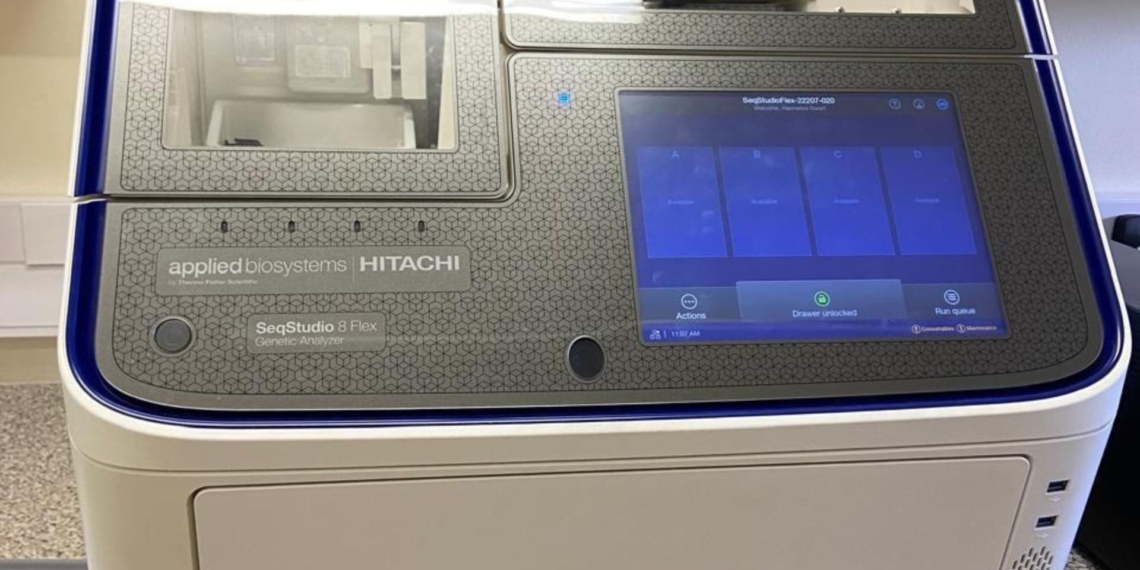
In a laboratory inside the Agricultural Research Council’s (ARC) Animal Production Campus in Irene, a powerful instrument is quietly shaping the future of South Africa’s livestock industry.
The SeqStudio Flex Genetic Analyzer, a recently upgraded system for DNA profiling using fragment analysis or Sanger sequencing, is not only solving cases of stock theft but also driving groundbreaking research, training young scientists, and supporting the country’s food security goals.
At first glance, it may look like just another lab instrument, but its impact stretches far beyond the ARC’s walls. This instrument embodies the value of public investment in science that benefits the whole nation.
Precision that protects livestock and farmers
According to Dr Pranisha Soma, a researcher in the animal breeding and genetics unit and custodian of the asset, the analyser is used for DNA profiling in livestock species. The unit works closely with livestock breed societies to ensure accurate pedigree recording and genetic improvement.
But it’s not just about breeding excellence. The same technology plays a crucial role in forensic investigations for stock theft, helping law enforcement link animals to owners through genetic evidence. The results often serve as technical evidence in cases involving alleged suspects. This is important, given the growing challenge of stock theft in the country, which results in substantial economic losses for farmers.
Farmers benefit from the security and transparency the system provides. It’s a small but vital step toward restoring trust and stability in the livestock value chain.
Empowering the next generation of scientists
Beyond its research and forensic value, the SeqStudio Flex is also a training platform for technicians and postgraduate students. Currently, two technicians and postgraduate students work closely with the asset. In addition, one MSc student graduated cum laude through the work linked to the recently upgraded analyser.
The analyser’s user-friendly software and digital database also make it a vital learning tool. Students gain hands-on experience in DNA sequencing, bioinformatics, and laboratory data management skills that are in high demand in the biotechnology and animal genetics sectors.
Related stories
- Seed technology: How innovation drives higher yields & success
- Young Limpopo scientist unlocks peperboom’s healing power
- Expert urges farmers to leverage ‘good debt’ for growth
- Harvesting love: How farming couples balance business & romance
Eco-friendly innovation with broad benefits
What sets this instrument apart is not just its analytical precision but also its sustainability. The new version is more eco-friendly and greener than the previous one that had been used in the unit for about 17 years. In an era where sustainability is becoming a central part of agricultural innovation, this upgrade represents a meaningful alignment with South Africa’s climate-smart development goals.
The analyser also supports collaborative research within the ARC and beyond. Colleagues across different research divisions can access its functionality and data for cross-disciplinary studies, while requests from other African countries for training and collaboration continue to grow. Unfortunately, limited funding for logistics has so far restricted this regional exchange, but the demand exists.
A national investment is paying off
Acquired for R1.6 million, the SeqStudio Flex Genetic Analyzer is a strong example of how government-funded science assets deliver long-term value. Although it’s still on a two-year service plan with an annual maintenance cost of about R120 000, Soma notes that operations are largely covered by income generated from DNA profiling services, mainly from breed societies and industry clients. In other words, it’s not just a cost centre, it’s a self-sustaining public asset that supports innovation while reducing the financial burden.
Looking ahead: Awareness and access
One of the main challenges, however, remains awareness. The custodians of the analyser mentioned that it is open for use even outside the ARC, but many potential users don’t know about it yet. Efforts are underway to market the asset internally and eventually expand access to universities, private researchers, and regional partners.
If awareness grows, this asset could serve as a regional hub for genetic analysis and training, opening doors for collaboration, technology transfer, and local capacity building across Southern Africa.
Why this asset matters
The story of the SeqStudio Flex Genetic Analyzer goes beyond laboratory science; it reflects the broader vision that publicly funded resources fuel knowledge, drive innovation, and deliver social and economic benefits to all. From improving livestock breeding and protecting farmers to training future scientists, this asset is proof that investment in science pays dividends far beyond its price tag. It’s a reminder that science serves the public.
- Whitney Matli, Manana Mamabolo, and Pranisha Soma are from the economic analysis unit, and animal breeding and genetics at the Agricultural Research Council (ARC).
READ NEXT: SA agricultural exports surge but face logistical strain