Wednesday, October 21, 2026
SUBSCRIBE
22 GLOBAL MEDIA AWARDS
Food For Mzansi
  • News
  • Changemakers
  • Lifestyle
  • Farmer’s Inside Track
  • Food for Thought
No Result
View All Result
  • News
  • Changemakers
  • Lifestyle
  • Farmer’s Inside Track
  • Food for Thought
No Result
View All Result
Food For Mzansi
No Result
View All Result
in News

Clanwilliam Dam delays frustrate farming communities

Years of delays and spiraling costs plague the Clanwilliam Dam project, leaving communities frustrated. Promised local job opportunities remain unfulfilled, and the dam is now set for completion in 2028

by Liezl Human
23rd January 2025
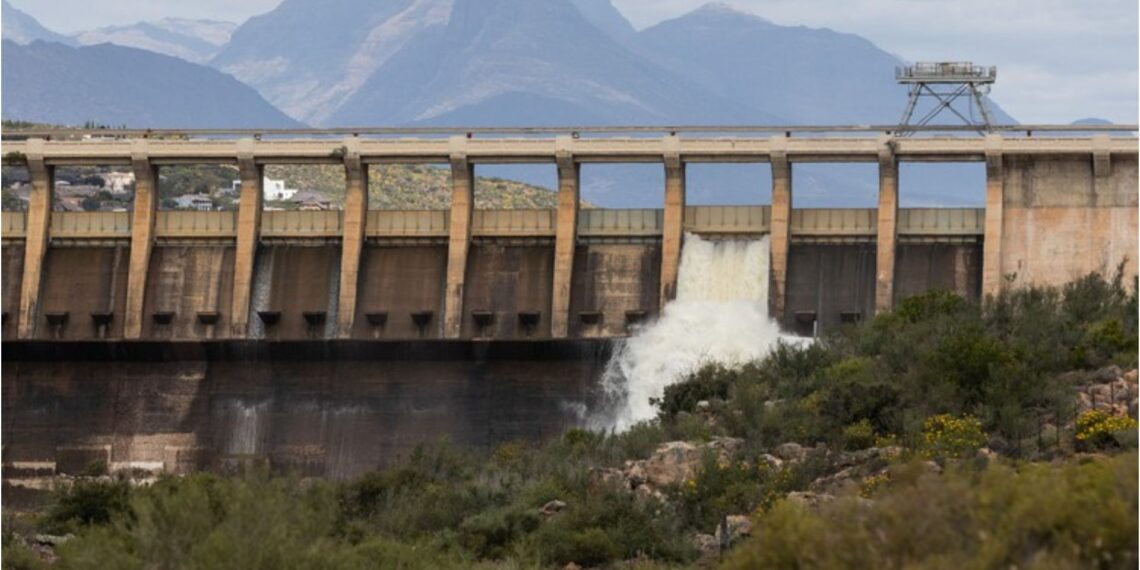
The minister of water and sanitation, Pemmy Majodina, says she is satisfied with the progress of Clanwilliam Dam upgrade. Photo: Ashraf Hendricks/GroundUp

The minister of water and sanitation, Pemmy Majodina, says she is satisfied with the progress of Clanwilliam Dam upgrade. Photo: Ashraf Hendricks/GroundUp

Share on FacebookShare on TwitterShare on WhatsApp

A mega construction project to raise the Clanwilliam Dam walls by 13 metres has been delayed for years due to various challenges, including procurement and funding issues. It was originally scheduled to finish in 2018, but the current delivery date is May 2028. The cost of building the dam has risen from an initial R2.2 billion to R5.6 billion.

The Clanwilliam Dam, located on the Olifants River, was originally built in 1935 and the dam wall was last raised in the 1960s.

The initial feasibility study to raise the Clanwilliam Dam wall was finalised in 2008. 

The feasibility report by the former department of water affairs and forestry noted that there is a need for a better supply of water for agriculture in the area and also “pressure to allocate additional water to resource-poor farmers in this area”. The report also noted that at the time there were dam spills almost every year.

Currently, the dam is the responsibility of the department of water and sanitation (DWS). DWS spokesperson Wisane Mavasa said that the current progress of the project is at 19%. The project only commenced in 2018. There were further delays and work stopped after a few years, only restarting in 2023.

Feasibility studies from 2007 also showed that the dam wall did not comply with safety standards, that it leaked when at full capacity, that it had cavities in its foundation, and that remedial work had to be done to strengthen the dam wall.


Related stories

  • Clanwilliam Dam extension set to create 70k agri jobs
  • WC rainfall shatters records, leaves behind destruction

The condition of the Clanwilliam Dam was rated F by the Dam Safety Office in September 2022. This means the dam is unsafe. Mavasa said that emergency work on the dam is now 32% complete. This, she says, will likely improve the rating.

What has caused all the delays?

In 2018, responding to a parliamentary question, the DWS said that the tender bid for appointing a construction contractor, which was issued in 2016, was not awarded “due to unavailability of funds for the construction phase of the project”.

Construction then started in 2018 after a long delay.

But following this, construction halted at about 12% completion for a few more years due to “procurement challenges”, according to Western Cape minister of agriculture Ivan Meyer in a provincial parliamentary response from 2021.

Meyer said that the Covid pandemic further delayed the DWS from continuing with the dam project.

Finally, during an oversight visit in 2023, former DWS minister Senzo Mchunu committed to resuscitating the multi-billion rand project, adding that at completion it would more than double its current capacity to 343 million cubic metres. The project started again in 2023.

In a statement, Peter Plaaitjies spokesperson for the Services to Our People’s Party (STOPP), raised concerns about the rising costs and shifting completion dates of the dam project.

Local communities’ concerns

“This project, meant to secure water for communities, sustain agriculture, and create jobs, has instead been marred by incompetence, waste and a blatant disregard for accountability,” he said.

Initially, the cost of the project was R2.2 billion and it was set to be completed in 2018. But the cost rose to R4 billion after several years of delays. It was then meant to be completed in 2023. Now, it is currently estimated to cost R5.6 billion, and according to DWS spokesperson Mavasa, to be completed in May 2028.

Francois Swartbooi, a local businessman and subcontractor on the project, raised concerns that not enough people from the Cederberg and Matzikamma area were contracted to work on the construction of the dam. “It’s one of the biggest projects in the Western Cape, and our people can’t even get access to it. That is our concern as the local community,” said Swartbooi.

But Mavasa said that local people are to be contracted for goods and services, and to date, more than 30 suppliers have been contracted on the project and “more will be contracted as the project progresses”.

This story was first published on GroundUp.

READ NEXT: Minimum wage hike: Striking a balance for farmers and workers

Sign up for Mzansi Today: Your daily take on the news and happenings from the agriculture value chain.

Liezl Human

Tags: ClanwilliamCommercialising farmerDepartment of water and sanitationInform meWestern Cape
News

Stop the rot: Four steps to slash post-harvest losses

by Abeeb Omotoso Abiodun Omotayo Adeyemi Aremu and Olaniyi Fawole
18th October 2026

Did you know nearly a third of all food produced globally never makes it to the table? Poor roads, lack...

Read moreDetails
A standing ovation for agriculture’s incredible talent! The Agri’s Got Talent 2026 top three celebrate their achievements: winner Honey Katoo of Endulini Fruit in Patensie, alongside runner-up Clareece Vlotman of Wolfpack in Wolseley and finalist Lwandile Nantsi of Laastedrift in Ceres. Photo: Supplied/Food For Mzansi

Patensie claims Agri’s Got Talent crown for second year running

17th October 2026
The panellists at FNB Business’s “Farming together” discussion at the Royal Show explored how market access, mentorship, financial discipline and strong commercial relationships can help farmers build sustainable businesses. Featured from the left are Bertram July (FNB’s distribution sales lead), commercial farmer Shakes Shabalala; Sandy Gumede (co-founder of Zulu Girl Wines), and Janis Robson (FNB’s head of development and SME business development). Photo: Food For Mzansi

FNB puts relationships at the heart of commercial farming

17th October 2026
Agri Skills Transfer students gain hands-on experience at the institution’s Cullinan Farm Training Centre, where agricultural theory meets the realities of commercial production. Photo: Supplied/Food For Mzansi

Build your future in agriculture with Agri Skills Transfer

17th October 2026
Durbanville Hills tastes sweet success at Michelangelo Awards

Promising early conditions predicted for 2027 SA wine harvest

17th October 2026

Ramaphosa: Title deeds and blended finance key to farming growth

Reality check: What SA agri interns really experience on the farm

Promising early conditions predicted for 2027 SA wine harvest

Agda conference puts inclusive agricultural growth in focus

Stop the rot: Four steps to slash post-harvest losses

Join Food For Mzansi's WhatsApp channel for the latest updates!

JOIN NOW!
Next Post
ChickenFacts calls for new Poultry Master Plan amid trade turmoil

Poultry slaughterhouses urged to adopt sustainable water practices

THE NEW FACE OF SOUTH AFRICAN AGRICULTURE

With 21 global awards in the first six years of its existence, Food For Mzansi is much more than an agriculture publication. It is a movement, unashamedly saluting the unsung heroes of South African agriculture. We believe in the power of agriculture to promote nation building and social cohesion by telling stories that are often overlooked by broader society.

Potatoes and tomatoes plunge while avocado prices soar

Becoming bankable: How to get your farm ready for finance

Fixing SA’s agricultural visa system to protect seasonal harvests

SA and Namibia reevaluate livestock trade after FMD outbreak

Agda conference to tackle finance, market access and agri growth

Reluctant farmer scales EC cabbage enterprise to supply Spar

  • Awards & Global Impact
  • Our Story
  • Contact Us
  • Cookie Policy
  • Privacy Policy
  • Copyright

Contact us
Office: +27 21 879 1824
News: info@foodformzansi.co.za
Advertising: sales@foodformzansi.co.za

Contact us
Office: +27 21 879 1824
News: info@foodformzansi.co.za
Advertising: sales@foodformzansi.co.za

  • Awards & Global Impact
  • Our Story
  • Contact Us
  • Cookie Policy
  • Privacy Policy
  • Copyright

Chat Options

About this assistant

This feature generates automated answers summarised from Food For Mzansi articles. By using it, you are interacting with an AI system (provided by Google), not a human. AI can make mistakes. Please refer to the source articles for verification and citation purposes.

Our staff do not check or moderate Lerato’s answers in advance, but may review some later. Our journalists continue to write and edit all the articles Lerato uses as sources.

To estimate unique and returning web users, we store a random browser ID in this browser. WhatsApp users are counted by phone number. The same person using both channels may be counted twice.

I'm Lerato, your AI assistant!
No Result
View All Result
  • News
  • Changemakers
  • Lifestyle
  • Farmer’s Inside Track
  • Food for Thought

Copyright © 2026 Food for Mzansi