Tuesday, July 21, 2026
SUBSCRIBE
22 GLOBAL MEDIA AWARDS
Food For Mzansi
  • News
  • Changemakers
  • Lifestyle
  • Farmer’s Inside Track
  • Food for Thought
No Result
View All Result
  • News
  • Changemakers
  • Lifestyle
  • Farmer’s Inside Track
  • Food for Thought
No Result
View All Result
Food For Mzansi
No Result
View All Result
in News

Poultry slaughterhouses urged to adopt sustainable water practices

Poultry slaughterhouses face scrutiny over their high water usage, averaging 25 litres per bird. This significant consumption contributes to water scarcity and environmental pollution. Experts urge the industry to adopt sustainable practices to minimise their environmental impact

by Patricia Tembo
23rd January 2025
ChickenFacts calls for new Poultry Master Plan amid trade turmoil

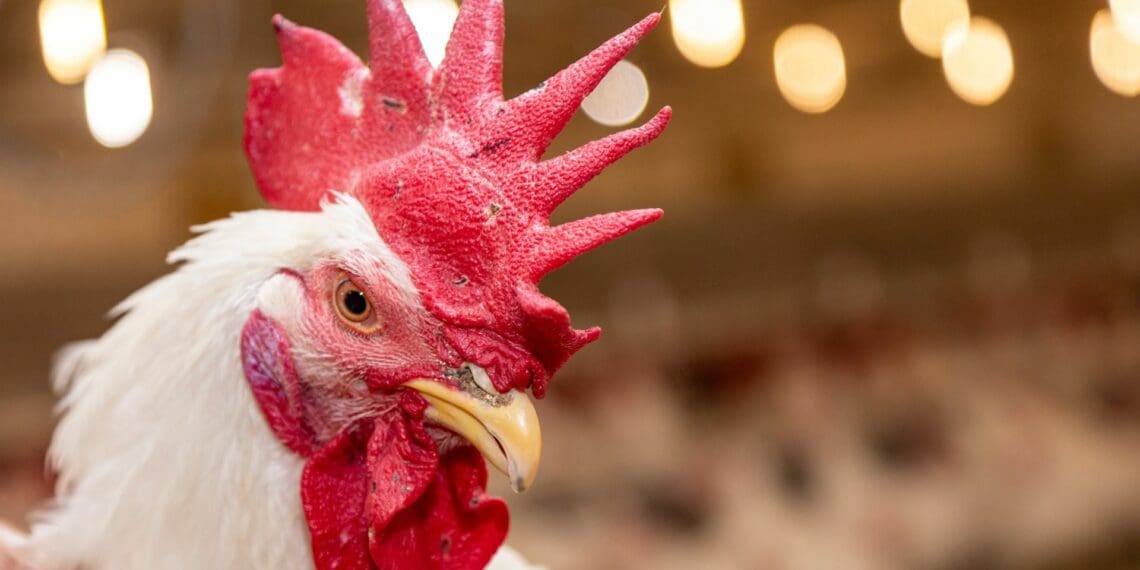
Industry experts urge abattoirs to manage wastewater sustainably. Photo:Supplied/Food For Mzansi.

Share on FacebookShare on TwitterShare on WhatsApp

Water usage in abattoirs, especially poultry slaughterhouses, is a critical concern due to the large quantities required daily for processing. From cleaning and cooling to scalding and evisceration, water is essential to maintain hygiene and food safety standards. However, this significant demand places immense pressure on South Africa’s water resources, particularly in regions facing water scarcity.

The industry is under increasing scrutiny to adopt more sustainable water management practices.

Professor Moses Basitere, a wastewater engineer and associate professor at the University of Cape Town (UCT), noted that the high demand for potable water in poultry slaughterhouses, which averages 25 litres per bird, contributes significantly to freshwater scarcity.

“The primary concern associated with the average use of 25 litres of water per bird is the high potable water demand and its environmental impact. In addition, wastewater generated by these operations is often highly contaminated with organic matter, fats, oils, and grease (FOG), and if discharged improperly, it can harm aquatic ecosystems by depleting oxygen levels in water bodies,” he said. 

Managing wastewater

While large volumes of potable water are necessary to maintain hygiene and food safety, Basitere emphasised the importance of managing wastewater responsibly. He suggested that industries such as poultry processing must find ways to recycle treated wastewater for non-potable purposes like cleaning and irrigation.

“This wastewater must meet stringent discharge standards to prevent pollution of water resources,” he said. 

Jeremiah Jothams, abattoir manager at Basadi Business in Johannesburg, Gauteng, highlighted the importance of addressing water challenges in abattoir operations for the sake of environmental sustainability.

“The process of recycling water is crucial as an abattoir uses thousands of litres daily. Depending on the water source, [whether] municipal or borehole, there’s a huge need to utilise the greywater for environmental sustainability. Either the abattoir recycles the water and reuses it, or they can use the greywater to irrigate crops,” said Jothams. 


Related stories
  • Proactive action needed as North West water levels drop
  • Ethical slaughtering of livestock crucial for animal welfare

Maintaining hygiene standards

According to Jothams, the volume of water used in poultry processing varies, with smaller abattoirs processing fewer than 2 000 birds daily consuming around 50 000 litres of water. This figure increases exponentially, further amplifying the environmental impact. Despite this, Jothams stresses that sustainable water usage is not optional, but a mandatory component of waste management programmes.

“Environmental sustainability requires that the abattoir does something about the thousands of litres of greywater. It’s mandatory to provide a clear sustainable solution in their waste management programme,” he said.

The necessity of maintaining hygiene standards during poultry processing, however, complicates the issue. Kamogelo Thobejane, poultry farmer and processor from Serishane, Limpopo, explained that water used in his operations could not be recycled due to hygiene concerns.

“No, it is not recycled for hygiene purposes. The water will be mixed with feathers, faeces, and blood. So clean water is needed throughout the process. For these operations, water is indispensable for cleaning and sanitising poultry, ensuring the safety and quality of the product,” he said.

However, not all abattoirs are fortunate enough to have easy access to clean water, with some facing significant water scarcity challenges. Thobejane’s facility benefits from a borehole, alleviating some of these concerns.

READ NEXT: Mpumalanga champions climate-smart farming strategies

Sign up for Mzansi Today: Your daily take on the news and happenings from the agriculture value chain.
Patricia Tembo

Patricia Tembo is motivated by her passion for sustainable agriculture. Registered with the South African Council for Natural Scientific Professions (SACNASP), she uses her academic background in agriculture to provide credibility and technical depth to her journalism. When not in immersed in the world of agriculture, she is engaged in outdoor activities and her creative pursuits.

Tags: Commercialising farmerenvironmentInform meWater management
The Forest of Renewal at Rustlers Valley celebrates the intertwined legacies of Frik Grobbelaar, Anton Chaka and Riky Rick, inviting South Africans to restore the land while cultivating hope, belonging and community. Illustration: ChatGPT
Food for Thought

Rustlers Valley offers a blueprint for South Africa’s renewal

by Ivor Price
18th July 2026

As the Rustlers Valley Memorial Forest is launched in the eastern Free State this weekend, Ivor Price reflects on why...

Read moreDetails
Grain SA appoints Mabuza to lead farmer development

Rising stars: 2026 PGP finalists redefining SA grain farming

18th July 2026
Rooibos heads to space in groundbreaking Mzansi experiment

Rooibos heads to space in groundbreaking Mzansi experiment

18th July 2026

Seriti Institute CEO wins prestigious Best Woman 2026 CSI award

17th July 2026
Farmers and brewers call for budget that builds, not breaks

Minister details Land Bank’s success in boosting black farmers

17th July 2026

Drought and heatwaves force SA maize farmers to adapt or switch

Treat food processing as essential national infrastructure – Khoury

Farmers urged to embrace uncertainty and build resilience

Deadline looms: Register water use by 23 July or risk penalties

Smart vineyard irrigation starts below the ground

Join Food For Mzansi's WhatsApp channel for the latest updates!

JOIN NOW!
Next Post
Sisters turn struggles into well-oiled natural haircare brand

Sisters turn struggles into well-oiled natural haircare brand

THE NEW FACE OF SOUTH AFRICAN AGRICULTURE

With 21 global awards in the first six years of its existence, Food For Mzansi is much more than an agriculture publication. It is a movement, unashamedly saluting the unsung heroes of South African agriculture. We believe in the power of agriculture to promote nation building and social cohesion by telling stories that are often overlooked by broader society.

Smart vineyard irrigation starts below the ground

Treat food processing as essential national infrastructure – Khoury

Farmers urged to embrace uncertainty and build resilience

SA poultry industry calls for urgent bird flu vaccine rollout

Mother’s legacy, neighbour’s grace: Venessa Simelane’s farm story

Deadline looms: Register water use by 23 July or risk penalties

  • Awards & Global Impact
  • Our Story
  • Contact Us
  • Cookie Policy
  • Privacy Policy
  • Copyright

Contact us
Office: +27 21 879 1824
News: info@foodformzansi.co.za
Advertising: sales@foodformzansi.co.za

Contact us
Office: +27 21 879 1824
News: info@foodformzansi.co.za
Advertising: sales@foodformzansi.co.za

  • Awards & Global Impact
  • Our Story
  • Contact Us
  • Cookie Policy
  • Privacy Policy
  • Copyright

Chat Options

I'm Lerato, your AI assistant!
No Result
View All Result
  • News
  • Changemakers
  • Lifestyle
  • Farmer’s Inside Track
  • Food for Thought

Copyright © 2024 Food for Mzansi

This website uses cookies. By continuing to use this website you are giving consent to cookies being used. Visit our Privacy and Cookie Policy.