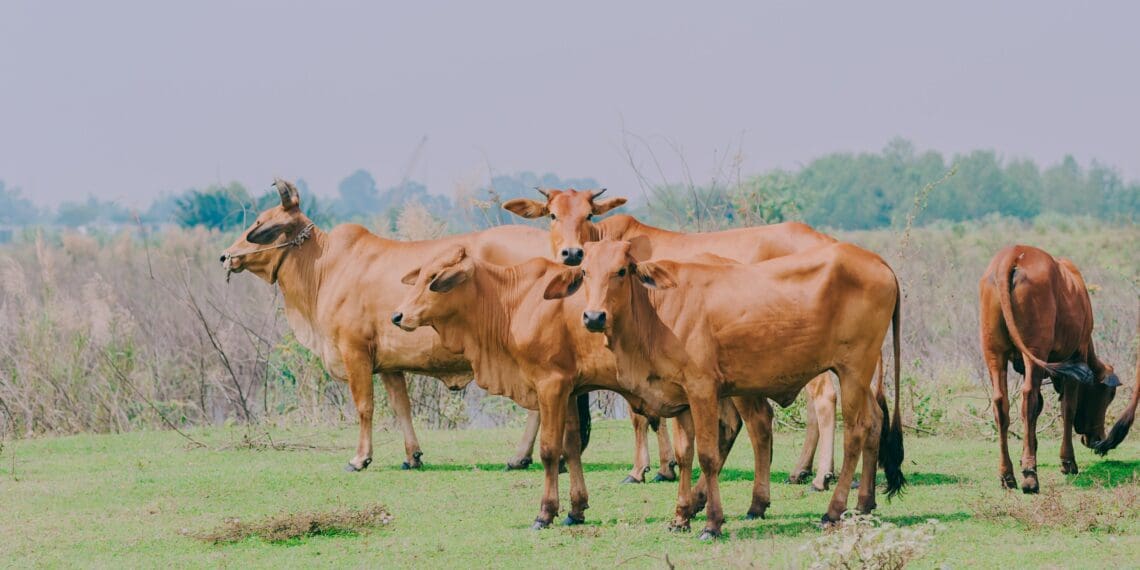
Extreme heat harms cattle in many different ways, especially when combined with high humidity. It reduces fertility, impairs the growth of calves, and can result in increased deaths. In dairy cows, it also reduces milk production. This impacts the viability of livestock farming, reducing animal welfare and farm income.
More than 1 billion cows around the world will experience heat stress by the end of the century if carbon emissions are high and environmental protection is low, according to new research published in IOP Publishing’s journal Environmental Research Letters.
This would mean cattle farming would face potentially lethal heat stress in much of the world, including Central America, tropical South America, Equatorial Africa, and South and Southeast Asia. The research also found that rapidly reducing greenhouse gas emissions, as well as keeping cattle production close to current levels, would reduce these impacts by at least 50% in Asia, 63% in South America, and 84% in Africa.
READ NEXT: El Niño: 2023 version brings a mix of concern and curiosity
How heat harms cattle
To study current and future impacts of heat stress on cattle, researchers from the Universities of Cape Town, KwaZulu-Natal and Chicago analysed today’s heat and humidity conditions around the world and estimated how they will impact cattle in future decades, depending on different levels of emissions and forms of land use.
Dr Michelle North, veterinarian and researcher at the University of KwaZulu-Natal, said cattle farming will become less and less viable in many parts of the world.
“Our study clearly shows that cattle are increasingly exposed to temperatures that impact their welfare, reducing growth and production and potentially leading to increasing deaths, in many parts of the world that are currently seen as prime cattle-farming territory.
“It is also important to remember that we are only looking at heat stress here, and do not consider changes to water availability,” North explains.
The researchers project that if future carbon emissions are very high, nine in ten cows around the world will experience 30 or more days of heat stress per year, and more than three in ten will experience it all year round by the end of the century.
While the most affected countries will be in tropical regions, many other parts of the world will also face multiple months of heat stress conditions every year, including parts of Europe and North America. Some areas of Japan, Australia and Mexico, among others, will experience 180 heat stress days or more per year.
ALSO READ: Transport tips: Look after your livestock when the wheels turn
Farmers will have to adapt
Rising temperatures and humidity will force farmers to adapt to these new conditions, for example, by providing ventilation or even air conditioning for the animals or switching to heat-adapted cattle breeds.
But these measures will become increasingly expensive with future warming and will not be possible in all places – meaning cattle farming could no longer be viable in places where it is currently a major occupation, for example in India, Brazil, Paraguay, Uruguay and north-eastern Argentina, and across the Sahelian and east African countries.
Cutting carbon emissions rapidly and maintaining livestock production within current levels would greatly reduce the number of cattle exposed to heat stress, particularly in some of the most affected regions, including Asia, South America and Africa. Reducing emissions will also protect cattle in temperate regions from experiencing heat stress for more than half the year.
Living with today’s decisions in the future
The researchers stress that today’s decisions will be critical for the coming decades. For example, cutting down tropical forests to farm livestock in places like the Amazon and central Africa will not only increase the number of cattle in areas that are already experiencing the most heat stress but will also worsen climate change, making cattle ranching extremely difficult in these regions and elsewhere.
Reducing the amount of beef in diets, and eating more plant-based products, would reduce consumer demand for cattle products. This would put fewer animals at risk from heat stress, while also providing opportunities for forest protection and the restoration of degraded lands that could help limit temperature rise.
“There are simple solutions that can both reduce the amount of heat stress cattle are subjected to, as well as reducing greenhouse gas emissions, and therefore reducing climate change overall,” says North.
“Existing farmers can start to prioritise strategies for reducing the amount of heat stress their cattle experience, choosing from a wide range of solutions that vary in how long they take to implement, how much they cost, and their effectiveness (in other words, how much heat they can help cattle cope with). They might also consider whether a different breed of cattle or different livestock species might be better adapted to their local conditions.
“At the same time, farmers and governments need to carefully consider whether it makes sense to expand cattle production in regions that are projected to become too hot for cattle. Consumers can help by choosing not to support increasing investment in cattle farming, through their purchasing decisions (for example through choosing sustainable diets, reducing meat consumption and supporting local producers), and through their voting decisions,” she explains.
‘We need to act now’
Dr Christopher Trisos, ecologist and climate change researcher at the University of Cape Town, says, “We’ve seen the deadly impacts for humans of climate change intensifying heatwaves, but the animals that feed us are also at severe risk from heat. We need to act now to limit the risk.”
“Expanding cattle production by cutting down or burning tropical forests is unsustainable, it worsens climate change and will undermine the welfare of hundreds of millions more cattle that will be exposed to severe, year-round heat stress.”
He added that it will be critical to adapt livestock farming systems to reduce the impacts of heat stress.
“Reducing the amount of cattle products in diets can help limit future expansion of cattle farming, creating opportunities to protect and restore forests that can help limit future global warming.”
ALSO READ: Farmer 101: Top tips to keep livestock thriving
Sign up for Mzansi Today: Your daily take on the news and happenings from the agriculture value chain.