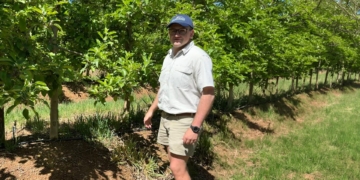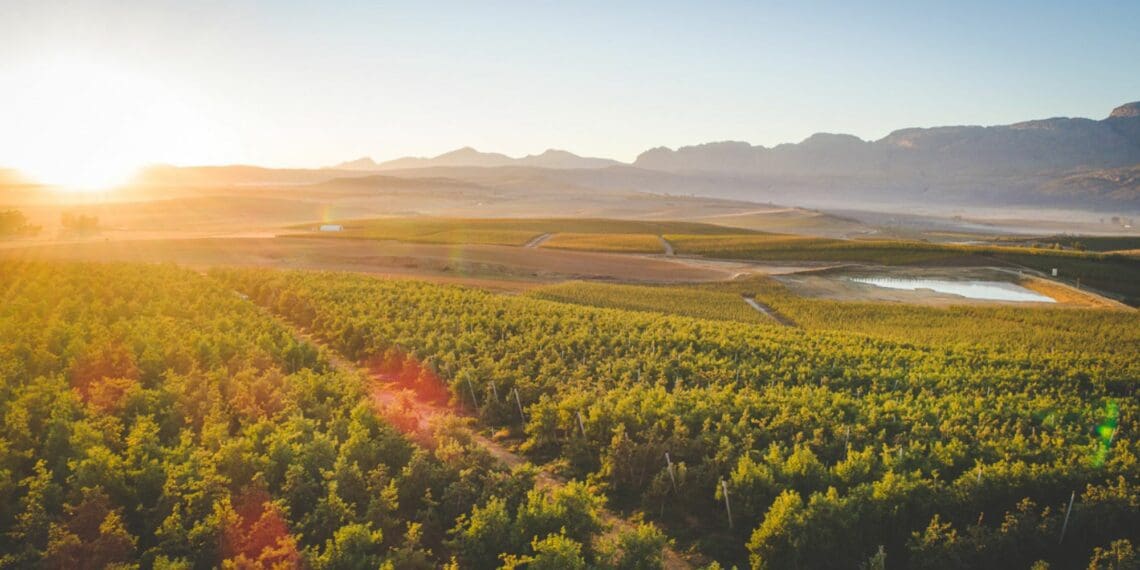
There is to more to the Witzenberg town of Ceres than apples, fruit juice and snow. This is a discovery agricultural economist and banker Maluta Netshaulu made during a recent trip to the farming community in the Western Cape.

There is something about Ceres that excites me. I just can’t put my finger on it. Perhaps documenting my experiences during my recent visits might help jog my memory. So, here goes nothing…
The closest I have ever been to Ceres was on a long-distance bus commute either going to university in Cape Town or going back home to Venda. I remember that quite vividly because we used to go through the Huguenot Tunnel. That was probably the exciting part of my travel; the rest was just long and tiring.
Some twelve to thirteen years later I found myself visiting Ceres for work related matters – to visit a potential partner doing some amazing work in bringing communities together as well as making meaningful contributions to the transformation of the agriculture sector.
Prior to my visit, I had known Ceres for three things, first of which was the fact that it is an apple-growing region. Second, it is where the “Ceres” fruit juices are made. And third, that is the place where snow often falls in South Africa. These are all facts, but they are not the whole truth.
ALSO READ: How PALS is innovating land reform across South Africa
A town of surprises
The place is very beautiful and probably has the cleanest air in the country. To my amazement, what I found exciting about the place was not the stuff I have mentioned. It was the people, organisations, and their stories. So let me tell you what you will find at this agricultural town.
Some of the biggest family farms in the country:
The attraction here is not their stature but more about their acknowledgement of the challenges the country faces and the actions they have taken to play their part. These families have invested a lot of money, resources and time developing their workers as well as empowering them through setting up joint ventures and employee trusts.
They have also integrated the employees’ operations into the value chain and spend a lot of money every year training and mentoring them so that they can succeed and be sustainable.
A law firm that is the heartbeat of the town:
There is a firm of attorneys that is doing amazing work outside the courtroom and that work has to do with helping different parties, black and white, to work together.
They facilitate discussions between the parties, structure empowerment entities, liaise with government departments for subdivisions and water license applications, draw up various types of agreements as well as keep all parties accountable.

Farmers from all walks of life working together, in long-term partnerships:
The word “partnership” is used very loosely in South Africa, especially partnerships in the agriculture sector and ones that have to do with transformation or black economic empowerment.
In Ceres, the types of partnerships I have experienced have been ones that were entered into wholeheartedly with each party having something to lose should something go wrong.
In partnerships both parties benefit, either the one party wants to expand his or her operation or get into new markets, and the other party may want to leverage off the experience and market access of the established farmer.
In these partnerships there are agreements in place – on training, on mentorship, on marketing and on the roles and responsibilities of the partners and profit-sharing ratios.
To be a successful farmer you need all the help you can get. These agreements and the established farmer making it his or her priority to really uplift and empower the starter farmer really makes a difference. Such that by the end of the partnership, the emerging farmer has all the skills and connection to be a successful farmer. It is what every new farmer wishes for.
A gem called Loxtonia:
I make it part of my agenda to discover hidden gems in small towns. In Ceres, that gem is in the form of an apple cider company called Loxtonia Cider.
Located less than five kilometres outside of Ceres, whenever you visit Ceres you must make sure to visit this place. But make sure you set aside time so you can fully experience the place, from the apple packhouse to the cidery. Then end with a cider tasting before you buy a whole lot of ciders to take home. Also note that at the cidery the beverages cost a lot less than you will find on their online platform.
ALSO READ: Commodity groups recommit to supporting new farmers
The energy headache
The town is not without its challenges. High on the list is the energy grid inefficiencies. Here I am not just talking about load shedding but more about the unstable and oversubscribed grid.
The situation is such that the economy of the town is being constrained for growth due to the grid not having additional capacity for businesses to grow or new businesses to be set up.
To solve this problem the town residents together with the municipality and independent power producers are looking to put additional capacity into the grid through alternative energy, such as solar PV.
These efforts will help, especially given that some of the empowerment projects in the pipeline need this important resource to take off. Without it, development plans might have to be put on hold, which doesn’t bode well for the country given the reliance on agriculture to create jobs, empower communities and contribute positively to the economy.
Now that I have put pen to paper, I think I have figured out what makes Ceres stand out for me. It is the way everyone (big farmers, emerging farmers, farmworkers, supporting services and municipality) works together towards a common goal and purpose – to create a better life for all!
If all rural towns can operate as well as Ceres does, some of our problems would cease to exist.
- Maluta Netshaulu is an agricultural economist, banker, thought leader, a husband and father.
ALSO READ: Should vertical farming replace conventional farming?
Sign up for Mzansi Today: Your daily take on the news and happenings from the agriculture value chain.