Tuesday, July 21, 2026
SUBSCRIBE
22 GLOBAL MEDIA AWARDS
Food For Mzansi
  • News
  • Changemakers
  • Lifestyle
  • Farmer’s Inside Track
  • Food for Thought
No Result
View All Result
  • News
  • Changemakers
  • Lifestyle
  • Farmer’s Inside Track
  • Food for Thought
No Result
View All Result
Food For Mzansi
No Result
View All Result
in News

Covid-19: ‘Cultivate underutilised land to boost food security’

by Staff Reporter
13th July 2020
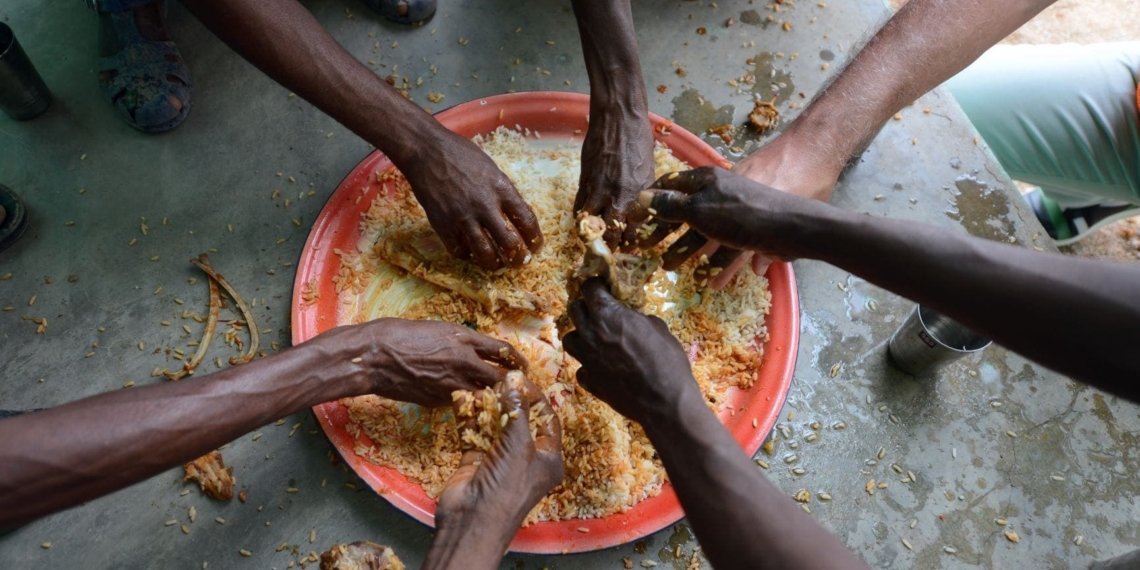
Covid-19, a changing climate, growing global population and rising food prices will have a significant yet uncertain impact on food security. Photo: International Food Policy Research Institute

Covid-19, a changing climate, growing global population and rising food prices will have a significant yet uncertain impact on food security. Photo: International Food Policy Research Institute

Share on FacebookShare on TwitterShare on WhatsApp

The covid-19 pandemic has amplified the urgent need to address bottlenecks in the smallholder farming communities and cultivate the vast amounts of underutilised land across the country.

This warning by Maluta Netshaulu, senior manager: agriculture for Nedbank Business Banking, follows the release of the fourth Global Report on Food Crisis (GRFC 2020). While Netshaulu describes Mzansi as “an agriculturally endowed country”, he does believe that food security remains a major concern as businesses throughout the world struggle to get to grips with the covid-19 pandemic.

“The coronavirus lockdown has affected agriculture exports also,” he says, “but as the country eases lockdown regulations, the ability of South Africa and the continent to look after its people remains high on the agenda.”

According to GRFC 2020, Africa has the most acutely food-insecure people in need of assistance in countries badly affected by weather events, particularly in the Horn of Africa and Southern Africa, followed by Central America and Pakistan. Conflict, political instability, weather extremes, desert locusts, economic shocks and covid-19 are expected to be the key drivers of severe hunger.

Maluta Netshaulu, senior manager: agriculture for Nedbank Business Banking. Photo: Supplied

Netshaulu points out, however, that agriculture is no stranger to adverse external factors presenting risk to the point of business continuity being threatened.

“The fears about the potential disruptions that the coronavirus could cause global supply chains have raised questions on whether South Africa could experience food shortages in the near-to-medium-term. From a national perspective, we doubt this would be the case, at least for most food products. South Africa is an agriculturally endowed country, generally a net exporter of agricultural and food products. What’s more, there are prospects for an abundant harvest of staple grains and fruit this year, which will increase the local supplies.”

Businesses that are exposed to global markets, and are dependent on income from exports, face a real challenge, though, that demand is severely contracted. This will ultimately affect cashflow ensuring that pressure will originate as a result of a mismatch in meeting forward exchange cover.

‘Two distinct levels of food security’

Netshaulu’s warning echoes that of prof. Ferdi Meyer, managing director of the Bureau for Food and Agricultural Policy (BFAP), and Agbiz CEO Dr John Purchase in a recent webinar hosted by Nedbank Business Banking.

“What the pandemic has made very clear is that there are two distinct levels of food security – at a national level, which is secure, and at a household level, which is very precarious,” says Meyer.

Dr John Purchase, Agbiz CEO
Dr John Purchase, the CEO of Agbiz. Photo: Supplied

Purchase agrees, adding that the situation was fragile even before covid-19. “We must acknowledge that the Zuma administration was disastrous for South Africans: per capita GDP was cut from USD 8 000 to USD 5 200, which means that South Africans are now roughly 25% poorer in US dollar terms than before the Zuma years.”

Then came covid-19 and the lockdown which Purchase says “cut off the legs” of the informal food supply network. “Informal trade was ceased, which was a remarkably efficient mechanism, so physical and financial access became problematic and this has created a humanitarian crisis on the same scale of the pandemic,” he says.

Purchase says a number of initiatives are in place to support this sector, particularly to weather the storm created by the pandemic. The department of agriculture, land reform and rural development has ring-fenced R1.2 billion to support around 15 000 small-scale farmers, and Agbiz is working with the Gauteng government through the Public-Private Growth Initiative to develop food supply chain security in the informal market.

Staff Reporter

Researched and written by our team of writers and editors.

Tags: AgbizBFAPBureau for Food and Agricultural PolicyCoronavirusCovid-19Covid-19 lockdownDr John PurchaseFood SecurityMaluta NetshaulupandemicProf. Ferdi MeyerSmall-scale farmersSmallholder farmers
The Forest of Renewal at Rustlers Valley celebrates the intertwined legacies of Frik Grobbelaar, Anton Chaka and Riky Rick, inviting South Africans to restore the land while cultivating hope, belonging and community. Illustration: ChatGPT
Food for Thought

Rustlers Valley offers a blueprint for South Africa’s renewal

by Ivor Price
18th July 2026

As the Rustlers Valley Memorial Forest is launched in the eastern Free State this weekend, Ivor Price reflects on why...

Read moreDetails
Grain SA appoints Mabuza to lead farmer development

Rising stars: 2026 PGP finalists redefining SA grain farming

18th July 2026
Rooibos heads to space in groundbreaking Mzansi experiment

Rooibos heads to space in groundbreaking Mzansi experiment

18th July 2026

Seriti Institute CEO wins prestigious Best Woman 2026 CSI award

17th July 2026
Farmers and brewers call for budget that builds, not breaks

Minister details Land Bank’s success in boosting black farmers

17th July 2026

The Karoo’s quiet lesson on trust and truth

Grain SA defends farmers against blame for rising food prices

SA poultry industry calls for urgent bird flu vaccine rollout

Drought and heatwaves force SA maize farmers to adapt or switch

Seriti Institute CEO wins prestigious Best Woman 2026 CSI award

Join Food For Mzansi's WhatsApp channel for the latest updates!

JOIN NOW!
Next Post
Covid-19: Agri sector continues to bleed jobs

Covid-19: Agri sector continues to bleed jobs

THE NEW FACE OF SOUTH AFRICAN AGRICULTURE

With 21 global awards in the first six years of its existence, Food For Mzansi is much more than an agriculture publication. It is a movement, unashamedly saluting the unsung heroes of South African agriculture. We believe in the power of agriculture to promote nation building and social cohesion by telling stories that are often overlooked by broader society.

Smart vineyard irrigation starts below the ground

Treat food processing as essential national infrastructure – Khoury

Farmers urged to embrace uncertainty and build resilience

SA poultry industry calls for urgent bird flu vaccine rollout

Mother’s legacy, neighbour’s grace: Venessa Simelane’s farm story

Deadline looms: Register water use by 23 July or risk penalties

  • Awards & Global Impact
  • Our Story
  • Contact Us
  • Cookie Policy
  • Privacy Policy
  • Copyright

Contact us
Office: +27 21 879 1824
News: info@foodformzansi.co.za
Advertising: sales@foodformzansi.co.za

Contact us
Office: +27 21 879 1824
News: info@foodformzansi.co.za
Advertising: sales@foodformzansi.co.za

  • Awards & Global Impact
  • Our Story
  • Contact Us
  • Cookie Policy
  • Privacy Policy
  • Copyright

Chat Options

I'm Lerato, your AI assistant!
No Result
View All Result
  • News
  • Changemakers
  • Lifestyle
  • Farmer’s Inside Track
  • Food for Thought

Copyright © 2024 Food for Mzansi

This website uses cookies. By continuing to use this website you are giving consent to cookies being used. Visit our Privacy and Cookie Policy.