 Zakir Kathrada, 28, had his first match of cricket around the age of 8 in a small farm near Schweizer-Reneke in North West. Now he plays as a semi-provincial professional batsman for the Central Gauteng Lions and owns a hydroponics farm nestled on the rooftop of The Whippet Coffee in the heart of Melville in Johannesburg.
“To me, cricket is everything. It is in my blood and ignites something in me. It has set me up for different aspects of life, has taught me to deal with disappointments. Basically, it’s a lifebook,” he tells me.
Fascinatingly, Kathrada’s journey to farming also started on a cricket field. In 2017, he sojourned to Holland to play cricket for four months. While there, he says he saw green houses and hydroponics farms, which are common there due to the scarcity of open land. He was amazed by how adaptable hydroponic farming is.
Back in Mzansi, Kathrada researched further about hydroponic and aquaponic farming. He got hold of an incubation and mentorship organisation called Urban Agricultural Initiative under WIBC (Wouldn’t It Be Cool), which trains urban farmers to farm creatively and seeks to create jobs through urban entrepreneurial ecosystem that aids young black, urban farmers.

Supplying The Whippet Coffee
After being accepted into the program, he attended a 12-week course to learn about effective ways of running an urban agricultural business. “You pitch your idea to the judges and there are investors. If you get through your pitch, you’re given a loan and you pay the loan back over four years,” Kathrada says.
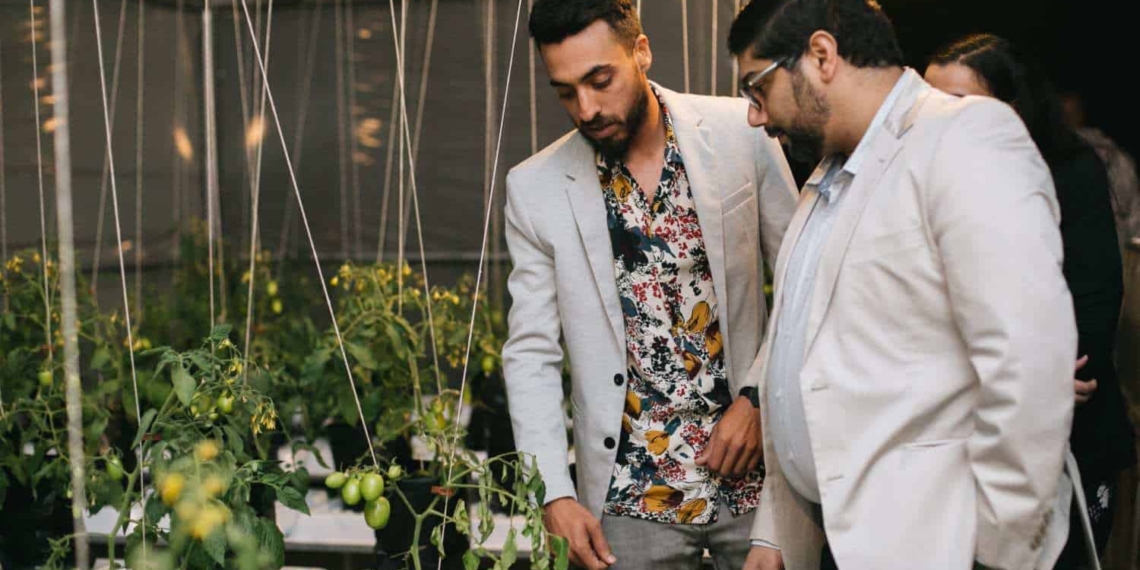
Now he owns a hydroponics farm nestled on the rooftop of The Whippet Coffee in the heart of Melville, a bohemian suburb full of bars and restaurants.
Kathrada grew up in a traditional farming setting. After his cricket career, he says he wanted to venture into farming. “I imagined horses and all these things running around. But never imagined this,” he smiles, referring to modern ways of practising agriculture such as aquaponics and hydroponics.
Kathrada mainly plants rocket, baby and normal spinach, cherry tomatoes and gem lettuce, which he supplies to The Whippet Coffee restaurant in Melville and Linden, near Randburg.
“This whole program is brilliant. My family is over the moon, they’ve been heavily involved in my farm when it comes to ploughing and harvesting.”
“I’m growing what the restaurant requests or what they have in the menu. [To supply the] rocket and baby spinach I wait for the chefs to call me for delivery [because it is] just downstairs. I am fortunate that my market is around me. The reviews I’ve received from the chefs are thumbs up,” he says with a joyous smile.
“There’s so many pubs and restaurants around and this place is constantly full of energy,” he tells me. The Whippet Coffee is proud of their locally grown produce – an excerpt of the restaurant’s menu reads: “Some of the dishes you will have today were grown by our rooftop garden. Farmer Zakir Kathrada is incredibly proud to bring you his fresh harvest to your table.”
Learning curve
Kathrada is still new in farming. It is less than a year since he ventured into the agribusiness. Sometimes it gets very challenging and he considers giving up. His religion is his pillar of strength. “I’m quite a religious person and I am Muslim. My guide is my religion. I’d be honest: when I am hundred percent on my path, I see miracles. I deal with failures better when I am on my path, because there’s a higher power.”

Despite the challenges, the Lions’ batsman is keen to improve the quality of his produce. Kathrada says, “I link this to cricket, you find yourself playing well and you’re promoted to a higher team, and you’re under pressure but you have to nail it. There’s no time to say I’m not ready. It’s always that you’ll grab the opportunity presented to you.”
Goodness of hydroponics farming
He says being a hydroponics farmer puts him at an advantage, easily doubling his turnover compared to field farmers. He says his produce grows faster. “You’re giving them the nutrients they require, whereas in the soil the roots have to work harder to find nutrients.”
Kathrada says he also saves a lot of water when watering his produce. “That water constantly flows 24 hours. You use 98 percent less water than someone in a field farm. In hydroponics farming the water is recirculated and it’s very specific to the plant, whereas in the field you water the plant and the surroundings absorb a lot of water, thereby leading to a loss of so much water.”
“Take a guess how much is my water bill per month? It is between R200 and R250!”
Kathrada says he hopes to expand his hydroponics farm so he can supply more restaurants in the area. Additionally, he is devoted to producing vegetables and greens of superior quality.
As we leave via the back door of the restaurant, customers are enjoying some of Kathrada’s luscious greens as part of their meal. He takes obvious pleasure in this. “When customers eat something that’s green in the menu, it’s more likely it comes from me, but I doubt if they don’t know that,” he smiles.