Saturday, September 5, 2026
SUBSCRIBE
22 GLOBAL MEDIA AWARDS
Food For Mzansi
  • News
  • Changemakers
  • Lifestyle
  • Farmer’s Inside Track
  • Food for Thought
No Result
View All Result
  • News
  • Changemakers
  • Lifestyle
  • Farmer’s Inside Track
  • Food for Thought
No Result
View All Result
Food For Mzansi
No Result
View All Result
in News

Deciduous fruit industry can change face of rural SA

In a no-holds-barred interview with Food For Mzansi, Ismail Motala speaks about the true state of transformation in the deciduous fruit industry. This, as excitement builds over the Deciduous Fruit Industry Transformation Awards on Thursday, 31 March

by Ivor Price
28th March 2022
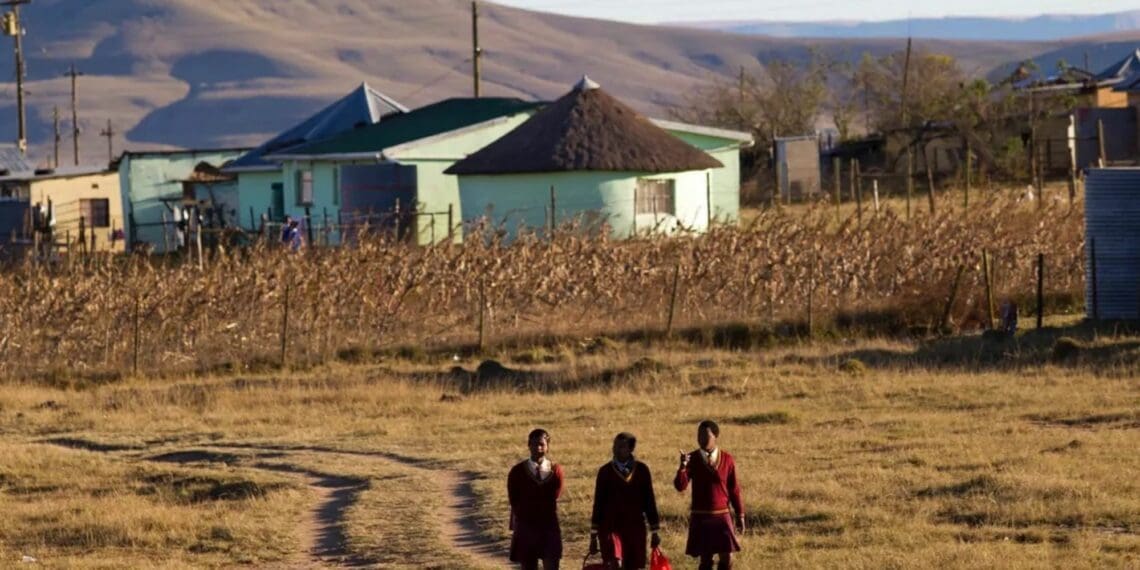
The deciduous fruit industry believes it has an obligation towards fostering growth in rural communities. Photo: Supplied/Food For Mzansi

Support and investment in rural communities should be a priority, both for poverty reduction as well food security. Photo: Supplied/Food For Mzansi

Share on FacebookShare on TwitterShare on WhatsApp

The deciduous fruit industry has the potential to change the face of rural economies in South Africa, says Ismail Motala, the chairperson of the Deciduous Fruit Development Chamber.

Ismail Motala, the chairperson of the Deciduous Fruit Development Chamber. Photo: Supplied/Food For Mzansi

Motala says excitement is building for the Deciduous Fruit Industry Transformation Awards on Thursday, 31 March. This event will see a number of high-profile business and other leaders touch down in the Mother City, including agriculture, land reform and rural development minister Thoko Didiza.

“The awards is about recognising the individuals and companies within the deciduous fruit industry who have played a very important transformation role over the past 28 years,” says Motala.

“We need to acknowledge the individuals, companies, and institutions that have brought us to where we are today in terms of transformation. Secondly, we need to encourage other role players and stakeholders to get involved, so we can increase the footprint of black producers within our country.”

Motala says the deciduous fruit industry is “one of the most technologically advanced industries in terms of cultivars etc..” However, black producers still face a number of challenges that hinders their full participation.

Access to finance remains problematic

“We want financial institutions to create products that are deciduous-industry specific; that understand patience with finance; that understand that our industry is capital intensive, but is an industry where you could have revenue for the next 25 to 30 years on that investment.”

Banking products created with this in mind, would go a long way in accelerating true agricultural transformation in South Africa, adds Motala.

“Financial institutions and the value players, we want them to come together and say we want to be part of transformation. This is the type of finance, schemes and loans we are prepared to put on the table in order to see development over the next 30 years.”

Asked about whether the deciduous fruit industry had really made enough progress since the dawn of Mzansi’s democracy, Motala described transformation as “a journey.”

“We, as industry leaders, have created the platform for this transformation. We would like it to be better than where we are. I would not say we have not achieved anything. Yes, we have achieved a substantial amount, but it is not where the masses would want to see us go.”

According to Motala this underscores the importance of the Deciduous Fruit Industry Transformation Awards.

“It brings government, stakeholders and private companies together to say, ‘How do we do better? What can we do better? What are we doing to achieve better results?’ Twenty-eight years later [since the 1994 elections] I certainly don’t believe we have fully achieved what we need to achieve. We have a long way to go. As an industry, we cannot do it on our own.”

A glitzy affair

Meanwhile, Dr Thembi Xaba, chief executive of the Deciduous Fruit Development Chamber, confirms that Didiza will deliver the keynote address at the Deciduous Fruit Industry Transformation Awards.

Winners will be announced on Thursday, 31 March during a glitzy affair at the Protea Hotel in Stellenbosch. Guests will be welcomed by Dr Ivan Meyer, the Western Cape minister of agriculture, while Reghart Strauss, the head of agribusiness in the province, will explore funding solutions for the deciduous fruit industry.

Afasa chairperson Neo Masithela will speak on the role that commodity organisations can play in advancing transformation. This, as Elias Monage, president of the Black Business Council, and Parks Tau, the MEC for economic development and agriculture in Gauteng, has also been confirmed to speak at the event.

ALSO READ: Deciduous fruit industry to honour change heroes

Sign up for Mzansi Today: Your daily take on the news and happenings from the agriculture value chain.
Ivor Price

Ivor Price is a multi-award-winning journalist and co-founder of Food For Mzansi.

Tags: Deciduous Fruit Development ChamberDeciduous Fruit IndustryTransformation
News

Aucamp outlines strategy for biosecurity, trade, and infrastructure

by Tiisetso Manoko
2nd September 2026

In an exclusive interview with Food For Mzansi, agriculture minister Willie Aucamp outlines his vision to accelerate the AAMP, tackle...

Read moreDetails
Tobias Doyer, CEO of Grain SA. Photo: Supplied/Grain SA Facebook

Rising costs, climate risk push Swartland wheat farmers to the brink

2nd September 2026
Sick spuds: No need to panic as SA’s potatoes are banned in Zim

Potato turning point ahead as onions double in price year-on-year

1st September 2026
Early calf care: Key growth targets every cattle farmer must track

Early calf care: Key growth targets every cattle farmer must track

1st September 2026

How to align your farming cycles with long-term financial success

1st September 2026

This week’s agri events: 31 August – 03 September

Foot-and-mouth crisis hits SA dairy industry with R1-billion loss

Honoured roots: A father’s legacy, a daughter’s farming dream

Water rights alone won’t fix inequality in SA commercial farming

Aucamp outlines strategy for biosecurity, trade, and infrastructure

Join Food For Mzansi's WhatsApp channel for the latest updates!

JOIN NOW!
Next Post
The window period for fishing rights appeals closed on 29 July 2022. Photo: Supplied/Food For Mzansi

Here's how to appeal your fishing rights allocation

THE NEW FACE OF SOUTH AFRICAN AGRICULTURE

With 21 global awards in the first six years of its existence, Food For Mzansi is much more than an agriculture publication. It is a movement, unashamedly saluting the unsung heroes of South African agriculture. We believe in the power of agriculture to promote nation building and social cohesion by telling stories that are often overlooked by broader society.

Honoured roots: A father’s legacy, a daughter’s farming dream

Gauteng farmers urged to harness massive urban market

Foot-and-mouth crisis hits SA dairy industry with R1-billion loss

Tough times, hardy cattle: Why Mzansi farmers are choosing Nguni

Dragon fruit thrives in KZN valley despite tough national season

Government hikes sugar import price, but industry warns of gap

  • Awards & Global Impact
  • Our Story
  • Contact Us
  • Cookie Policy
  • Privacy Policy
  • Copyright

Contact us
Office: +27 21 879 1824
News: info@foodformzansi.co.za
Advertising: sales@foodformzansi.co.za

Contact us
Office: +27 21 879 1824
News: info@foodformzansi.co.za
Advertising: sales@foodformzansi.co.za

  • Awards & Global Impact
  • Our Story
  • Contact Us
  • Cookie Policy
  • Privacy Policy
  • Copyright

Chat Options

I'm Lerato, your AI assistant!
No Result
View All Result
  • News
  • Changemakers
  • Lifestyle
  • Farmer’s Inside Track
  • Food for Thought

Copyright © 2024 Food for Mzansi

This website uses cookies. By continuing to use this website you are giving consent to cookies being used. Visit our Privacy and Cookie Policy.