Wednesday, March 4, 2026
SUBSCRIBE
21 GLOBAL MEDIA AWARDS
Food For Mzansi
  • News
  • Changemakers
  • Lifestyle
  • Farmer’s Inside Track
  • Food for Thought
No Result
View All Result
  • News
  • Changemakers
  • Lifestyle
  • Farmer’s Inside Track
  • Food for Thought
No Result
View All Result
Food For Mzansi
No Result
View All Result
in Farmer's Inside Track

Discipline and dirt define Meshack Ndongeni’s farming success

From driving tractors at 14 to mentoring the next generation, Meshack Ndongeni is building a lasting legacy in KZN. His advice to emerging farmers? Understand your input costs, master your yields, and never stop learning

by Patricia Tembo
4th March 2026
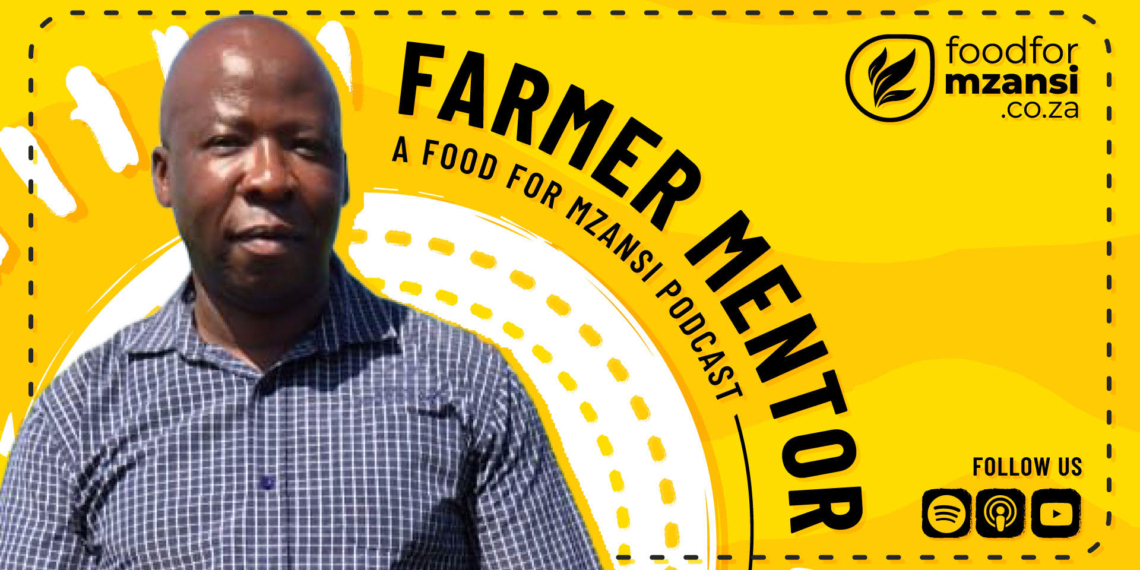
From hand-built irrigation furrows in the Eastern Cape to leading a diversified commercial enterprise, award-winning farmer Meshack Ndongeni shares how discipline, sound financial management, precision investment and a commitment to mentorship have shaped his journey from small-scale beginnings to building a sustainable farming legacy. Photo: Food For Mzansi/Gareth Davies

From hand-built irrigation furrows in the Eastern Cape to leading a diversified commercial enterprise, award-winning farmer Meshack Ndongeni shares how discipline, sound financial management, precision investment and a commitment to mentorship have shaped his journey from small-scale beginnings to building a sustainable farming legacy. Photo: Food For Mzansi/Gareth Davies

Share on FacebookShare on TwitterShare on WhatsApp

Farming isn’t just about what you plant; it’s about how you manage. Commercial trailblazer Meshack Ndongeni shares his journey of scaling from a single second-hand tractor to a multi-crop operation in this edition of our Farmer Mentor series.


Award-winning commercial farmer Meshack Ndongeni’s journey into agriculture did not begin with business plans or formal training, but with a way of life shaped in the former homelands of the Eastern Cape. 

Growing up on a small family plot, he learned early that farming meant hard work, responsibility and opportunity.

His mother’s four-hectare plot, irrigated by hand-built furrows and dams, became his first classroom. The family sold vegetables and even bartered produce for grain, later reselling it when prices were higher. These early lessons in production and trading sparked a passion that would shape his future.

The rise of an agripreneur

By the age of 14, Ndongeni was driving a tractor, and by 16, he was repairing it. In 1996, still a young man, he bought his first second-hand tractor and began ploughing for the community while working his own small plot. Contract work soon followed, and by the mid-2000s, he was managing hundreds of hectares for government programmes and municipalities.


Related stories
  • Cheap potatoes bring relief to consumers, pain to farmers
  • Legacy lives on: Mathidi finds purpose in potato farming
  • Grandfather’s garden unlocks big dreams for FS potato farmer
  • How to spot and manage cutworm infestations in potato fields


“The contracting side of the business helped me grow. It allowed me to buy implements and build capacity, but it also meant long hours and a lot of pressure. It’s not work for someone who is lazy,” Ndongeni says.

As his fleet of equipment grew, so did his ambitions. With tractors standing idle outside the peak season, he began leasing land to keep his machinery and workers productive. That decision marked his transition into commercial crop production.

“There were clear signs that it was time to move forward. I had the equipment from tillage to harvesting, but it was sitting on leased land. That’s when I realised I needed a farm of my own.”

He secured his first leased farm in 2013, later acquiring a second farm in Kokstad, KwaZulu-Natal, of 1280ha through a bank loan. 

Today, Ndongeni Farms runs a diversified operation that includes grain, potatoes, cabbage and livestock. Potatoes have become the main income driver, providing steady cash flow from February to July, while livestock and grain support risk management and feed requirements.

Farming as a business

For Ndongeni, the key to scaling a farming business starts with mindset and discipline.

“Treat farming as a business. Know your input costs, your yields and your profitability. Being commercial is not about how many hectares you plant. It’s about what you produce per hectare,” he says.

He stresses the importance of continuous learning, seeking external support and maintaining accurate financial records. Access to finance, he says, depends heavily on good governance and proper documentation.

“You must plan, keep budgets and stick to them. Have proper financials, keep records and understand your numbers. When lenders look at your business, they want to see how you manage it,” Ndongeni stresses. 

Climate variability remains one of the biggest challenges. Unpredictable rainfall, hail and prolonged dry spells have forced him to adapt his planning and risk-management strategies. One of his key recommendations is gradual investment in precision agriculture.

“Even small improvements in precision planting, spreading and spraying can save money. Over a few seasons, those savings make a big difference to profitability,” Ndongeni says. 

Advice for the next generation

Beyond production, Ndongeni is passionate about mentoring emerging farmers. He regularly hosts students and young producers, sharing practical knowledge gained through experience.

“My goal is to help others so they don’t have to pay the same school fees I did. Practical knowledge is very important. You can have a qualification, but real understanding comes from working on the land,” he notes.

He also hopes to leave a legacy through his own family, with his Siyavuya, now working alongside him on the farm.

For new and expanding farmers, his advice is simple but honest: understand the nature of the business and commit to doing it properly.

“Farming is not a quick way to make money. It takes patience, planning and discipline. But if you do the right things and keep improving, it can build a strong and lasting legacy,” Ndongeni says. 

READ NEXT: Three years on: Is the master plan delivering for farmers?

Sign-up to Farmer's Inside Track for the best farming tips, news and advice to thrive!

Patricia Tembo

Patricia Tembo is motivated by her passion for sustainable agriculture. Registered with the South African Council for Natural Scientific Professions (SACNASP), she uses her academic background in agriculture to provide credibility and technical depth to her journalism. When not in immersed in the world of agriculture, she is engaged in outdoor activities and her creative pursuits.

Tags: Commercialised farmerFarmer mentorInspire meKwaZulu-NatalPotatoes SA

Related Posts

Castor bean farming could be SA’s next big opportunity

Castor bean farming could be SA’s next big opportunity

3rd March 2026
Agro-processing: Farmer’s guide to turning crops into cash

Agro-processing: Farmer’s guide to turning crops into cash

24th February 2026

Pomegranate pioneer: Debbie Theunissen’s rise in fruit farming

How to set up grazing camps and cut feed costs

Agricultural insurance: Common mistakes and how to avoid them

Purpose in pastures: Dale Hutton’s journey to dairy excellence

How to choose the right farm insurance to protect your business

Pneumonia in livestock: Spot the signs before it’s too late

SA’s 2025 harvest: Lessons, leadership and looking ahead
News

Three years on: Is the master plan delivering for farmers?
by Patricia Tembo
2nd March 2026

Planning is one thing; implementation is another. Stakeholders say that while the Agriculture and Agro-processing Master Plan (AAMP) has improved...

Read moreDetails
Plant varieties for aquaponics systems are selected based on nutrient demand, growth rate, and market potential. Herbs, lettuces, tomatoes, peppers and chillies tend to do well in the system.

This week’s agri events: 02 – 06 March

2nd March 2026
Mooketsa Ramasodi, director-general of the department of agriculture, welcomes the arrival of 1.5 million Dollvet FMD vaccines from Turkey at Aerolink Pharma 18, OR Tambo International Airport. Photo: Supplied/Food For Mzansi

Turkish FMD vaccines set to boost national vaccination drive

1st March 2026
Land reform stalls, CSI offers a path forward – Setou

Why the environment is the real boss of farming

1st March 2026
Ten tips to establish grazing pasture and boost profits

Invasive mesquite plants threaten NC’s soil and livelihoods

28th February 2026

Land reform: How the private sector can bridge the funding gap

Potchefstroom Agricultural College celebrates farming’s future

Castor bean farming could be SA’s next big opportunity

Unified vision key to driving innovation in SA’s grain industry

Gqeberha agripreneur turns backyard into thriving medicinal hub

Join Food For Mzansi's WhatsApp channel for the latest updates!

JOIN NOW!

THE NEW FACE OF SOUTH AFRICAN AGRICULTURE

With 21 global awards in the first six years of its existence, Food For Mzansi is much more than an agriculture publication. It is a movement, unashamedly saluting the unsung heroes of South African agriculture. We believe in the power of agriculture to promote nation building and social cohesion by telling stories that are often overlooked by broader society.

Discipline and dirt define Meshack Ndongeni’s farming success

Unified vision key to driving innovation in SA’s grain industry

Potchefstroom Agricultural College celebrates farming’s future

Castor bean farming could be SA’s next big opportunity

Farm clinics bring healthcare closer to Cape Winelands workers

Why SA is importing FMD vaccines from Argentina

  • Awards & Global Impact
  • Our Story
  • Contact Us
  • Cookie Policy
  • Privacy Policy
  • Copyright

Contact us
Office: +27 21 879 1824
News: info@foodformzansi.co.za
Advertising: sales@foodformzansi.co.za

Contact us
Office: +27 21 879 1824
News: info@foodformzansi.co.za
Advertising: sales@foodformzansi.co.za

  • Awards & Global Impact
  • Our Story
  • Contact Us
  • Cookie Policy
  • Privacy Policy
  • Copyright
No Result
View All Result
  • News
  • Changemakers
  • Lifestyle
  • Farmer’s Inside Track
  • Food for Thought

Copyright © 2024 Food for Mzansi

This website uses cookies. By continuing to use this website you are giving consent to cookies being used. Visit our Privacy and Cookie Policy.