Hortgro launched its industry leadership programme in 2022 to expose the next generation of industry leaders to structures and programmes.
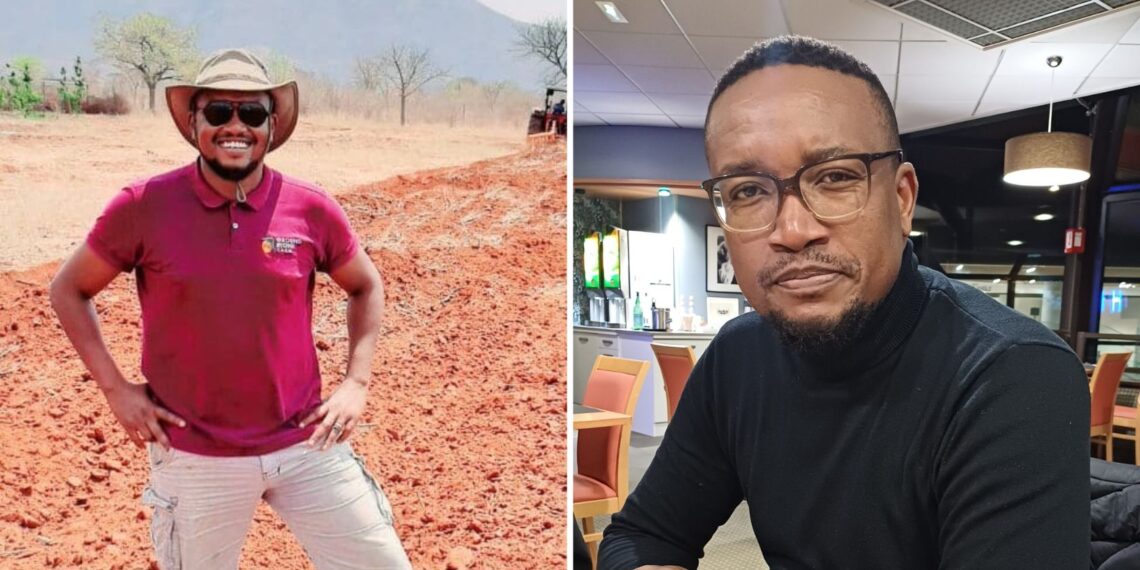
Dibesho Serage was one of the first graduates and participated in the Hortgro-supported tour of Europe and the Middle East. He previously served on the board of the Deciduous Fruit Development Chamber, a transformation body that aims to stimulate black growers’ participation in deciduous fruit production.
Serage is an industrial engineer who started his career in the corporate world with companies such as Ford and South African Breweries. He became involved in agriculture in 2012 when he joined his parents on Ground Stone farm in Zebediela, Limpopo.
They planted their first stone fruit in 2013 and currently have 15 hectares of peaches and nectarines, and five hectares of vegetables. Ground Stone is Global Gap certified and supplies to Woolworths.
Has your engineering background helped you in agriculture?
Our main focus as industrial engineers is productivity, efficiency, quality, and operations management. That helped a lot, and my engineering background helped me understand many things in agriculture.
Farmers deal with science, for example, climate science, the chemistry of the plant itself and the chemistry of the production inputs we put on the trees. They also need to understand the basics of mechanical, electrical, and civil engineering. For example, we work with a lot of mechanical pumps and electrical motors, and we also design irrigation lines.
My engineering background helped me grasp all those theories and make sound decisions on the farm. Most people without a technical or engineering background find it challenging to deal with these hardcore engineering competencies, so they rely completely on service providers.
Most service providers are just selling products, sometimes stuff you don’t need. You find you’re driving a Rolls Royce when all you needed was a simple Uno.

Related stories
- Started from the bottom, now Dibesho’s on top!
- Young farm manager makes big impact with social media
- Hortgro bursary propels Buhle to thrive in deciduous fruit industry
What are your views on transformation in the deciduous fruit industry?
There is still a need for transformation in the industry, and I thought to myself, I’m going to be that example of transformation because that is the only way you will stimulate other growers. If you just speak without them seeing what you’re speaking about, it does not encourage them.
The point of transformation is that more people of colour like me should be in the industry. We lack participation throughout the entire value chain, starting at the level of production inputs such as the manufacturing and supply of fertilisers and chemicals.
The next level is fruit production, meaning access to fertile land with sufficient water that is available on reasonable terms. Lastly, the marketing of the fruit. There is a need for black participation in the marketing space.
Production is the easier step for black people to enter the value chain because most of us are from villages where land is available for us to farm. Transformation efforts should be aimed at encouraging black farmers in rural areas to begin there and perfect their skills.
The biggest challenge for black growers is technical advice. You must get technical advice as early as preparing the land. If you prepare the land, plant it and only then raise your hand for help, sometimes, it’s too late.
The second challenge is funding. It’s not that funding is not there, but what’s not there is the security for the funding as most black growers farm on tribal land, which most financial institutions regard as not bankable and insecure.
Without secure tenure on the land, it remains challenging for most black growers to enter or grow within the industry.

What were the highlights of the Hortgro industry leadership programme?
Hortgro is very well-organised. Until I joined the leadership programme, I thought of Hortgro as just an association of growers who came together to share their experiences. But I realised it’s much more than an association – Hortgro is an industry knowledge body.
During the programme, we visited institutions such as FruitFly Africa. They combat fruit flies through organic means to reduce the fruit-fly populations in the orchard. That was very enlightening.
The other thing that blew my mind was the Tissue Culture Facility, and to see that you can propagate cultivars without using the older methods.
It was also interesting to see the movement of fruit at the harbour first-hand. Growers complain that the harbour isn’t efficient. It is heartbreaking that growers experience losses because of Transnet’s inefficiencies at the harbour.
For our international tour, we visited Europe and the Middle East. In Europe, it was fascinating to see South Africa is a big international player in fruit production. The South African fruit industry is highly regarded.
In the Middle East, we visited a couple of fresh produce companies in Dubai, the gateway to other countries in the Arab region. When they order fruit, they order not only for Dubai but also for neighbouring countries. So, there’s a huge opportunity for us to send fruit there.
What were some personal lessons from the programme?
Seeing how the growers work together, especially in the Western Cape. It makes life so simple. You don’t have to duplicate resources and learn from your neighbours. This is a lesson that I share with black growers in our region.
During the programme, it was also interesting to network with young minds in the industry and hear how they synchronise their activities and simplify their work.
I respect Hortgro’s leadership. They have been really helpful. They possess both skill and experience, so no problem is ever too big for them. I enjoyed the journey.
- This article was first published on Hortgro and written by Anna Mouton
READ NEXT: Citrus industry bleeds R5.27 billion due to logistics failures
Sign up for Mzansi Today: Your daily take on the news and happenings from the agriculture value chain.