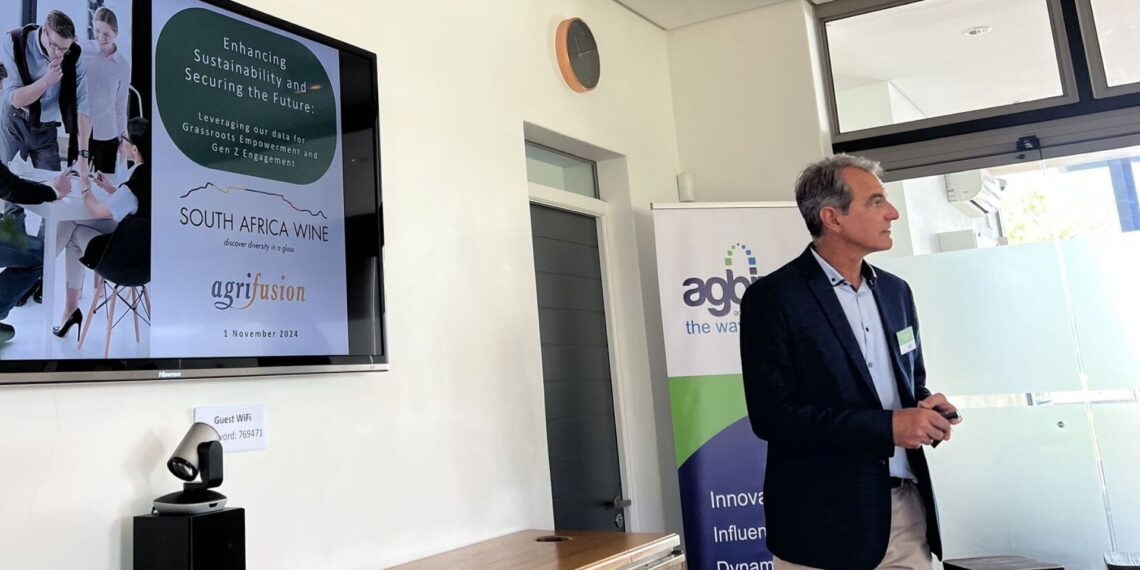
As global demand for sustainably and ethically produced goods intensifies, environmental, social, and governance (ESG) practices are becoming indispensable for South Africa’s wine industry. This was the consensus during a recent media day hosted by Agbiz and South Africa Wine, which explored the increasing role of ESG in shaping the future of the sector.
Frans van Wyk, an ESG expert and director of Agrifusion, highlighted during a panel discussion that ESG has transitioned from being a choice to a necessity.
“ESG is no longer optional for businesses within the wine sector – it is essential for survival and future growth,” he said.
Van Wyk noted the vital economic and reputational role that the wine industry plays both locally and globally, noting that maintaining high environmental and social standards is crucial for its continued success.

Gerard Martin, South Africa Wine’s executive for research, development, and innovation, underscored the importance of sustainable practices in the face of climate change, particularly in the area of viticulture.
With climate shifts threatening grape cultivation, Martin called for urgent action on water conservation, sustainable farming practices, and carbon emission reductions to safeguard the industry’s long-term viability.
“By prioritising ESG, South Africa’s wine sector is positioning itself to meet international market expectations, while contributing to environmental sustainability and social progress,” added Ivor Price, co-founder of Food For Mzansi, who chaired the panel discussion. His comments aligned with broader sentiments about the need for the sector to align with global trends towards sustainability.
Elriza Theron, advocacy and communications manager at CropLife South Africa, addressed some common misconceptions about the crop protection industry during the session.
Often viewed as a barrier to sustainability, Theron explained that crop protection is an essential part of maintaining food security and sustainable farming. She pointed to initiatives like integrated pest management, the development of environmentally friendlier pesticides, and efforts to reduce environmental harm as evidence of the industry’s commitment to sustainability.
“Balancing crop protection with sustainability goals is key, and the sector has made great strides in ensuring that its products support both environmental and food security objectives,” Theron concluded, advocating for more transparent dialogue to bridge the gap between public perception and the industry’s efforts.

New ESG rules to reshape SA wine industry
Annelize Crosby, head of legal intelligence at Agbiz, took a deep dive into the evolving regulatory landscape of ESG in South Africa, focusing on the impending changes to Section 29 of the Companies Act.
With mandatory sustainability disclosures on the horizon, Crosby stressed the importance of South African businesses preparing for these regulations. She also discussed the role of the Johannesburg Stock Exchange in encouraging ESG disclosures, calling for clearer frameworks and stronger enforcement to ensure real progress in sustainability practices.
The discussion also touched on regulatory challenges in the crop protection industry, with Crosby calling for streamlined approval processes to ensure farmers have timely access to safe and effective products, while also protecting public health and the environment.
Dr Etienne Terblanche, a viticulturist and winemaker, shared his expertise on integrating ESG principles in vineyard management. He discussed how sustainable farming methods, such as organic practices, water conservation, and biodiversity preservation, can be applied in viticulture.
Terblanche also highlighted the role of innovation in adapting to climate challenges, such as the development of drought-resistant grape varieties. “Collaboration is key in promoting sustainability across the wine industry,” he said, encouraging producers to share knowledge and resources.
Social responsibility: ESG beyond the vineyard
While the environmental conversation took centre stage, social governance was equally vital. Kachné Ross, people development manager at South Africa Wine, highlighted the importance of developing and retaining talent within the industry.
Ross presented the South Africa Wine Learner Management System (SA Wine LMS), a cloud-based platform aimed at addressing skills gaps, offering structured training, and providing continuous professional development for young professionals entering the wine industry.
“The future of the wine industry relies on the next generation of leaders,” said Ross. “By nurturing young talent and providing them with the necessary skills, we ensure the industry remains strong, competitive, and inclusive.”
Maryna Calow, communications manager at Wines of South Africa (WoSA), underscored the powerful global influence of the country’s wine industry and its substantial contributions to the GDP and tourism sector.
She highlighted how the industry draws international visitors, whose interest in South African wines boosts local economies and drives investment in wine tourism infrastructure. Calow pointed out that wine tourism provides a unique platform to showcase the country’s premium wines and the rich diversity of its wine regions, adding value to the national brand.
READ NEXT: Emerging wine brands shine at Standard Bank WineX
Sign up for Mzansi Today: Your daily take on the news and happenings from the agriculture value chain.