Sunday, September 6, 2026
SUBSCRIBE
22 GLOBAL MEDIA AWARDS
Food For Mzansi
  • News
  • Changemakers
  • Lifestyle
  • Farmer’s Inside Track
  • Food for Thought
No Result
View All Result
  • News
  • Changemakers
  • Lifestyle
  • Farmer’s Inside Track
  • Food for Thought
No Result
View All Result
Food For Mzansi
No Result
View All Result
in Farmer's Inside Track

Farmer 101: Tackling soil erosion, overgrazing

Stripping the land of its resources through poorly managed agricultural practices spells disaster for farmers. To combat soil erosion and overgrazing, adopting regenerative farming comes highly recommended

by Vateka Halile
28th January 2023
Share on FacebookShare on TwitterShare on WhatsApp

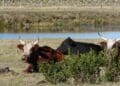
The improper management of grazing land, specifically by overstocking, can result in soil erosion, the encroachment of bushes, the drying up of springs, and a reduction in animal output.

In this edition of Gather To Grow, soil scientist Sixolise Mcinga, agronomist Wafiq Essop, and product developer Thapelo Phiri share advice on regenerative agricultural techniques.

Why overgrazing happens and how to prevent it

Overstocking the land with cattle within poorly-managed agricultural applications is a leading source of overgrazing, says Mcinga. There is an optimal population density of grazing animals for any given plot of land. Overgrazing occurs when more livestock is introduced into a field than the land can sustain.

“[For example] cattle are in love with one grass species, which is called the eragrostis curvula. So, on a piece of land, if there are other types of species, obviously the first preference will be their type, which will be your eragrostis curvula as an example.”

Mcinga explains that when this happens, other grass species replace eragrostis curvula in the field. There would be swaths of themeda triandra and other species that cattle have little interest in eating.

Finding the solution

According to Phiri, farmers can and should be more resourceful in their efforts to combat soil erosion and overgrazing. Regenerative farming boosts soil health, yielding more nutritious crops.

“There will be a lot of money for those who will be transitioning, and surely those who will be transitioning faster will make more money than those who will come late. So, what I’ll say to farmers who have joined us here, is just to find ways to consult how they can start to transition to regenerative agriculture,” explains Phiri.

The specialists also discussed the following:

  • What the agribusiness world can learn from carbon credits;
  • What an absolute necessity it is to select a location with sufficient grass for animal husbandry; and
  • Establishing a rotational grazing system.

READ NEXT: Food security at stake as soil erosion sets in

Sign up for Farmer’s Inside Track: Join our exclusive platform for new entrants into farming and agri-business, with newsletters and podcasts.  

Vateka Halile

Vateka Halile grew up in rural areas of Cofimvaba in the Eastern Cape. She was raised in a traditional family setting and found writing to be a source of comfort and escape. Vateka participated in an online citizen journalism course through Food For Mzansi, and her passion for health and medicine-related stories was born. Her dedication to community work and love for social justice and solidarity spaces is evident in her quality time with the community when she isn't working.

Tags: soil erosionThapelo PhiriWafiq Essop
The future of Mzansi's sugar industry hangs in the balance
News

Government hikes sugar import price, but industry warns of gap

by Staff Reporter
3rd September 2026

South Africa’s government has adjusted the sugar import reference price from $680 to $785 per tonne to curb surging imports....

Read moreDetails

Chicken is booming, but the real money is in the supply chain

2nd September 2026
How Tebogo beat post-harvest losses with smart agro-processing

How Tebogo beat post-harvest losses with smart agro-processing

2nd September 2026

Aucamp outlines strategy for biosecurity, trade, and infrastructure

2nd September 2026
Tobias Doyer, CEO of Grain SA. Photo: Supplied/Grain SA Facebook

Rising costs, climate risk push Swartland wheat farmers to the brink

2nd September 2026

Potato turning point ahead as onions double in price year-on-year

Former electrical engineer builds farming powerhouse on tribal land

Dragon fruit thrives in KZN valley despite tough national season

Aucamp outlines strategy for biosecurity, trade, and infrastructure

RSVP now: Emerging farmers’ programme at Nampo Cape

Join Food For Mzansi's WhatsApp channel for the latest updates!

JOIN NOW!
Next Post

Podcast: Uses and benefits of cover crops

THE NEW FACE OF SOUTH AFRICAN AGRICULTURE

With 21 global awards in the first six years of its existence, Food For Mzansi is much more than an agriculture publication. It is a movement, unashamedly saluting the unsung heroes of South African agriculture. We believe in the power of agriculture to promote nation building and social cohesion by telling stories that are often overlooked by broader society.

RSVP now: Emerging farmers’ programme at Nampo Cape

Community-led farms boost food security and incomes in Limpopo

Farmers rethink water use as shortages threaten food production

Honoured roots: A father’s legacy, a daughter’s farming dream

Gauteng farmers urged to harness massive urban market

Foot-and-mouth crisis hits SA dairy industry with R1-billion loss

  • Awards & Global Impact
  • Our Story
  • Contact Us
  • Cookie Policy
  • Privacy Policy
  • Copyright

Contact us
Office: +27 21 879 1824
News: info@foodformzansi.co.za
Advertising: sales@foodformzansi.co.za

Contact us
Office: +27 21 879 1824
News: info@foodformzansi.co.za
Advertising: sales@foodformzansi.co.za

  • Awards & Global Impact
  • Our Story
  • Contact Us
  • Cookie Policy
  • Privacy Policy
  • Copyright

Chat Options

I'm Lerato, your AI assistant!
No Result
View All Result
  • News
  • Changemakers
  • Lifestyle
  • Farmer’s Inside Track
  • Food for Thought

Copyright © 2024 Food for Mzansi

This website uses cookies. By continuing to use this website you are giving consent to cookies being used. Visit our Privacy and Cookie Policy.