The department of agriculture has received reports of African armyworm outbreaks in several provinces, including Gauteng, Mpumalanga, Limpopo, and KwaZulu-Natal. The pest, known for its destructive feeding habits, primarily affects grasslands and certain savannah regions, posing a significant threat to crops and pastures.
The African armyworm is the larval stage of a night-flying moth. When present in large numbers, these caterpillars can cause substantial damage to agricultural cereal crops such as pastures, wheat, maize, rice, millet, sorghum, and sugarcane.
Outbreaks typically occur following the onset of wet seasons when dry grasslands begin to produce new growth and cereal crops are planted.
Signs of armyworm infestation
The department urged farmers to monitor their fields for signs of infestation. “Caterpillars feed on the leaves of cereals and grasses, leaving holes. The adult caterpillars drop to the ground if disturbed.
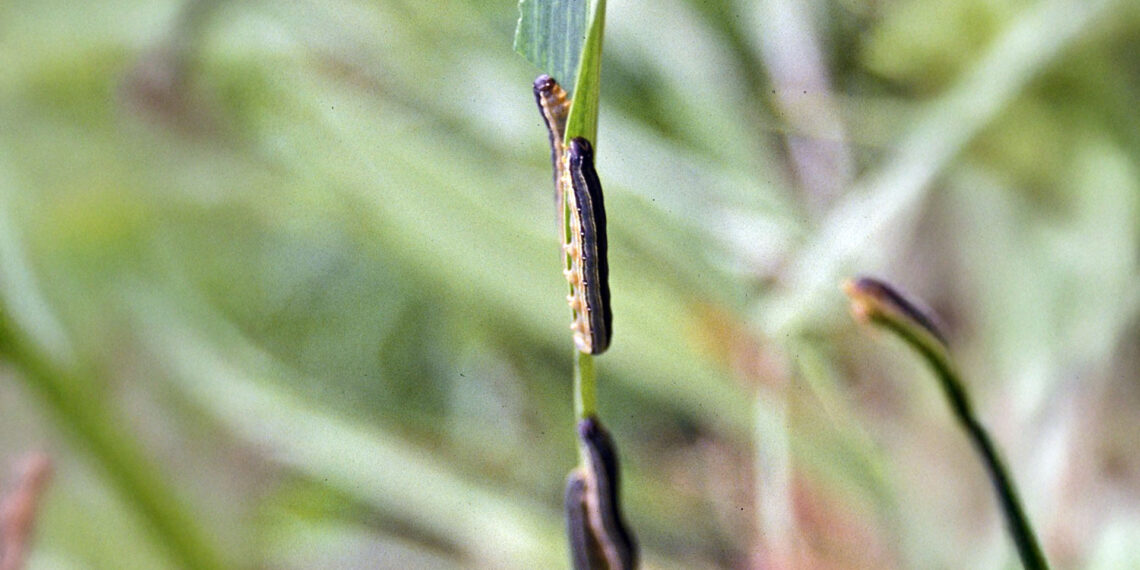
“The caterpillar develops from grey-green with white-yellow stripes down its back when small, to black with thin blue lines down the middle of the back and yellow-green lines outside the blue lines when fully grown. The caterpillar measures 2 to 3cm long,” the department stated.
Related stories
- How CropLife SA is leading responsible pesticide disposal
- Cutworm infestation: Here’s how to protect your crops
The department warned that affected cattle may exhibit severe symptoms, such as the swallowing of affected cattle being paralysed, the appearance of large “strings” of watery saliva drooling from the mouth, and animals exhibiting an apparent severe thirst. Slight symptoms of bloat, grinding of teeth, and nervous twitching may occur.
“A good prevention of further poisoning is the removal of all animals from the pasture for a period of at least 40 days,” the department said.
Farmers who experience or observe armyworm outbreaks are urged to report the incidents to local agricultural offices and district disaster coordinators.
ALSO READ: Eskom’s rising tariffs push farmers to the brink
Sign up for Mzansi Today: Your daily take on the news and happenings from the agriculture value chain.