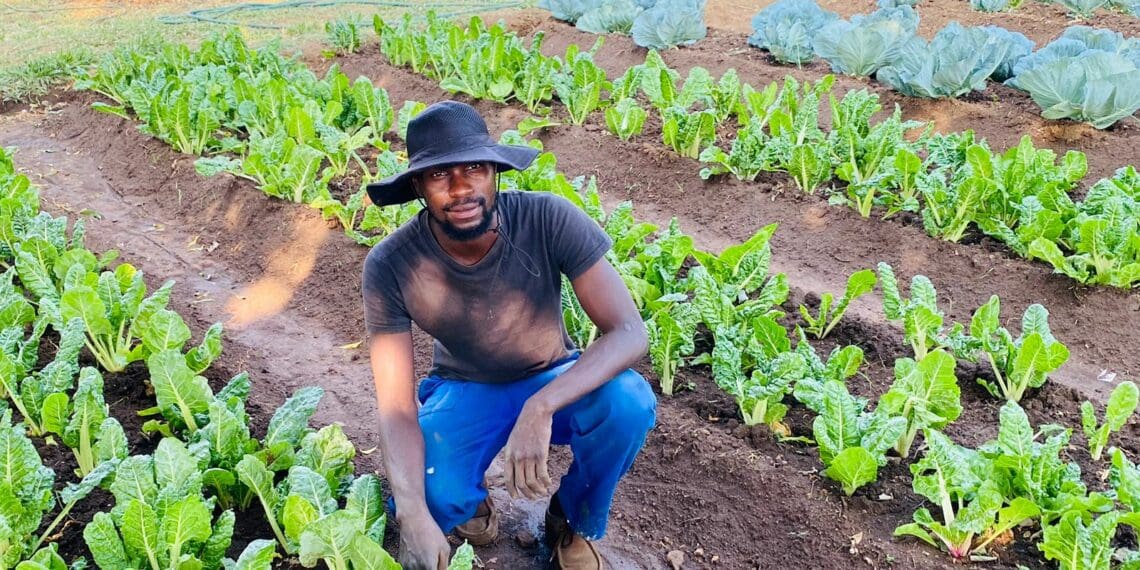
When Rudzani Shadrack Seboa sees an opportunity, he seizes it and perseveres even when the going gets tough. This young up-and-coming farmer saw a need for a spinach supplier in his community and started to utilse an empty space to start growing his crops.
Seboa’s farming journey was motivated by many aspects, but the two main ones were feeding his family, and putting the empty space at the community centre to good use.
Born and bred in Moletsane in Soweto, Seboa says following his family’s struggles, he decided to venture into farming so that his family could have something to eat and become sustainable.
Planting the seed
“I was given a head start by an organisation called Garden of Life where we were taught agribusiness, and I got a certificate in 2019. It was an eye-opening experience, and the exposure, knowledge, and wisdom I got from the training pushed me to start my own farming journey,” he says.
Seboa started farming in 2020, taking advantage of being an essential worker as a farmer during the Covid-19 lockdown and supplying ordinary community members in his neighbourhood.
“I am farming with spinach, using half a hectare, at the Enthokwezeni Community Centre. The road has not been easy but it has been rewarding in many ways, and I am grateful for the opportunity I got.
“I had to learn farming on the go, and with the motivation and help of my family members, the road became more bearable. I have irrigation challenges and am working hard to resolve them.”
Rising through challenges
In life there are many challenges and Seboa has learned to deal with it.
“I had people stealing some of my seeds after planting them, which was a drawback. However, the centre hired security which has made things better. Now my crops grow without any hindrances,” he says.
To minimise operational costs, Seboa has started to make his own manure and pesticides, which is working magic for his plants, he adds.
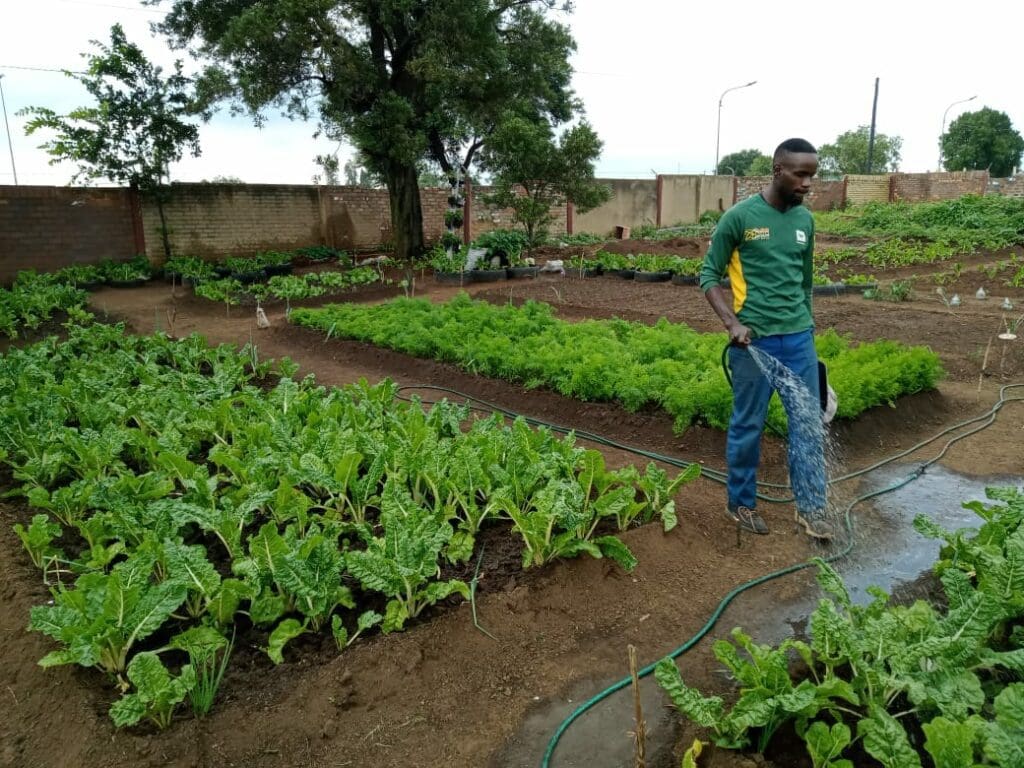
“So, I have dug up a hole where all the waste [goes]. I put them there and close it, [and] because of the hot temperatures, the waste turns into manure that I use for my crops.”
Planning for the future
Seboa says after seeing how solid his spinach market was, it is now time to consider other crops to sell.
“I have done research in my community and I have approached retailers in the area. Planting herbs is next on my list. I have started cleaning the other area at the community centre to plant the herbs, [and] I will be starting with parsley which I believe will be a golden opportunity for me.”
At the moment, he fills his trolley up with spinach and goes around selling his produce to community members.
“The intention is to grow and sell to small retailers in my area. I do not want to bite more than what I can chew, so I am taking it one step at a time. And I have seen a lot of progress on my farming journey, even though I have been operating for less than two years.
“Food is an essential service and is needed daily, so there are definitely opportunities in my township,” he adds.
Use your hands
Seboa calls on young people to stand up and use their hands as a way of putting food on their tables and creating employment for others.
“Agriculture is not only about the money, it’s about creating a food-secure community and ultimately a nation. Those who want to join us in the farming space must know that to farm, you need a dedicated mind, a love for farming and a hard-working mindset to make it.”
Selling and producing spinach has been the most fulfilling life experience that he has gone through, Seboa says, and he will not trade it for anything now being the family breadwinner.
ALSO READ: not-even-disability-can-keep-dolly-from-farming
Sign up for Mzansi Today: Your daily take on the news and happenings from the agriculture value chain.