Friday, October 23, 2026
SUBSCRIBE
22 GLOBAL MEDIA AWARDS
Food For Mzansi
  • News
  • Changemakers
  • Lifestyle
  • Farmer’s Inside Track
  • Food for Thought
No Result
View All Result
  • News
  • Changemakers
  • Lifestyle
  • Farmer’s Inside Track
  • Food for Thought
No Result
View All Result
Food For Mzansi
No Result
View All Result
in International News, News

Farming programme helps Tanzanian women thrive

UN Women have partnered with other organisations to improve land ownership for women, and educate smallholders on climate-smart agricultural practices to improve sunflower farming productivity

by Staff Reporter
20th September 2022
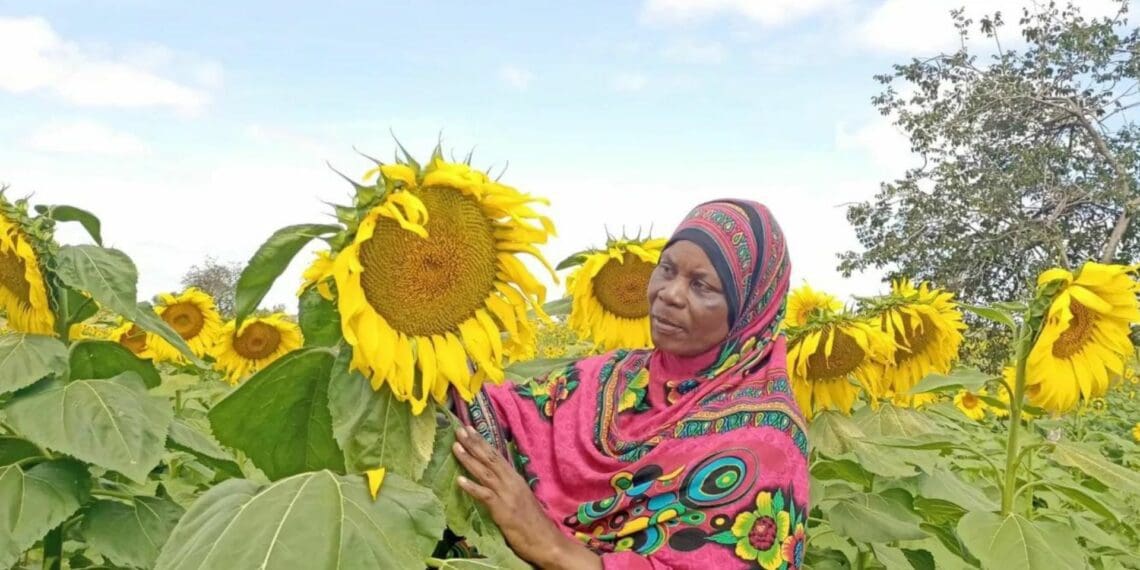
Support to improve women land ownership delivers life-changing benefits for women farmers in Tanzania, like Mariam Tungu, from Singida’s Ikungi district in central Tanzania. Photo: Supplied/FoodForAfrika.com

Support to improve women land ownership delivers life-changing benefits for women farmers in Tanzania, like Mariam Tungu, from Singida’s Ikungi district in central Tanzania. Photo: Supplied/FoodForAfrika.com

Share on FacebookShare on TwitterShare on WhatsApp

Tanzanian women are all too familiar with challenges of access to land, discriminatory social norms and attitudes, and limited access to credit and agricultural inputs.

Fed up with their realities, a group of women have taken matters into their own hands to secure access to land, information and agricultural inputs.

FoodforAfrika.com reports that in 2020, women from the village of Kipumbuiko joined forces and formed agricultural groups to pool resources and cultivate large pieces of land.

That same year, as part of the UN Women and UNFPA joint programme “Realizing Gender Equality through Empowering Women and Adolescent Girls”, UN Women partnered with Farm Africa to capacitate smallholder farmers’ groups in Kipumbuiko and surrounding villages.

The programme, supported by KOICA, educated farmers on modern, climate-smart agricultural practices to improve sunflower farming productivity.

Mariam Tungu, a farmer from Singida’s Ikungi district in central Tanzania, is one of the groups’ members who were trained and given improved sunflower seeds. They were also given enhanced access to markets through Agricultural Marketing Cooperatives.

Increased women’s land ownership

According to FoodforAfrika.com, Tungu spent decades cultivating the small piece of land behind her home and had resigned herself to yielding only enough to sustain her family.

“If we got lucky, we had a little extra to sell and give our children some meat or eggs that week but sustaining this didn’t seem possible at the time,” she said.

Thanks to the programme, Tungu and other smallholder farmers alike have seen increased income in their farming enterprises.

With evidence showing that increasing women’s land ownership improves their farming productivity, UN Women partnered with the Ministry of Lands, Housing and Human Settlements, and local authorities to draft village land-use plans for women to obtain certificates of customary rights of occupancy (CCROs).

This is being done  under the UN Joint Programme and allows for the ownership of land under customary law.

Click here to read the rest of the article on FoodForAfrika.com

ALSO READ: Kgodiso Development Fund, Grain SA give hope to Milnerdale Farm

Sign up for Mzansi Today: Your daily take on the news and happenings from the agriculture value chain.

Staff Reporter

Researched and written by our team of writers and editors.

Tags: African Women in AgricultureFemale FarmersTanzania
News

CPAs urged to register for free governance support toolkits

by Staff Reporter
21st October 2026

With 82% of registered CPAs facing non-compliance issues, Vumelana Advisory Fund has introduced free support toolkits to improve land management...

Read moreDetails

Potatoes and tomatoes plunge while avocado prices soar

20th October 2026
Becoming bankable: How to get your farm ready for finance

Becoming bankable: How to get your farm ready for finance

20th October 2026

Fixing SA’s agricultural visa system to protect seasonal harvests

20th October 2026
‘Beware the dangers of illegal foot-and-mouth vaccines’

SA and Namibia reevaluate livestock trade after FMD outbreak

20th October 2026

Mogogelo farmers receive packhouse and cold storage facilities

Crowdfunding breathes new life into neglected Limpopo citrus farm

Promising early conditions predicted for 2027 SA wine harvest

Stop the rot: Four steps to slash post-harvest losses

This week’s agri events: 19 – 23 October

Join Food For Mzansi's WhatsApp channel for the latest updates!

JOIN NOW!
Next Post
Carolien Samson, head of sustainable banking at Oxbury Bank Limited, considers how farming can both contribute to the greenhouse effect and mitigate the impact. She also unpacks climate adaptation and how farmers in SA and other countries are adopting a range of strategies. Photo: Supplied/FoodForMzansi

Climate change 101: How farmers adapt and mitigate

THE NEW FACE OF SOUTH AFRICAN AGRICULTURE

With 21 global awards in the first six years of its existence, Food For Mzansi is much more than an agriculture publication. It is a movement, unashamedly saluting the unsung heroes of South African agriculture. We believe in the power of agriculture to promote nation building and social cohesion by telling stories that are often overlooked by broader society.

Agda pushes for pathways to commercialise emerging farmers

Karoo sheep tallow finds new purpose in Mzansi beauty brand

Why simple farm records beat complex systems

Crowdfunding breathes new life into neglected Limpopo citrus farm

Mogogelo farmers receive packhouse and cold storage facilities

Godongwana unveils fuel relief and R10 billion El Niño buffer

  • Awards & Global Impact
  • Our Story
  • Contact Us
  • Cookie Policy
  • Privacy Policy
  • Copyright

Contact us
Office: +27 21 879 1824
News: info@foodformzansi.co.za
Advertising: sales@foodformzansi.co.za

Contact us
Office: +27 21 879 1824
News: info@foodformzansi.co.za
Advertising: sales@foodformzansi.co.za

  • Awards & Global Impact
  • Our Story
  • Contact Us
  • Cookie Policy
  • Privacy Policy
  • Copyright

Chat Options

About this assistant

This feature generates automated answers summarised from Food For Mzansi articles. By using it, you are interacting with an AI system (provided by Google), not a human. AI can make mistakes. Please refer to the source articles for verification and citation purposes.

Our staff do not check or moderate Lerato’s answers in advance, but may review some later. Our journalists continue to write and edit all the articles Lerato uses as sources.

To estimate unique and returning web users, we store a random browser ID in this browser. WhatsApp users are counted by phone number. The same person using both channels may be counted twice.

I'm Lerato, your AI assistant!
No Result
View All Result
  • News
  • Changemakers
  • Lifestyle
  • Farmer’s Inside Track
  • Food for Thought

Copyright © 2026 Food for Mzansi