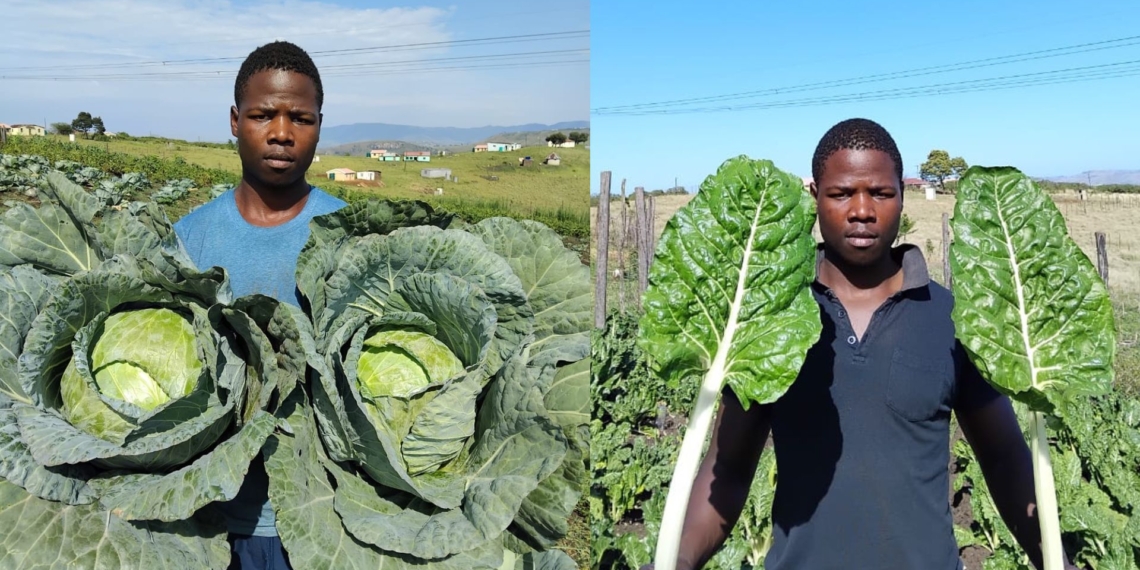
With hopes of becoming an electrical engineer, Lakhe Mangena from Mdudwa village in Flagstaff in the Eastern Cape once had his career path clearly mapped out. However, life had other plans. Instead of lecture halls and power grids, Mangena found his purpose in farming.
Mangena had grown up around farming and understood it deeply.
Today, he farms vegetables on his family’s land and in 2024 founded Imbewu Yethu Agri-Solutions, blending his passion for learning and teaching with the soil.
Trading wires for the land
After matric, Mangena moved to Cape Town to study electrical engineering at Northlink College’s Belhar Campus from 2022 to 2023. He says he initially enjoyed his classes, but by his second year, he began to feel that the course was not as exciting or fulfilling as he had imagined. Eventually, he dropped out and returned home to the Eastern Cape.
“I realised that being an electrician was not my passion. The course was draining me. After completing my N4 in December 2023, I decided to drop out and not continue my studies, even though I had passed.
“I would be an electrician or a teacher. I was inspired by these two professions as a child.”
Growing up, his father worked in the mines and returned home during holidays. “I grew up with my late father as the sole breadwinner, and Momma as a housewife, whom we respected a lot.”
Mangena says his mother kept them busy with the family food garden, which sustained them throughout the year, supported by the monthly income from his father’s mine work.
After school, on weekends, and during holidays, they worked in the garden. “That’s when we learned about traditional farming, to make manure from the kraal, from the cow’s dung.”
Mangena notes that these early lessons and traditional methods continue to guide him in his farming business today.
Related stories
- Flourishing go-getter ditches city for farm
- Taking chances pays off for NW livestock farmer
- Cultivating crops helps Zulu conquer hardships
- Visionary farmer takes agritourism to KZN village
Patience in every season
What works for Mangena is keeping his soil fertile by feeding it with food scraps, manure, and compost made at home. He explains that proper crop maintenance from the seedling stage through to harvest is crucial.
Understanding what a crop needs at each stage, he says, is key to achieving a quality harvest.
He farms on one hectare of fenced land, but water scarcity remains a major challenge. “I do not have my own JoJo tanks. We all use the same JoJo tank water for different purposes like cooking, cleaning, and washing clothes.”
Sadly, when the rain stops, the water runs out quickly, and his crops begin to suffer.
Mangena also shares that he recently registered his business. “What I need to grow this business into success is a consistent water supply, like a borehole, that would enable me to grow food throughout the whole year without losing sleep over whether it’s going to rain or not.”
He adds, “With enough water, I can expand as much as I want. Farming has taught me patience.”
From a business perspective, he says farming has also taught him that there are seasons in business, too.
“Seasons are not permanent; they change. Sometimes the business will not do well, and sometimes it will do well.”
Hard work that grows loyalty
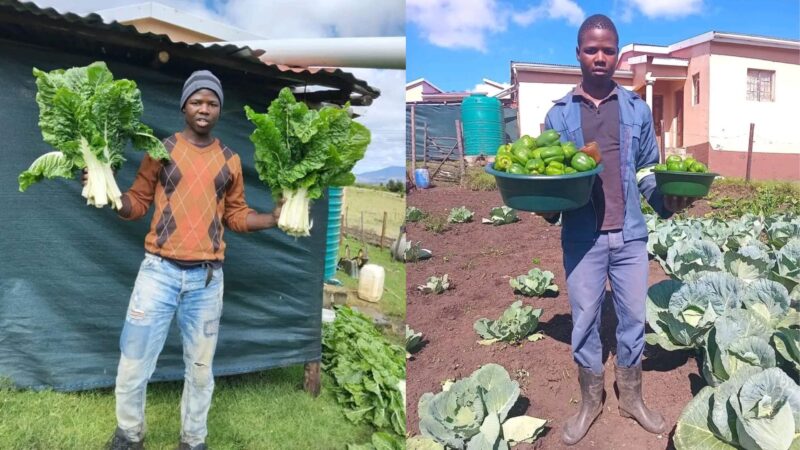
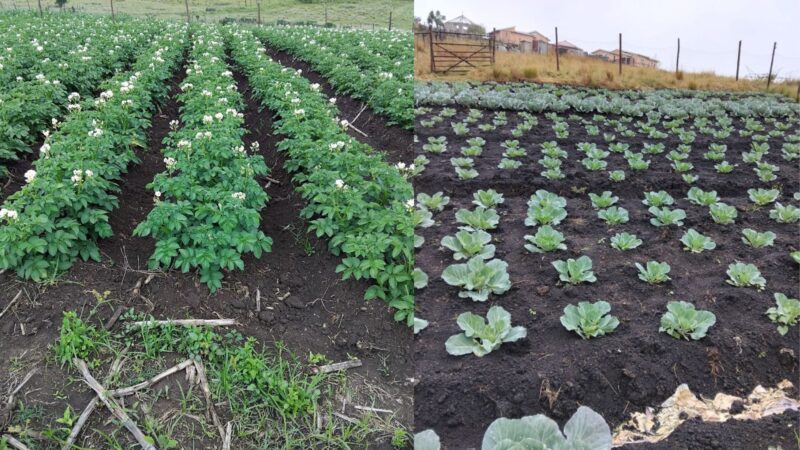
For now, Mangena does not have any formal marketing, as he is still waiting for his registration certificate. Instead, he relies on community support, selling his produce door to door in the village, including potatoes, spinach, cabbage and green peppers.
“Although doing door-to-door sales, it does work for me. I understand my customers. Some are old, and some live far from my home.”
If it were not for water scarcity, he would expand his vegetable range. He says there is something special about seeing people access fresh, quality produce locally, something his customers often confirm.
“To grow my business, I wish it were in a position where it can sustain itself even without my presence. In a position where I no longer have to do everything alone, tilling the soil with a spade, transplanting seedlings, watering my crops manually, and removing weeds manually.”
Mangena hopes to reach a stage where he can attend agricultural workshops and expos, and have reliable transport to serve clients beyond his village.
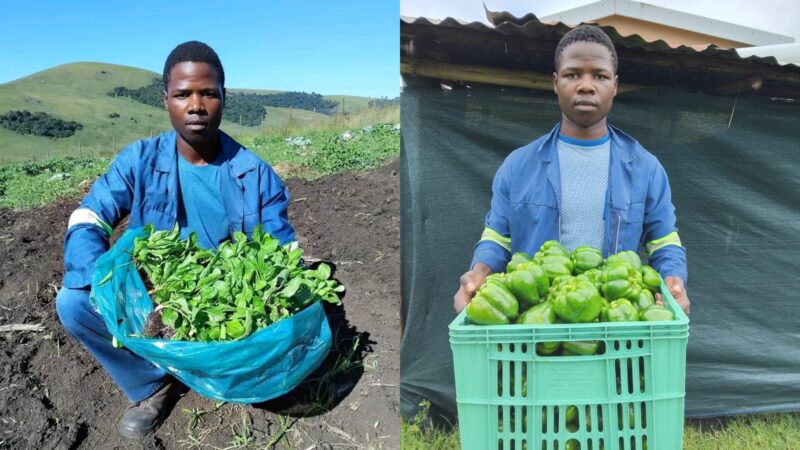
He admits the labour-intensive nature of farming takes a toll on the body, and proper equipment remains high on his wish list.
As someone who has loved teaching from a young age, he says, “I wish it could be a learning centre where agriculture students from around the country come and gain first-hand experience on the farm.”
He adds, “What I need to get there is guidance, mentorship from experts, and financial support to get the necessary tools needed to grow this business.”
For now, he enjoys teaching others about crops through social media.
READ NEXT: Learning and earning through farming drives Nkaqa