Wednesday, November 25, 2026
SUBSCRIBE
22 GLOBAL MEDIA AWARDS
Food For Mzansi
  • News
  • Changemakers
  • Lifestyle
  • Farmer’s Inside Track
  • Food for Thought
No Result
View All Result
  • News
  • Changemakers
  • Lifestyle
  • Farmer’s Inside Track
  • Food for Thought
No Result
View All Result
Food For Mzansi
No Result
View All Result
in Farmer's Inside Track

Gauteng farmer builds app to get fair livestock prices

After years of farming in Bronkhorstspruit, Kagiso Marule knew firsthand how stressful and uncertain selling livestock can be. Now, his app Live Stock is helping farmers verify buyers, benchmark animal prices, and trade safely straight from their phones

by Patricia Tembo
25th November 2026
Add FFM on Google
Kagiso Marule, founder of Live Stock, is drawing on his experience as a livestock farmer and background in technology to make buying and selling animals more accessible through a digital marketplace. Photo: Gareth Davies/Food For Mzansi


Is this conversation helpful so far? Photo: Gareth Davies/Food For Mzansi

Kagiso Marule, founder of Live Stock, is drawing on his experience as a livestock farmer and background in technology to make buying and selling animals more accessible through a digital marketplace. Photo: Gareth Davies/Food For Mzansi Is this conversation helpful so far? Photo: Gareth Davies/Food For Mzansi

Share on FacebookShare on TwitterShare on WhatsApp

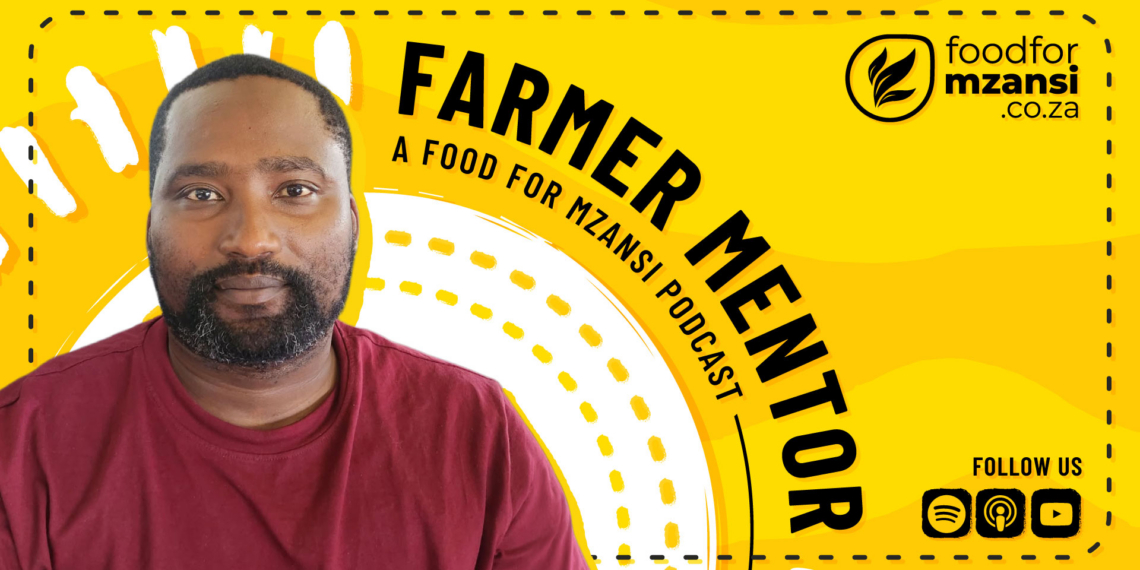
Selling livestock shouldn’t depend on who you know. After years of farming sheep, goats, and cattle in Bronkhorstspruit, Kagiso Marule turned one of agriculture’s biggest headaches into a digital solution. In this Farmer Mentor episode, he explains how he built the Live Stock trading app from scratch.


Kagiso Marule’s experience in livestock farming exposed him to a challenge many producers face: finding reliable buyers and securing a fair price for their animals. Combining this firsthand knowledge with his technology background, he set out to make livestock trading more accessible through an online platform.

Marule has been involved in livestock farming since 2011, working with sheep and goats before the family operation expanded on a 21-hectare farm in Bronkhorstspruit, Gauteng. The farm also keeps Bonsmara and Tuli cattle. 

His responsibilities included manual farm work and transporting animals, giving him practical insight into the demands of running a livestock business.

However, selling animals proved to be one of the industry’s biggest challenges.


Related stories
  • Prepare your livestock for a drier 2026/27 breeding season
  • Professionalism pays: How Jantjies built a thriving lucerne business
  • No one-size-fits-all: Liane’s lessons on leaving the land better
  • Simphiwe Hlubi: Why multi-stream income is the future of farming

Finding a fair market

Marule says farmers often rely on word of mouth and personal networks to find buyers. Although online advertisements can attract interest, enquiries do not always translate into sales.

Auction environments presented another challenge, particularly for farmers who are unfamiliar with established buyers and sellers.

“There’s a boys’ club that’s there, regular buyers, regular sellers,” he says.

He also experienced uncertainty around animal valuations, weights and grading, as well as the cost and stress associated with transporting livestock to market.

“How do you trust the person who’s at your gate? How do you trust the auctioneer who’s telling you the weight, who’s measuring and grading your animals?” he asks.

These experiences highlighted the importance of understanding the market and knowing what animals are worth before selling them.

For farmers, Marule says, this means keeping proper production records, understanding input costs and monitoring herd performance and breeding cycles. Knowing when to sell and what it costs to produce an animal can help farmers make more informed decisions rather than accepting the first offer they receive.

Turning a farming challenge into a business

In February 2024, Marule began developing the idea for Live Stock, an online platform to allow farmers to buy and sell animals using their phones.

Initially, he believed he would need substantial funding and professional developers to bring the idea to life. He approached agencies and potential funders, but struggled to gain traction.

Drawing on his experience in corporate technology, he eventually used artificial intelligence-assisted development tools to build the platform himself.

The experience reinforced an important lesson for aspiring entrepreneurs: a lack of funding or access to specialists does not necessarily mean an idea must be abandoned. Understanding the problem, having a clear vision and using available resources can help turn an idea into something practical.

Building trust into livestock trading

Live Stock aims to connect buyers and sellers while introducing verification and accountability into online transactions. 

Users undergo identity verification, while sellers must photograph their animals at the time of listing. Buyers commit funds before arranging to inspect the animals in person. If they are unhappy after viewing the livestock, they can decline the purchase and receive a refund, while the seller retains the animals.

The platform also provides pricing insights based on factors such as breed, age and weight, helping farmers to assess their animals against industry standards and other listings. Sellers remain responsible for setting their own prices.

Marule wants the platform to give farmers, regardless of the size of their operations or industry connections, an opportunity to reach buyers and access useful market information.

He also hopes to engage directly with farmers across the country, helping them use the platform while learning from their experiences.

For Marule, improving market access is essential to building a viable farming business.

“The value chain is not about production only. It’s all the way up to sale. So you need to be able to get in and then also be able to sell your product. Otherwise, what’s the point?” 

READ NEXT: When to plant fodder radish for better livestock feed in droughts

Sign-up to Farmer's Inside Track for the best farming tips, news and advice to thrive!


Add FFM on Google Follow FFM on Google News

Patricia Tembo

Patricia Tembo is motivated by her passion for sustainable agriculture. Registered with the South African Council for Natural Scientific Professions (SACNASP), she uses her academic background in agriculture to provide credibility and technical depth to her journalism. When not in immersed in the world of agriculture, she is engaged in outdoor activities and her creative pursuits.

Tags: Farmer mentorInspire meLivestock farming
Why seasonal rainfall averages don’t guarantee maize yields
Advertorial

Why seasonal rainfall averages don’t guarantee maize yields

by Lisakanya Venna
23rd November 2026

PARTNER CONTENT: Judging a season solely by total seasonal rainfall figures can be misleading for South African grain producers. In...

Read moreDetails
Top matric achiever skips varsity to build thriving farm from scratch

Top matric achiever skips varsity to build thriving farm from scratch

23rd November 2026
Beyond timber: How farmers can profit from multi-purpose trees

Beyond timber: How farmers can profit from multi-purpose trees

23rd November 2026
This week’s agri events: 23 – 27 November

This week’s agri events: 23 – 27 November

23rd November 2026

When to plant fodder radish for better livestock feed in droughts
22nd November 2026

Top matric achiever skips varsity to build thriving farm from scratch

How Alkelp is turning seaweed into biostimulants that deliver value on the farm

Beyond timber: How farmers can profit from multi-purpose trees

Why seasonal rainfall averages don’t guarantee maize yields

Business-first mindset drives success for EC mohair farmers

Join Food For Mzansi's WhatsApp channel for the latest updates!

JOIN NOW!

THE NEW FACE OF SOUTH AFRICAN AGRICULTURE

With 21 global awards in the first six years of its existence, Food For Mzansi is much more than an agriculture publication. It is a movement, unashamedly saluting the unsung heroes of South African agriculture. We believe in the power of agriculture to promote nation building and social cohesion by telling stories that are often overlooked by broader society.

Gauteng farmer builds app to get fair livestock prices

Ramasodi: ‘The best is yet to come for South African agriculture’

Stop losing money on poor livestock marketing – here’s how to fix it

Veg prices crash ahead of festive season, squeezing SA farmers

Working with nature: How soil health builds resilient farms

Enza Zaden field days prove crop performance from farm to market

  • Awards & Global Impact
  • Our Story
  • Contact Us
  • Cookie Policy
  • Privacy Policy
  • Copyright

Contact us
Office: +27 21 879 1824
News: info@foodformzansi.co.za
Advertising: sales@foodformzansi.co.za

Contact us
Office: +27 21 879 1824
News: info@foodformzansi.co.za
Advertising: sales@foodformzansi.co.za

  • Awards & Global Impact
  • Our Story
  • Contact Us
  • Cookie Policy
  • Privacy Policy
  • Copyright

Chat Options

About this assistant

This feature generates automated answers summarised from Food For Mzansi articles. By using it, you are interacting with an AI system (provided by Google), not a human. AI can make mistakes. Please refer to the source articles for verification and citation purposes.

Our staff do not check or moderate Lerato’s answers in advance, but may review some later. Our journalists continue to write and edit all the articles Lerato uses as sources.

To estimate unique and returning web users, we store a random browser ID in this browser. WhatsApp users are counted by phone number. The same person using both channels may be counted twice.

I'm Lerato, your AI assistant!
No Result
View All Result
  • News
  • Changemakers
  • Lifestyle
  • Farmer’s Inside Track
  • Food for Thought

Copyright © 2026 Food for Mzansi