Wednesday, November 25, 2026
SUBSCRIBE
22 GLOBAL MEDIA AWARDS
Food For Mzansi
  • News
  • Changemakers
  • Lifestyle
  • Farmer’s Inside Track
  • Food for Thought
No Result
View All Result
  • News
  • Changemakers
  • Lifestyle
  • Farmer’s Inside Track
  • Food for Thought
No Result
View All Result
Food For Mzansi
No Result
View All Result
in News

Stop losing money on poor livestock marketing – here’s how to fix it

Poor marketing and hidden abattoir penalties are eating cattle farmers’ profits. Experts unpack how taking charge of animal valuation, compliance, sales channels, and carcass grading can help you stop losing money and boost your farm’s returns

by Lisakanya Venna
25th November 2026
Add FFM on Google
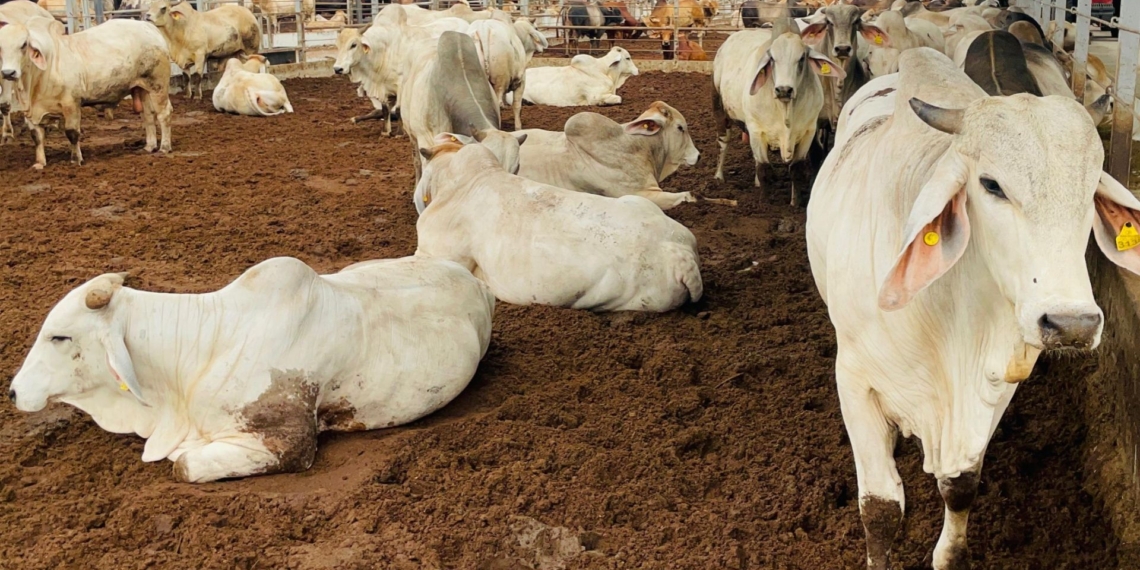
Success in cattle farming goes beyond herd numbers and depends on how well producers prepare, value, and market their animals. Photo: Lisakanya Venna/Food For Mzansi

Success in cattle farming goes beyond herd numbers and depends on how well producers prepare, value, and market their animals. Photo: Lisakanya Venna/Food For Mzansi

Share on FacebookShare on TwitterShare on WhatsApp

Producers have been encouraged to take a more hands-on approach to preparing, valuing, and marketing their livestock. The message emerged during the fourth webinar in the Livestock Growth Series, hosted by Red Meat Industry Services (RMIS) and the Agricultural Development Agency (Agda).

Leading the session, “Deciding where to sell: How to and where to sell”, RMIS technical advisor Frans Dolamo challenged producers to evaluate their approach before taking cattle to market.

He asked farmers to consider whether they are actively producing for the market or simply hoping the market accommodates them, whether they truly know the value of their animals rather than leaving it up to buyers, and whether they are fully prepared in terms of animal quality, identification, traceability, and movement documentation.

Dolamo noted that structured cattle marketing helps farmers identify opportunities, make informed decisions on when and where to sell, understand valuation and pricing, and select the most suitable sales channel.

“Know where to get your returns from,” he urged producers, adding that livestock farmers must stop relying on buyers to determine the worth of their animals and instead take charge of market preparation, pricing calculations, and regulatory compliance.


Related stories
  • Practical management tips every SA livestock farmer must follow
  • Festive demand vs. El Niño: What’s driving SA’s livestock market?
  • How blood parasites harm cattle health and livestock livelihoods
  • Dairy dynasty: Family, innovation fuel Foundation Farm success

Preparing animals and choosing the right channel

Dolamo said preparing livestock for the market begins with selecting suitable animals based on body condition scoring (BCS), live weight, age, breed, and frame size, supported by supplementary feeding and sound animal health. Farmers must also understand liveweight versus carcass-based pricing and how age, weight, breed, condition, and market demand determine price per kilogram.

He outlined the trade-offs across three primary marketing channels:

  • Auctions: Offer competition, transparency, and exposure, but carry commission fees, transport costs, and price uncertainty.
  • Feedlots: Provide bulk sales, consistent demand, and market access, though they enforce strict selection criteria, weight requirements, and deductions.
  • Direct sales: Allow price negotiation, zero commission, and buyer relationships, but involve limited buyers, payment risks, and greater marketing effort.

Before animals leave the farm, Dolamo stressed that farmers must meet all compliance rules, including animal identification and branding, traceability records, movement permits, and pre-transport health requirements.

“Success in livestock farming goes beyond herd numbers; it lies in how well you prepare, value and market your animals,” Dolamo said.

Abattoir grading and avoiding carcass penalties

Co-presenter Chris Ngeleza, quality manager (NR) and technical manager at the South African Meat Industry Company (Samic), which inspects abattoirs and regulates red meat marking, unpacked carcass classification standards for beef, lamb, mutton, and goat meat.

Carcass age is classified by teeth using colour-coded roller marks:

  • Class A (Purple AAA): Young animal with no permanent teeth.
  • Class AB (Green AAAB): Slightly older animal with one to two permanent teeth.
  • Class B (Brown BBB): Older animal with three to six permanent teeth.
  • Class C (Red CCC): Old animal with more than six permanent teeth.

“The age determines the softness of the meat,” Ngeleza said.

Carcasses are also graded on fatness, ranging from no visible fat to excessively fat, measured between height and length. Ngeleza warned that carcasses with little to no fat indicate underfeeding, while overfat carcasses signal overfeeding, “so you will be penalised on that”.

While most buyers look for lean to medium-fat carcasses, some markets specifically require higher fat levels, making it vital that farmers know their buyer’s requirements.

To avoid further deductions, Ngeleza advised farmers to inject animals in the leg rather than the rump, noting the leg is cheaper, and rump blemishes or bruising attract penalties. Because carcass prices fluctuate weekly, he urged farmers to check ahead on market pricing before committing to a sale by asking: “What is the price next week?”

“Success in livestock farming goes beyond herd numbers; it lies in how well you prepare, value and market your animals,” he said.

READ NEXT: Agri Western Cape slams 15% agricultural water cut

Sign-up to Farmer's Inside Track for the best farming tips, news and advice to thrive!

Add FFM on Google Follow FFM on Google News

Lisakanya Venna

Lisakanya Venna is a junior journalist and content coordinator with varied multimedia experience. As a CPUT journalism alumni, she finds fulfilment in sharing impactful stories and serving as a reliable source of information.

Tags: Agricultural Development Agency (AGDA)Inform meRed Meat Industry Services (RMIS)
Beyond timber: How farmers can profit from multi-purpose trees
News

Beyond timber: How farmers can profit from multi-purpose trees

by Vateka Halile
23rd November 2026

Thinking of starting a tree-growing enterprise? Food and Trees for Africa’s Robyn Hills explains how to grow multi-purpose trees that...

Read moreDetails
This week’s agri events: 23 – 27 November

This week’s agri events: 23 – 27 November

23rd November 2026

When to plant fodder radish for better livestock feed in droughts

22nd November 2026
Neat rows of young crops cover a sloping green field beneath lush, forested hills and a dramatic, overcast sky.

Private partnerships unlock millions for land reform beneficiaries

21st November 2026
Rooibos industry targets global growth while protecting local roots

African markets offer fresh growth opportunities for SA rooibos

21st November 2026

Eight-year harvest low threatens survival of SA wheat farms

Beyond the bottle: How black-owned wines can win market share

Supplying Joburg Market: Phumla Qwabe grows her next chapter

Working with nature: How soil health builds resilient farms

This week’s agri events: 23 – 27 November

Join Food For Mzansi's WhatsApp channel for the latest updates!

JOIN NOW!

THE NEW FACE OF SOUTH AFRICAN AGRICULTURE

With 21 global awards in the first six years of its existence, Food For Mzansi is much more than an agriculture publication. It is a movement, unashamedly saluting the unsung heroes of South African agriculture. We believe in the power of agriculture to promote nation building and social cohesion by telling stories that are often overlooked by broader society.

Stop losing money on poor livestock marketing – here’s how to fix it

Veg prices crash ahead of festive season, squeezing SA farmers

Working with nature: How soil health builds resilient farms

Enza Zaden field days prove crop performance from farm to market

South Africa’s job crisis: Why the agricultural sector is bleeding

Boshof Solar Power backs three-year emerging farmer programme

  • Awards & Global Impact
  • Our Story
  • Contact Us
  • Cookie Policy
  • Privacy Policy
  • Copyright

Contact us
Office: +27 21 879 1824
News: info@foodformzansi.co.za
Advertising: sales@foodformzansi.co.za

Contact us
Office: +27 21 879 1824
News: info@foodformzansi.co.za
Advertising: sales@foodformzansi.co.za

  • Awards & Global Impact
  • Our Story
  • Contact Us
  • Cookie Policy
  • Privacy Policy
  • Copyright

Chat Options

About this assistant

This feature generates automated answers summarised from Food For Mzansi articles. By using it, you are interacting with an AI system (provided by Google), not a human. AI can make mistakes. Please refer to the source articles for verification and citation purposes.

Our staff do not check or moderate Lerato’s answers in advance, but may review some later. Our journalists continue to write and edit all the articles Lerato uses as sources.

To estimate unique and returning web users, we store a random browser ID in this browser. WhatsApp users are counted by phone number. The same person using both channels may be counted twice.

I'm Lerato, your AI assistant!
No Result
View All Result
  • News
  • Changemakers
  • Lifestyle
  • Farmer’s Inside Track
  • Food for Thought

Copyright © 2026 Food for Mzansi