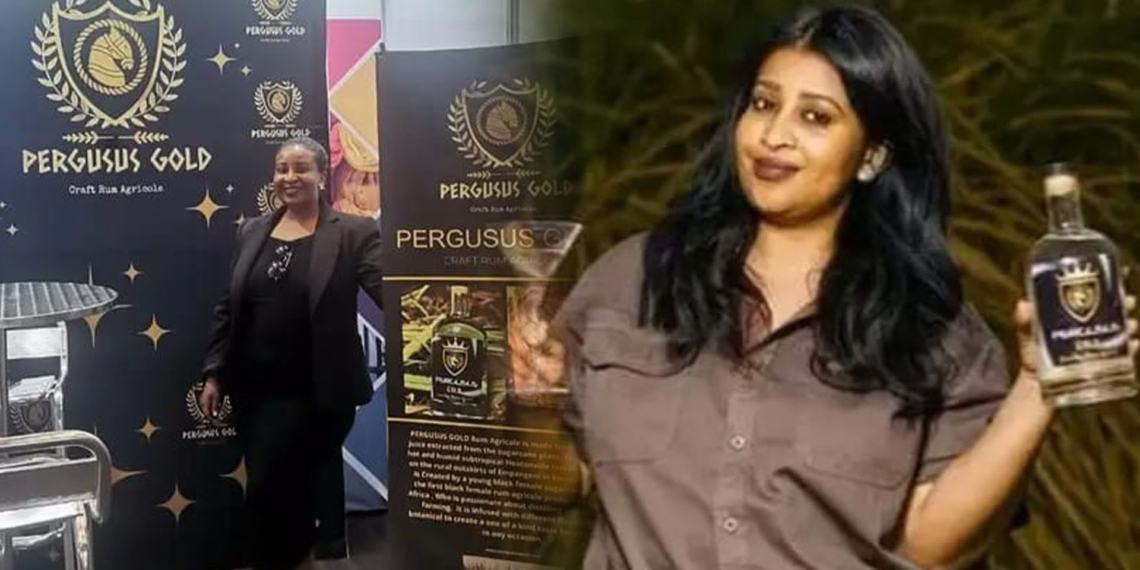
While young black women remain a rare sight in commercial sugarcane farming, one Dukuza-born entrepreneur is using her marketing savvy and a “happy mistake” to turn a 165-hectare farm into a premier craft distillery.
In the rolling green hills of Heatonville, Empangeni, Gugulethu Precious Masuku is reimagining the potential of the South African sugar industry.
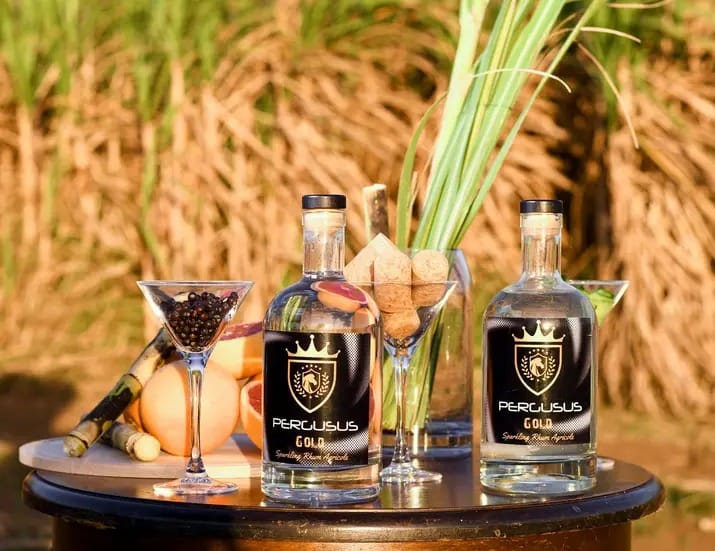
As a fourth-generation farmer and the founder of her own spirits brand, Pegasus Gold, Masuku is not merely harvesting cane; she is distilling a future that honours her lineage while carving out a unique space in the competitive world of craft alcohol.
A farming heritage
The story of this land is woven into Masuku’s DNA. Her great-great-grandmother was a subsistence sugarcane farmer, a tradition carried forward by her parents, Khulekani and Thulisile.
Growing up in nearby Dukuza, Masuku’s childhood was a “beautiful upbringing” surrounded by agriculture; if the family wasn’t tending to sugarcane, they were growing vegetables.
She attended Empangeni Primary School and later Empangeni High School, where she understood the mechanics of the family business, yet felt a strong desire to explore life beyond the farm.
Determined to find a different path after matric, Masuku moved to the city around 2007 to enrol at the University of Johannesburg (UJ), where she completed a one-year marketing course.
Seeking a different direction, she moved to Boston Media House to complete a two-year qualification in hospitality. After her studies, she quickly found her footing professionally, working in food and beverage at Crowne Plaza and Moro’s Place, where she honed her skills.
Related stories
- From bitter to sweet: Tongaat Hulett farmers feel at ease
- Visionary KZN farmer turns sugarcane fields into hemp future
- Sugar tax, cheap imports endanger rural livelihoods
Finding her way back to the land
The shift back to her roots happened in stages. After her time in the hospitality world, she went on to help her aunt, Zamanje Mthembu, in her catering company. Seeing her aunt manage her own business sparked a dormant ambition.
“I told myself I wanted to venture now into business as well,” she recalls, “little did I know that all of that would lead me back to farming.”
Initially, still unsure of her long-term path, Masuku decided to return home. At that stage, she didn’t yet know she would pursue farming full-time, but she began assisting her parents on their land. It was during this period of transition that a “happy mistake” changed everything.
After being gifted homemade jam by a neighbour, Masuku decided to make her own using fruits from her parents’ garden. When the mixture fermented, she nearly threw it away, thinking it had spoiled. However, a farmworker tasted it and encouraged her to keep going.
“They wanted more [the farmworker], and I realised I might be onto something.”
That accidental fermentation led to a period of intense research into Rhum Agricole, a style of rum made directly from sugarcane juice – and eventually her signature gin, Zululand Snow.
This discovery solidified her passion for the industry, leading her to formalise her own agricultural path.
She was later selected as a beneficiary of the Proactive Land Acquisition Strategy (PLAS) programme, a government initiative that granted her 165 hectares of land in Heatonville, Empangeni. There, she planted her own sugarcane to power her distillery and to launch an independent operation, away from her parents.
Navigating the path to diversification
Today, Masuku has successfully bridged the gap between agriculture and luxury retail. Under the Pegasus Gold banner, she uses her marketing and hospitality expertise to supply local markets and private events.
She also manages her farm with a lean team of five casual workers, scaling up during the labour-intensive periods of crushing and distilling.

Reflecting on her shift in perspective, she says, “It’s strange how everything fell into place, and food and beverage ended up being part of farming and what I’m doing right now… as I grew older, I realised that I do have a love for farming.”
However, the transition from farmer to distiller has not been without its trials. While the government provided the land, Masuku’s business remains entirely self-funded.
“I run into a bit of a problem with funding because of what I do,” she explains, noting that she falls into a specific tax bracket that makes securing external grants difficult.
Beyond the financial hurdles, it is the lack of representation that strikes her most. “There’s not a lot of women within the sugar space, within the sugarcane industry, or within farming,” she says. “I think most of them sort of end up within small-scale subsistence, but when you’re looking at land reform, and you’re looking at commercial players, there’s not a lot of us.”
Looking ahead, Masuku plans to diversify her range with ready-to-drink gin and tonics and is eyeing expansion into the wider African market. Her advice to other women thinking of going into farming is a simple, direct call to action: “Definitely do it.”
READ NEXT: Sugar crisis as Tongaat Hulett files for provisional liquidation