Wednesday, July 22, 2026
SUBSCRIBE
22 GLOBAL MEDIA AWARDS
Food For Mzansi
  • News
  • Changemakers
  • Lifestyle
  • Farmer’s Inside Track
  • Food for Thought
No Result
View All Result
  • News
  • Changemakers
  • Lifestyle
  • Farmer’s Inside Track
  • Food for Thought
No Result
View All Result
Food For Mzansi
No Result
View All Result
in Weird & Wonderful

How scientists use ‘portholes’ to study cows’ rumens

One scientist said the porthole method is important if "we are going to maximise food production and minimise greenhouse gases"

by Zolani Sinxo
17th January 2022
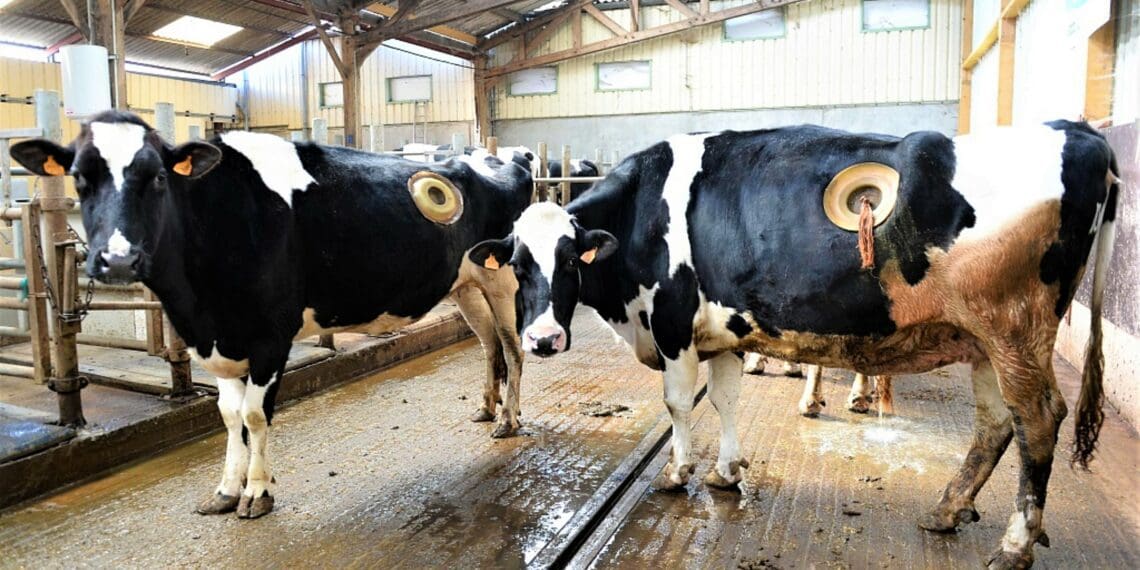
The practice of piercing portholes into cows dates back as early as the 1920s. Photo: Supplied/VCG

The practice of creating portholes into cows is said to date back as early as the 1920s. Photo: Supplied/VCG

Share on FacebookShare on TwitterShare on WhatsApp

Since the beginning of time, researchers and scientists have been known for using unconventional methods to try and understand the world around us. Who would have thought that they could cut holes into cows’ stomachs to better understand their digestive system?

Veterinary researchers in Europe and the United States have been experimenting on cow digestive systems for many years, using “porthole” to access their rumens. The method is not sitting well with some animal lovers.

According to the website Farm Animal Report, the surgical procedure is done when the cow is standing. Local anaesthesia is given and the skin is cut to create a hole. A cannula is passed through the hole to keep it open. “A removable cap is also included for easy access. After a period of six months, when healing is completed, the cow becomes ready for the desired purpose.”

The aim of the experiment is reportedly to perfect feeding so the cows produce as much milk as possible. It is done more specifically to study the animal’s digestive system and to “reduce the use of antibiotics and lower the nitrate and methane emissions linked to livestock farming”.

Featured at agricultural shows

According to researchers, this practice dates back to as early as the 1920s.

The BBC reports that Scotland Rural Collage academic director Jamie Newbold has said studying cows’ stomachs is important if “we are going to maximise food production and minimise greenhouse gases”. The method is used for assessing the functioning of the gastrointestinal tract and to conduct digestibility trials, for instance, by allowing access for taking samples.

“It’s an operation normally done under anaesthetic, but once the animal has recovered, it tends to live far longer than the average cow. It suffers pain during the process but I’m aware of animals living 12 to 15 years after the operation has been done,” said Newbold.

In some parts of Switzerland, cows with portholes are sometimes showcased at agricultural events during which people are invited to reach with their hands down the cow’s stomach.

But in 2019, images from France of cows with portholes caused outrage on social media, with many animal lovers condemning the practice. Political figures also condemned the practice as illegal and serious animal abuse.

Despite it sparking an outcry, it is still practised in many parts of the world.  

ALSO READ:  Buried to come back as a fruit tree? Yes, it’s happening

Sign up for Mzansi Today: Your daily take on the news and happenings from the agriculture value chain.

Zolani Sinxo

Zolani is an award-winning journalist and holds a National Diploma and a B Tech in journalism, he is a journalist at heart with a particular interest in developmental journalism, politics, African development stories, environment, and global and national current affairs. He started to develop an interest in writing and storytelling at a young age after he co-authored a folk tales children’s book in 2005 titled Our Stories, Amabali Ethu. After graduating, Zolani worked at various government institutions where he worked in the marketing and communication departments specialising in media liaison and editorial management. His passion for developmental journalism saw him being a co-founder of a community newspaper in Stellenbosch, Umlambo News. He has also worked for the Group Editors as a journalist for the George Herald and is also the editor of Idinga community newspaper. Zolani loves books, especially on Africa’s politics, history, stories, and biographies of African leaders who have made a significate contribution to the continent’s socio-economic wellbeing.

Tags: dairy cowsLivestock farmers
Harnessing the power of passive rainwater harvesting
News

Deadline looms: Register water use by 23 July or risk penalties

by Lisakanya Venna
20th July 2026

South African water users have until 23 July 2026 to declare their usage to the DWS. Whether you’ve bought new...

Read moreDetails
This week’s agri events: 20 – 24 July

This week’s agri events: 20 – 24 July

20th July 2026

Climate change: SA’s food processors are feeling the heat

19th July 2026
The Forest of Renewal at Rustlers Valley celebrates the intertwined legacies of Frik Grobbelaar, Anton Chaka and Riky Rick, inviting South Africans to restore the land while cultivating hope, belonging and community. Illustration: ChatGPT

Rustlers Valley offers a blueprint for South Africa’s renewal

18th July 2026
Grain SA appoints Mabuza to lead farmer development

Rising stars: 2026 PGP finalists redefining SA grain farming

18th July 2026

Minister details Land Bank’s success in boosting black farmers

How this KZN agricultural advisor is bringing tech to rural fields

Treat food processing as essential national infrastructure – Khoury

Mother’s legacy, neighbour’s grace: Venessa Simelane’s farm story

Shoprite hits 300th food garden milestone in Bredasdorp

Join Food For Mzansi's WhatsApp channel for the latest updates!

JOIN NOW!
Next Post
What does South Africa's agricultural policy landscape for 2022 look like? Supplied/Food For Mzansi

ICYMI: These agri policy discussions will dominate 2022

THE NEW FACE OF SOUTH AFRICAN AGRICULTURE

With 21 global awards in the first six years of its existence, Food For Mzansi is much more than an agriculture publication. It is a movement, unashamedly saluting the unsung heroes of South African agriculture. We believe in the power of agriculture to promote nation building and social cohesion by telling stories that are often overlooked by broader society.

No one-size-fits-all: Liane’s lessons on leaving the land better

Shoprite hits 300th food garden milestone in Bredasdorp

Tech and solar upgrades drive growth at Ceres Fruit Growers

Smart vineyard irrigation starts below the ground

Treat food processing as essential national infrastructure – Khoury

Farmers urged to embrace uncertainty and build resilience

  • Awards & Global Impact
  • Our Story
  • Contact Us
  • Cookie Policy
  • Privacy Policy
  • Copyright

Contact us
Office: +27 21 879 1824
News: info@foodformzansi.co.za
Advertising: sales@foodformzansi.co.za

Contact us
Office: +27 21 879 1824
News: info@foodformzansi.co.za
Advertising: sales@foodformzansi.co.za

  • Awards & Global Impact
  • Our Story
  • Contact Us
  • Cookie Policy
  • Privacy Policy
  • Copyright

Chat Options

I'm Lerato, your AI assistant!
No Result
View All Result
  • News
  • Changemakers
  • Lifestyle
  • Farmer’s Inside Track
  • Food for Thought

Copyright © 2024 Food for Mzansi

This website uses cookies. By continuing to use this website you are giving consent to cookies being used. Visit our Privacy and Cookie Policy.