Saturday, October 3, 2026
SUBSCRIBE
22 GLOBAL MEDIA AWARDS
Food For Mzansi
  • News
  • Changemakers
  • Lifestyle
  • Farmer’s Inside Track
  • Food for Thought
No Result
View All Result
  • News
  • Changemakers
  • Lifestyle
  • Farmer’s Inside Track
  • Food for Thought
No Result
View All Result
Food For Mzansi
No Result
View All Result
in Lifestyle

How to make compost with kitchen scraps

Two gardening junkies share their secrets when it comes to making their own compost in order to grow the best quality produce. Their advice will also save you a few trips to the kitchen bin and back

by Duncan Masiwa
29th June 2022
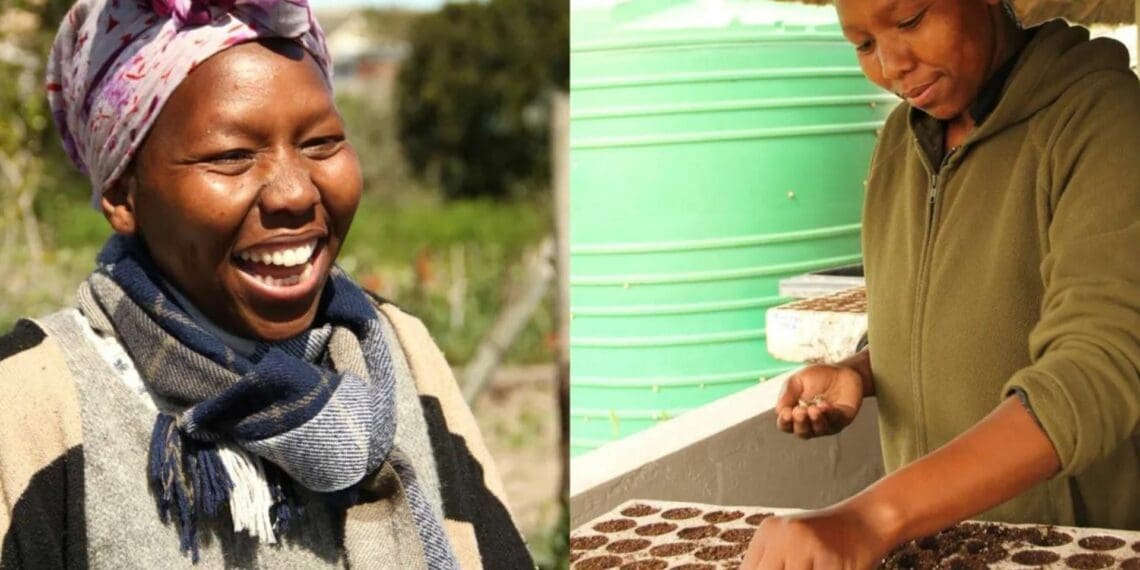
Food scraps and yard waste together currently make up more than 30% of what we throw away, and could be composted instead. Babalwa Mpayipeli uses the technique of bokashi composting. Photo: Supplird/Health For Mzansi

Food scraps and yard waste together currently make up more than 30% of what we throw away, and could be composted instead. Babalwa Mpayipheli uses the technique of bokashi composting. Photo: Supplird/Health For Mzansi

Share on FacebookShare on TwitterShare on WhatsApp

What if we told you that compost made from kitchen scraps is liquid gold for your garden and a clever way to save money on input costs? But you don’t have to take our word for it.

According to Babalwa Mpayipheli, a field worker at Abalimi bezekhaya garden in Khayelitsha, Cape Town, you should think twice before chucking your kitchen scraps away. Instead, you should consider using them to make your own compost.

In an interview with Health For Mzansi journalist, Vateka Halile, Mpayipheli explains using a technique known as “bokashi” composting. This is a traditional composting practice that uses bacteria to break down food scraps and garden waste.

Mpayipheli asks why not use your kitchen waste as compost for your very own garden at home? “We use compost piles of one meter in length and width for bi-gardens and community gardens.”

In the article, Mpayipheli offers a complete bokashi composting guide for home gardening, and notes that it may be used in confined spaces and prevents insects and odours.

Gengezi Bubu-Yuze. Photo: Vateka Halile/Health For Mzansi

Keeping it natural

If you can’t stand unpleasant odours, then the bokashi method might not be your thing. According to Gengezi Buba-Yuze from Mandalay in Cape Town, the bokashi method does not work for her because of the odour. Instead of doing this, she has decided to dig a hole in her garden.

“What I do is carry all of our kitchen scraps to the garden and cover it with topsoil.”

This has made her sandy garden more like the rich soil she is used to in the Eastern Cape. She adds that the presence of earthworms in her garden has made the soil fertile, which is beneficial for her garden.

“Earthworms are essential to the health of the soil because they bring nutrients and minerals from below to the surface through decomposed organic matter.”

Buba-Yuze says that her produce tastes better since she began preparing her own compost. She says that even neighbours who purchase tomatoes, spinach, and spring onions from her, relish the organic nature of the produce.

The article offers more advice on useful scraps to use for your garden and a breakdown of the bokashi composting method.

This article was written by Vateka Halile and originally published on Health for Mzansi.

ALSO READ: How to make a compost area with limited resources
Duncan Masiwa

DUNCAN MASIWA is the assistant editor at Food For Mzansi, South Africa’s leading digital agriculture news publication. He cut his teeth in community newspapers, writing columns for Helderberg Gazette, a Media24 publication. Today, he leads a team of journalists who strive to set the agricultural news agenda. Besides being a journalist, he is also a television presenter, podcaster and performance poet who has shared stages with leading gospel artists.

Tags: CompostingHealth For MzansiSoil
News

Tomatoes surge, potatoes tighten as fresh produce prices shift

by Raylentia Simmons
30th September 2026

Agricultural economist Conce Moraba breaks down South Africa’s latest fresh produce shifts for GroundRules. With tomatoes surging 38% and potatoes...

Read moreDetails
Master farming first: Jotham’s formula for multi-stream income

Master farming first: Jotham’s formula for multi-stream income

30th September 2026
SADC symposium brings plant nutrition research closer to the farm

SADC symposium brings plant nutrition research closer to the farm

30th September 2026
High input costs drive SA grain farmers to rethink crop mix

High input costs drive SA grain farmers to rethink crop mix

30th September 2026
Mechanisation boost as NW farmers receive key implements

Mechanisation boost as NW farmers receive key implements

30th September 2026

Inchanga Agroecology Hub: Building lasting community impact

Why money is not moving to SA farmers – and how to fix it

How unity, technology, and value addition drive farm profitability

Mechanisation boost as NW farmers receive key implements

Pivot to poultry: Jennifer Gazide swaps boardroom for broiler house

Join Food For Mzansi's WhatsApp channel for the latest updates!

JOIN NOW!
Next Post
John Deere Launches Africa’s Largest Capacity Combine. Photo:Supplied/Food For Mzansi

Get inside Africa's largest combine harvester

THE NEW FACE OF SOUTH AFRICAN AGRICULTURE

With 21 global awards in the first six years of its existence, Food For Mzansi is much more than an agriculture publication. It is a movement, unashamedly saluting the unsung heroes of South African agriculture. We believe in the power of agriculture to promote nation building and social cohesion by telling stories that are often overlooked by broader society.

Beyond tradition: Mbatha takes SA goat meat to retail and the world

Royal Show: FNB brings farmers together to talk collaboration

Regulatory barriers and capital costs stall SA dragon fruit growth

‘Citrus Irrigation’ guide empowers growers amid water scarcity

Earth as a pharmacy: Dlamini builds backyard dandelion brand

Inchanga Agroecology Hub: Building lasting community impact

  • Awards & Global Impact
  • Our Story
  • Contact Us
  • Cookie Policy
  • Privacy Policy
  • Copyright

Contact us
Office: +27 21 879 1824
News: info@foodformzansi.co.za
Advertising: sales@foodformzansi.co.za

Contact us
Office: +27 21 879 1824
News: info@foodformzansi.co.za
Advertising: sales@foodformzansi.co.za

  • Awards & Global Impact
  • Our Story
  • Contact Us
  • Cookie Policy
  • Privacy Policy
  • Copyright

Chat Options

I'm Lerato, your AI assistant!
No Result
View All Result
  • News
  • Changemakers
  • Lifestyle
  • Farmer’s Inside Track
  • Food for Thought

Copyright © 2024 Food for Mzansi