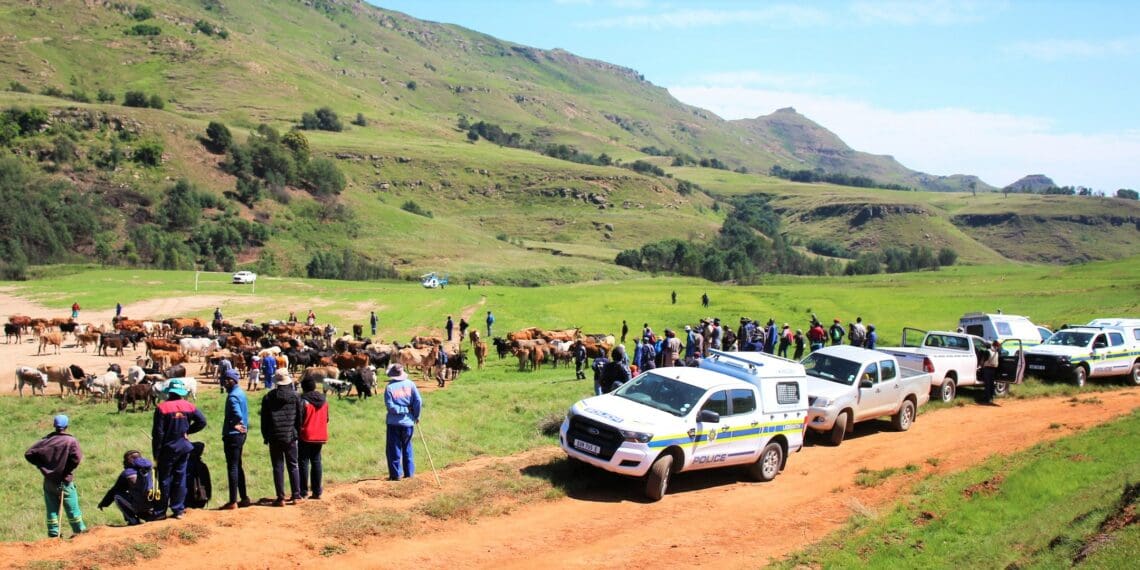
Agri SA is calling on the South African Police Service (SAPS) to prioritise the security and safety of farming communities when implementing its national safer festive season operation.
The operation, recently announced by police minister Bheki Cele, focuses on crime hotspots and will see heightened police visibility at shopping centres, national roads, at South African border posts and at tourist destinations throughout the festive season.
Agri SA deems it important that the operation also be conducted visibly in rural areas, and welcomed the national commissioner of police’s announcement that the rural safety strategy would be applied in the festive period to deal with stock theft and attacks on the farming community.
According to Uys van der Westhuijzen, chair of Agri SA’s centre of excellence for rural safety, “The high crime levels, particularly farm attacks which recently flared up again, have had a devastating impact on various farming operations.”

Farmers also suffer enormous losses due to an increase in product and input theft and looting on farms.
High-risk crimes such as illegal hunting with dogs, especially in organised groups, pose a further threat to the safety of the farming community. These criminals will not hesitate to use violence if confronted, Agri SA states, adding that this also poses a threat to wildlife that are poached and exposed to serious trauma in this manner.
‘Police must be proactive’
The police need to follow a proactive approach in implementing national instructions to prevent trespassing and land invasions, which have the potential of creating further conflict if not dealt with promptly by the police.
“The police must take [this] seriously and do their legal duty instead of standing by passively without considering the victim’s right to effective policing”, says Van der Westhuijzen.
Agri SA says it is fully aware of farmers’ frustration with the high incidence of crime they face daily.
“Farmers should not despair, however, because we can, together, find solutions to these challenges. Agri SA also acknowledges those farmers who contribute towards curbing rural crime within their communities and who serve in various security structures in the interest of the organisation and their fellow farmers.
“We are aware that it requires sacrifice and a lot of time away from their businesses and that it places a financial burden on those individuals and their farming operations,” Van der Westhuijzen pointed out.
ALSO READ: Farm attacks a ‘ticking bomb’ for food producers
Wine body loses against government
South African wine body Vinpro has expressed its disappointment in the Cape High Court’s ruling on its dispute of government’s approach to liquor restrictions.

Vinpro argued three points during its court case, which was heard from 23 to 25 August 2021.
Vinpro’s arguments centred around government structures (provincial vs national), an interim application asking to take evidence regarding the third wave into account, as well as the issue of mootness since the ban had been partially lifted at the time.
The court, however, refused Vinpro’s application to introduce new evidence, found the application as moot (as regulations has since changed) and dismissed the structure of government argument. The court also determined that each party should be liable for their own legal costs.
“We are extremely disappointed in the ruling,” said Rico Basson, Vinpro’s managing director.
“Government’s blunt approach, unwillingness to consult and lack of transparency regarding the empirical data used in decision making has caused irreversible damage to the wine and tourism industry.”
The industry, Basson explains has not only lost more than R10 billion in sales revenue, but also seen significant job losses and suffered international reputational damage.
“The only way for wine-related businesses to recover and rebuild is by creating an enabling environment for sustainable growth. This includes government policies that are based on thorough and transparent empirical data and are consistently implemented and strictly enforced,” Basson said.
‘At the mercy of legal process’
In response to the judges’ criticism of Vinpro over the timing of its court applications, Basson said that Vinpro always submitted its applications and court documents timeously and on an urgent basis but did not have control over when the applications would be heard.
“To our utmost frustration, we were at the mercy of a legal process over which we had no control. The court repeatedly unilaterally postponed the hearing dates, or reserved judgement until after restrictions on liquor sales had been lifted,” he said.
Vinpro is also concerned that the court has bent over backwards to accommodate the government respondents and has not provided clarity on important issues raised by Vinpro, especially in respect of government’s blunt approach to dealing with lockdowns, instead of a nimble, province-based approach.
Although Vinpro is currently considering whether to apply for leave to appeal the judgement, initial advice is that an appeal, should leave be granted, will not achieve much.
It is likely only to be heard in the second half of 2022. Vinpro, however, reserves the right to again approach the court on an urgent basis should it be deemed necessary.
ALSO READ: Vinpro vs. state: It’s hurry up and wait for wine lovers
Sign up for Mzansi Today: Your daily take on the news and happenings from the agriculture value chain.