Tuesday, September 8, 2026
SUBSCRIBE
22 GLOBAL MEDIA AWARDS
Food For Mzansi
  • News
  • Changemakers
  • Lifestyle
  • Farmer’s Inside Track
  • Food for Thought
No Result
View All Result
  • News
  • Changemakers
  • Lifestyle
  • Farmer’s Inside Track
  • Food for Thought
No Result
View All Result
Food For Mzansi
No Result
View All Result
in News

In pictures: Indigenous medicinal plants take root in CT townships

Vegetable gardens in Khayelitsha and Nyanga are getting a medicinal makeover! A collaboration between Abalimi Bezekhaya and Happy by Nature provided a workshop on growing and using healing herbs, promoting cultural heritage and self-sufficiency

by Duncan Masiwa
10th May 2024
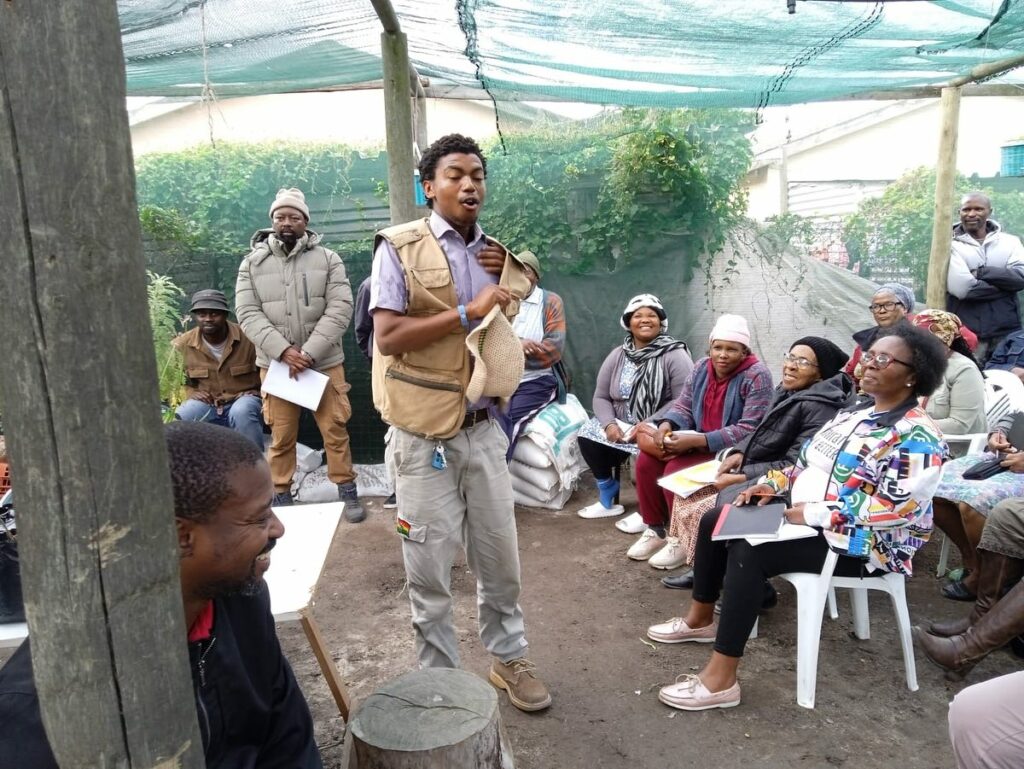
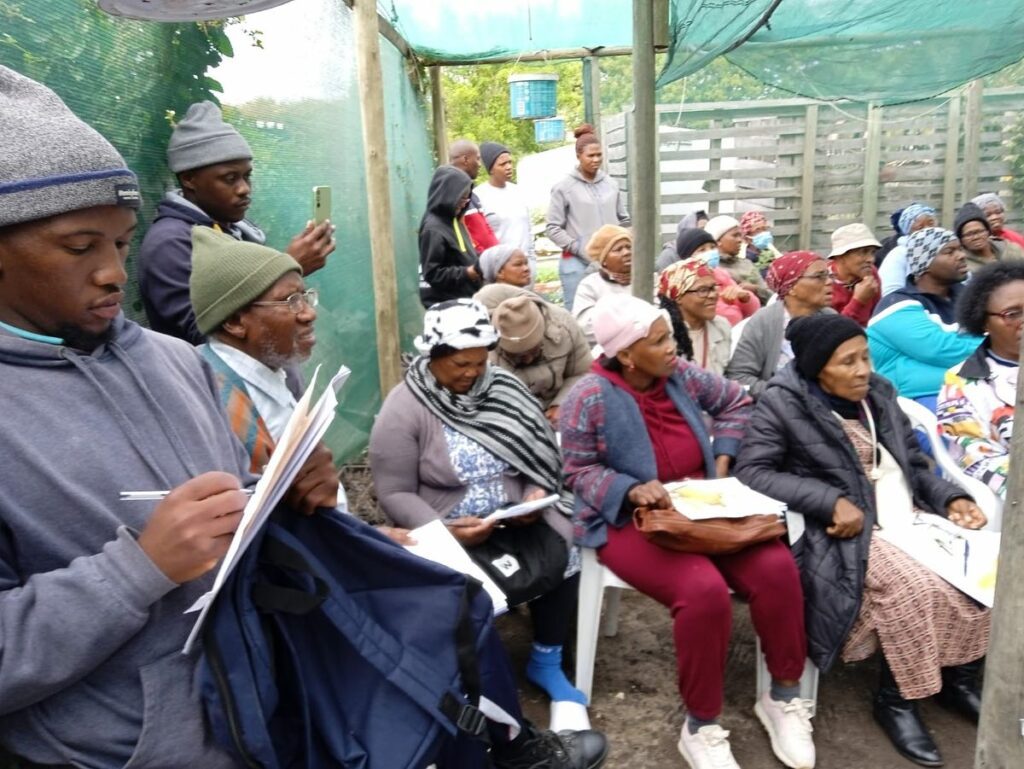
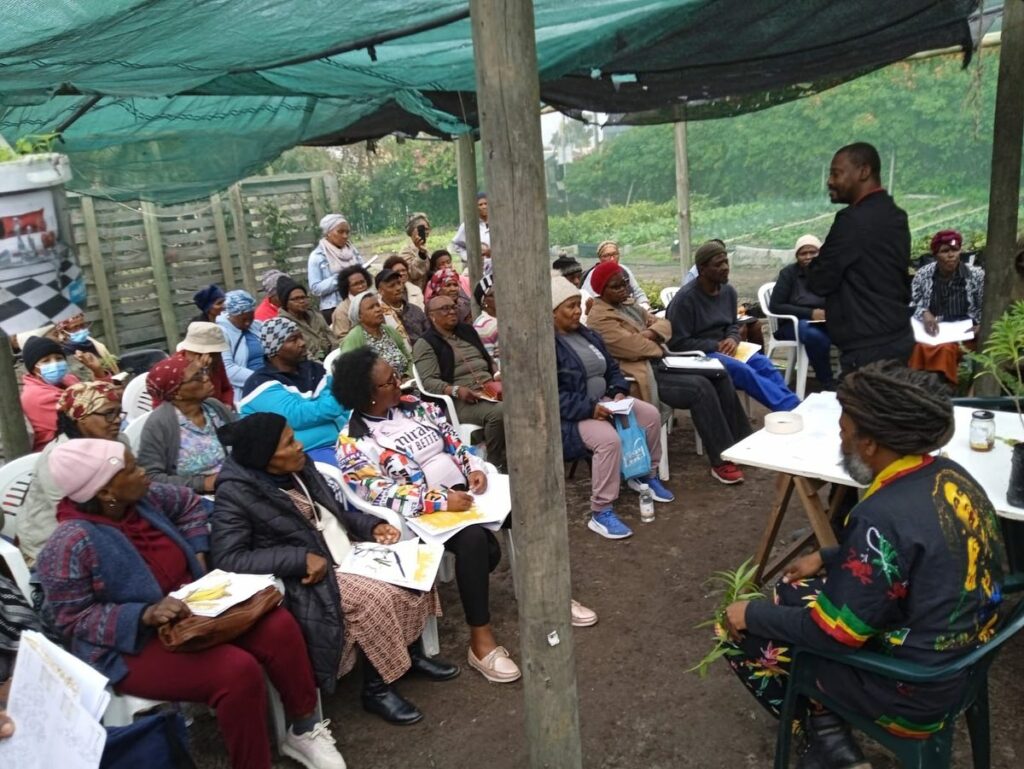
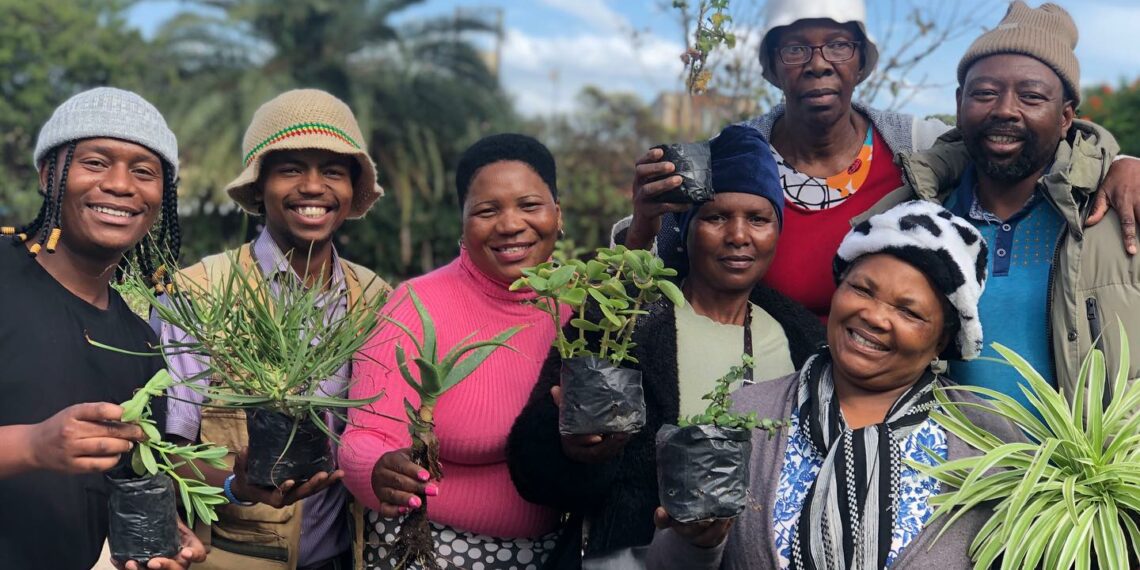
Township farmers and traditional healers attended a workshop on indigenous plant medicine, presented by Abalimi Bezekhaya and Happy By Nature. Photo: Supplied/Food For Mzansi

Township farmers and traditional healers attended a workshop on indigenous plant medicine, presented by Abalimi Bezekhaya and Happy By Nature. Photo: Supplied/Food For Mzansi

Share on FacebookShare on TwitterShare on WhatsApp

In Khayelitsha and Nyanga, two townships nestled on the outskirts of Cape Town, a quiet revolution is taking place. Community vegetable gardens, brimming with spinach, carrots, and tomatoes, are incorporating indigenous plants into their cycle.

The community organisation, Abalimi Bezekhaya and Happy by Nature, recently teamed up to provide an introductory workshop for farmers on indigenous herbal first aid.

“This is an important part of our cultural heritage, which often gets lost in the urban environment,” said Vatiswa Dunjana from Abalimi Bezekhaya
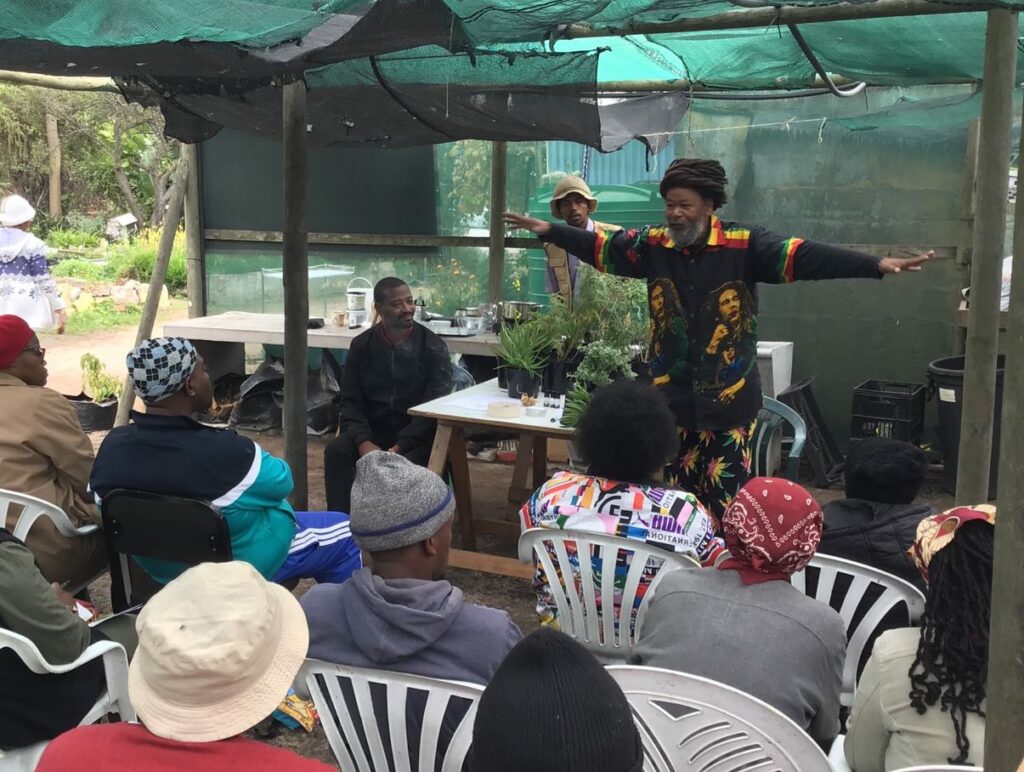
Attendees listening to a traditional plant grower on the benefits of traditional plant medicine. Photo: Supplied/Food For Mzansi

The workshop empowered farmers with valuable knowledge and skills. By learning about medicinal plants and their uses, farmers were equipped to address common health issues effectively.

“This course addresses basic first aid including 13 medicinal plants, preparations, as well as the growing, harvesting and propagation of these healing plants,” said Dunjana.

This holistic approach to health not only addresses immediate health needs but also promotes sustainable farming practices and self-sufficiency within the community.

“The Khayelitsha and Nyanga Garden Centres both have medicinal gardens and sell these plants to the local community,” explained Dunjana.

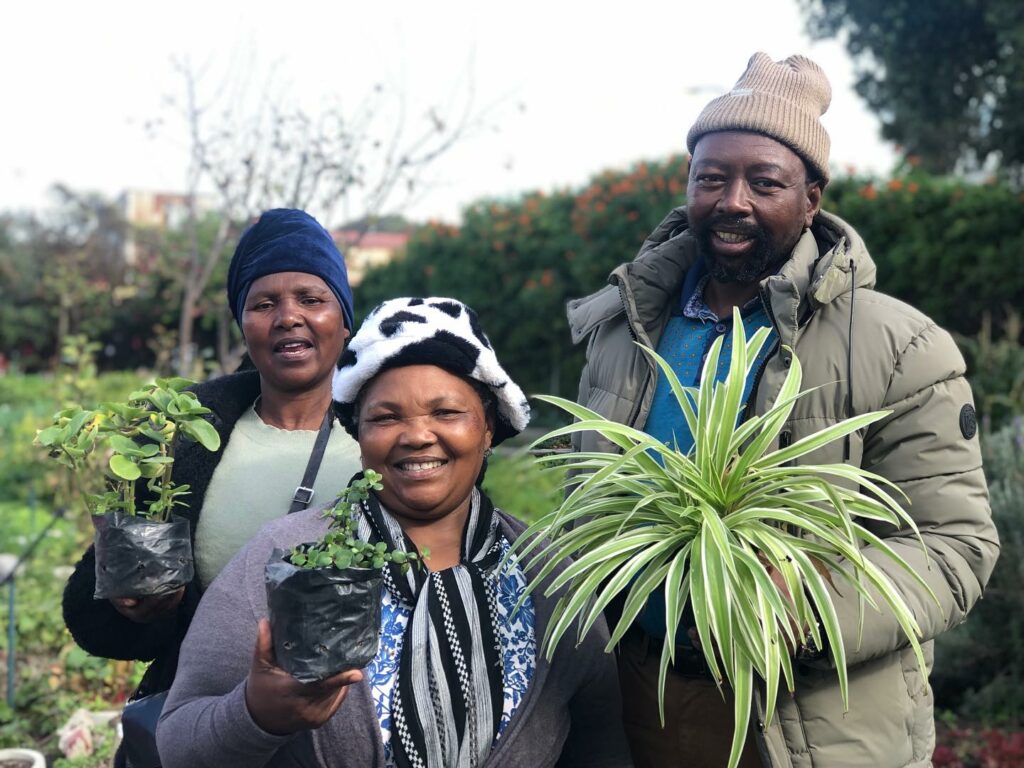
Simangaliso Ngalwana from Happy by Nature introduces ibhucu (Bulbine frutescens) an indigenous plant useful as a first-aid remedy. Photo: Supplied/Food For Mzansi

Related stories
  • Farming with indigenous crops brings Pabalelo healing
  • Ramaipadi pioneers indigenous farming for community resilience
  • Agripreneur 101: Crafting indigenous tea their trade

Collaboration to champion indigenous plants

By pooling their resources and expertise, Abalimi Bezekhaya and Happy by Nature were able to provide a comprehensive and impactful workshop.

Happy by Nature, based in Cape Town, has a long-term vision to reintroduce plant medicine into mainstream healthcare, said Jimmy Symmonds, co-founder of Happy By Nature.

“We develop training targeting healthcare professionals including traditional health practitioners. The first step takes the form of a foundation course in indigenous plant medicine, which equips the healthcare professionals with the knowledge and resources they need to run herbal first-aid workshops in their communities.”

To date, Happy by Nature have conducted two workshops in partnership with Abalimi Bezekhaya, with traditional health practitioners that have completed the training leading the workshops.

“We introduced them to about 13 indigenous herbs that are easy to cultivate and safe to use. These herbs are very beneficial for many first-aid problems.”

Each attendee also received a training manual and some medicinal plants from Happy by Nature, to grow at home.

READ NEXT: DIY polony: Make your own healthier, yummy version
Sign up for Mzansi Today: Your daily take on the news and happenings from the agriculture value chain


Duncan Masiwa

DUNCAN MASIWA is the assistant editor at Food For Mzansi, South Africa’s leading digital agriculture news publication. He cut his teeth in community newspapers, writing columns for Helderberg Gazette, a Media24 publication. Today, he leads a team of journalists who strive to set the agricultural news agenda. Besides being a journalist, he is also a television presenter, podcaster and performance poet who has shared stages with leading gospel artists.

Tags: Abalimi Bezekhayaindigenous cropsInform memedicinal plants
News

Plant, pick, protect: The rising potential of urban foraging in SA

by Mallika Sardeshpande
6th September 2026

Urban foraging is growing in South African cities, yet many pickers avoid public parks out of fear of getting into...

Read moreDetails
From left: Jeremia Mathebula (vice-chairperson of Grain SA); Dr Jack Bloom (deputy minister of water and sanitation); Falon Mars (Mars Rossouw Attorneys INC); and André Cloete (award-winning Overberg farmer). All four are part of the lineup for the special emerging farmers’ programme at Nampo Cape. Photos: Supplied/Food For Mzansi

RSVP now: Emerging farmers’ programme at Nampo Cape

5th September 2026
Community-led farms boost food security and incomes in Limpopo

Community-led farms boost food security and incomes in Limpopo

5th September 2026
Farmers rethink water use as shortages threaten food production

Farmers rethink water use as shortages threaten food production

5th September 2026
Honoured roots: A father’s legacy, a daughter’s farming dream

Honoured roots: A father’s legacy, a daughter’s farming dream

4th September 2026

Chilli farming: Why high-value crops are SA’s missed opportunity

Dragon fruit thrives in KZN valley despite tough national season

BenicaTheFarmer: The nurse who built an agricultural empire

Rural safety under fire as stock theft and farm violence persist

Rising costs, climate risk push Swartland wheat farmers to the brink

Join Food For Mzansi's WhatsApp channel for the latest updates!

JOIN NOW!
Next Post
Free health screenings! Farmworkers in Robertson in the Western Cape had free access to blood pressure, cholesterol, diabetes, and HIV/Aids tests at Food For Mzansi and Health For Mzansi’s Agricultural Workers Day. Photo: Ivor Price/Food For Mzansi

Beyond pills and bills: Farmworkers take charge of wellness

THE NEW FACE OF SOUTH AFRICAN AGRICULTURE

With 21 global awards in the first six years of its existence, Food For Mzansi is much more than an agriculture publication. It is a movement, unashamedly saluting the unsung heroes of South African agriculture. We believe in the power of agriculture to promote nation building and social cohesion by telling stories that are often overlooked by broader society.

Grain markets slide: Temporary pause or start of a downturn?

Chilli farming: Why high-value crops are SA’s missed opportunity

SA pork industry builds resilience following disease outbreaks

Young farmers need structured opportunities, not just open doors

BenicaTheFarmer: The nurse who built an agricultural empire

Rural safety under fire as stock theft and farm violence persist

  • Awards & Global Impact
  • Our Story
  • Contact Us
  • Cookie Policy
  • Privacy Policy
  • Copyright

Contact us
Office: +27 21 879 1824
News: info@foodformzansi.co.za
Advertising: sales@foodformzansi.co.za

Contact us
Office: +27 21 879 1824
News: info@foodformzansi.co.za
Advertising: sales@foodformzansi.co.za

  • Awards & Global Impact
  • Our Story
  • Contact Us
  • Cookie Policy
  • Privacy Policy
  • Copyright

Chat Options

I'm Lerato, your AI assistant!
No Result
View All Result
  • News
  • Changemakers
  • Lifestyle
  • Farmer’s Inside Track
  • Food for Thought

Copyright © 2024 Food for Mzansi

This website uses cookies. By continuing to use this website you are giving consent to cookies being used. Visit our Privacy and Cookie Policy.