Tuesday, September 8, 2026
SUBSCRIBE
22 GLOBAL MEDIA AWARDS
Food For Mzansi
  • News
  • Changemakers
  • Lifestyle
  • Farmer’s Inside Track
  • Food for Thought
No Result
View All Result
  • News
  • Changemakers
  • Lifestyle
  • Farmer’s Inside Track
  • Food for Thought
No Result
View All Result
Food For Mzansi
No Result
View All Result
in Food for Thought

Chilli farming: Why high-value crops are SA’s missed opportunity

Raw chillies sell for cents, but processed hot sauce turns into real profits. Tlhoks Vegis founder Letlhogonolo Leserwane argues that South Africa’s agricultural sector overlooks small-scale chilli processing and that policy, retailers, and extension services must rethink support for emerging farmers

by Letlhogonolo Leserwane
8th September 2026
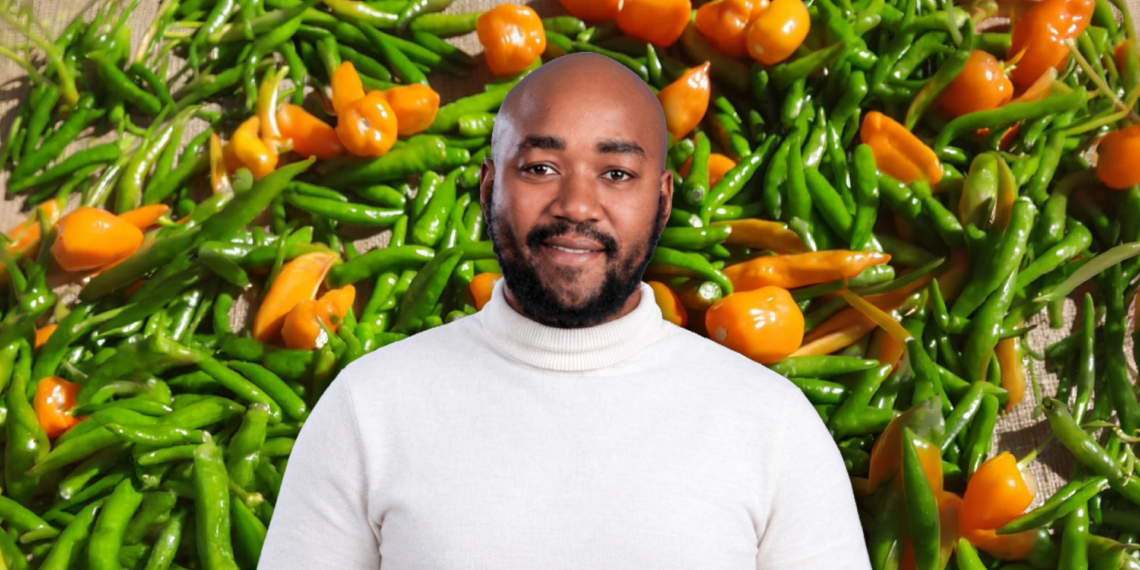
Tlhoks Vegis founder Letlhogonolo Leserwane explains how he built Sambok Hot Sauce from a backyard plot and why SA must support small-scale chilli processing. Photo: Supplied/Food For Mzansi

Tlhoks Vegis founder Letlhogonolo Leserwane explains how he built Sambok Hot Sauce from a backyard plot and why SA must support small-scale chilli processing. Photo: Supplied/Food For Mzansi

Share on FacebookShare on TwitterShare on WhatsApp

How does a backyard plot turn into a national hot sauce brand in over 83 outlets without government funding or inherited land? Tlhoks Vegis founder Letlhogonolo Leserwane shares his journey and challenges South Africa’s agricultural sector to support high-value crops and local agro-processing.


In 2016, I planted chillies in my backyard in Kuruman because I was unemployed. Not to make a statement about agriculture. To survive. 

Nine years later, that backyard is a family-owned agribusiness. We grow the chillies, we process them, we bottle them as Sambok Hot Sauce, and the product is on shelves in more than 83 outlets across South Africa. No inherited land. No processing infrastructure handed to us. No government programme built for a crop like chilli. We built this in spite of the system, not because of it. 

That is not a success story about me. It is an indictment of everyone who was supposed to make this easier and didn’t. 

A case for chilli agro-processing

Chilli is not a difficult crop. It needs less land than maize. It yields more per hectare than most vegetables. It has real export demand, and its margins multiply the moment it is processed into hot sauce, chilli oil, spice blends.

Raw chilli sells for cents. Bottled, branded chilli sells for rands. This is not theory. It is the entire business model of Tlhoks Vegis, proven with real product on real shelves. 
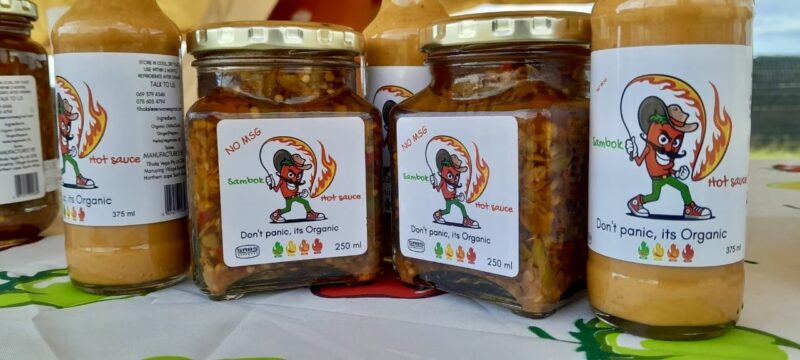
Letlhogonolo Leserwane grows the chillies, processes them, and bottles them as Sambok Hot Sauce. Photo: Supplied/Food For Mzansi

And yet chilli is still treated as an afterthought. Ask any emerging farmer what they were told to plant, and the answer is almost always maize, or vegetables with no processing pathway attached. Nobody is telling them a small plot of chilli, properly processed, can out-earn a far larger plot of staple crops. The advice given to new farmers is built around what is convenient to fund, not what actually pays. 


Related stories
  • Spice up agro-processing and turn chillies into profit
  • NW agripreneur creates condiments with care and purpose
  • Chilli farmer builds a solid business on just one hectare
  • Agripreneur 101: Meet a chilli sauce maker

I had none of that advice either. I learned by doing, funding equipment and packaging out of whatever the business could generate that month. Every step from farm to bottle to retail shelf happened because my family refused to stop, not because a system existed to carry us there. 

The systemic gap for emerging farmers

So here is the question South Africa needs to answer, not me: if a chilli business can go from a Kuruman backyard in the

Northern Cape to  83 stores with almost no institutional support, what is happening to the thousands of chilli farmers who never get that far? How many gave up before they ever reached a processing stage, not because the crop failed them, but because nobody showed them it was possible; there was no affordable equipment, and no path from raw produce to finished product? 

We talk about food security and inclusive growth as if they are inevitable outcomes of good intentions. Chilli is the test that exposes whether that talk is real. It rewards processing over raw sales. It suits small landholdings. It fits precisely into land reform and youth farming strategy because it does not demand large-scale land to be viable. 

Tlhoks Vegis founder Letlhogonolo Leserwane says South Africa needs to back small-scale chilli processing now. Photo: Supplied/Food For Mzansi

If government, enterprise development programmes and retailers are serious about building black-owned agribusinesses at scale, chilli is not a marginal opportunity. It is one of the clearest ones sitting in front of them,  unused. 

What SA needs to unlock agri-enterprise

What we need now is not sympathy for how far a backyard garden has come. We need land access support built for high-value crops like chilli, affordable processing equipment for small-scale agro-processors, direct pathways into retail for farmers ready to supply at scale, and agricultural extension advice that treats chilli as a serious commodity,  not a side project. 

Tlhoks Vegis proves the model works. It should never have taken this much improvisation to prove it. The next chilli farmer should not have to build a national brand from nothing but stubbornness. They should be able to build it with support that already exists, if South Africa finally decides to build it.

  • Letlhogonolo Leserwane is the founder of Tlhoks Vegis. The views and opinions expressed in this article are those of the author and do not necessarily reflect the views or positions of Food For Mzansi.

READ NEXT: Chicken is booming, but the real money is in the supply chain

Sign-up for the latest agricultural news delivered straight to your inbox every day with Mzansi Today!

Letlhogonolo Leserwane

Tags: agroprocessingchilli farmingChilli SauceHelp me understandNorthern Cape
From left: Jeremia Mathebula (vice-chairperson of Grain SA); Dr Jack Bloom (deputy minister of water and sanitation); Falon Mars (Mars Rossouw Attorneys INC); and André Cloete (award-winning Overberg farmer). All four are part of the lineup for the special emerging farmers’ programme at Nampo Cape. Photos: Supplied/Food For Mzansi
News

RSVP now: Emerging farmers’ programme at Nampo Cape

by Staff Reporter
5th September 2026

Emerging farmers can engage directly with experts on finance, land, water and sanitation, grain, legal matters and risk at Nampo...

Read moreDetails
Community-led farms boost food security and incomes in Limpopo

Community-led farms boost food security and incomes in Limpopo

5th September 2026
Farmers rethink water use as shortages threaten food production

Farmers rethink water use as shortages threaten food production

5th September 2026
Honoured roots: A father’s legacy, a daughter’s farming dream

Honoured roots: A father’s legacy, a daughter’s farming dream

4th September 2026
Gauteng farmers urged to harness massive urban market

Gauteng farmers urged to harness massive urban market

4th September 2026

RSVP now: Emerging farmers’ programme at Nampo Cape

Honoured roots: A father’s legacy, a daughter’s farming dream

How Tebogo beat post-harvest losses with smart agro-processing

Tough times, hardy cattle: Why Mzansi farmers are choosing Nguni

Farmers rethink water use as shortages threaten food production

Join Food For Mzansi's WhatsApp channel for the latest updates!

JOIN NOW!

THE NEW FACE OF SOUTH AFRICAN AGRICULTURE

With 21 global awards in the first six years of its existence, Food For Mzansi is much more than an agriculture publication. It is a movement, unashamedly saluting the unsung heroes of South African agriculture. We believe in the power of agriculture to promote nation building and social cohesion by telling stories that are often overlooked by broader society.

Chilli farming: Why high-value crops are SA’s missed opportunity

SA pork industry builds resilience following disease outbreaks

Young farmers need structured opportunities, not just open doors

BenicaTheFarmer: The nurse who built an agricultural empire

Rural safety under fire as stock theft and farm violence persist

This week’s agri events: 07–11 September

  • Awards & Global Impact
  • Our Story
  • Contact Us
  • Cookie Policy
  • Privacy Policy
  • Copyright

Contact us
Office: +27 21 879 1824
News: info@foodformzansi.co.za
Advertising: sales@foodformzansi.co.za

Contact us
Office: +27 21 879 1824
News: info@foodformzansi.co.za
Advertising: sales@foodformzansi.co.za

  • Awards & Global Impact
  • Our Story
  • Contact Us
  • Cookie Policy
  • Privacy Policy
  • Copyright

Chat Options

I'm Lerato, your AI assistant!
No Result
View All Result
  • News
  • Changemakers
  • Lifestyle
  • Farmer’s Inside Track
  • Food for Thought

Copyright © 2024 Food for Mzansi

This website uses cookies. By continuing to use this website you are giving consent to cookies being used. Visit our Privacy and Cookie Policy.