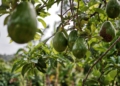
Western diets make up most of South Africa’s food systems. This displaces indigenous crops and edible forest plants.
The problems created by westernised diets include environmental damage caused by commercial farms. These diets also threaten African food systems. They cause indigenous farming practices and knowledge about indigenous crops to become forgotten. Westernised diets of processed foods with little nutritional value also cause health problems.
Some indigenous crops, like blackjack and wild cucumber, are highly nutritious. They contain vitamin A, vitamin C, protein, fibre, calcium, iron, magnesium, zinc, beta-carotene, folate and ascorbic acid. They’re often found growing in the wild, and therefore require less water and few agrochemicals.
I am an agricultural scientist and research how indigenous vegetables and agricultural extension services play a social and economic role in rural South Africa.
I studied a rural area in South Africa’s KwaZulu-Natal province to find out whether indigenous crops were included in the services offered by agricultural extension service providers.
Agricultural extension services use qualified advisors to bridge the gap between research and practical farming. They provide farmers with training and support to grow crops in an environmentally sustainable way and improve food security for communities.
Indigenous foods have a big role to play as the world searches for sustainable ways of producing food and increasing food security.
Both of these are among the priorities of the South African presidency of the G20. South Africa, for example, advocates for food sovereignty and sustainable food systems based on local realities and characteristics.
My research found that it is critically important for agricultural extension advisors to train farmers in growing underutilised indigenous food crops.
How indigenous crops are undermined
African communities traditionally relied on certain indigenous food crops for their sustenance. But over the years, these crops have become sidelined. A stigma has been attached to African indigenous foods as food for the destitute. Because supermarkets sell so few indigenous vegetables, they have been sent into decline.
I interviewed 195 farmers from selected rural communities of Ilembe, King Cetshwayo, and Umkhanyakude district municipalities, who were all involved in growing and trading indigenous crops.
My research found that agricultural extension service providers had encouraged smallholder farmers to grow exotic (non-indigenous) crops that they could sell – cash crops such as cabbage and spinach.
They may mention indigenous crops when interacting with farmers. But they don’t teach the production techniques or value chains associated with these crops. Communication between farmers and the agricultural extension service providers is still mainly centred on high-value exotic crops, cash crops, or export crops.
This is partly because agricultural extension advisors have been trained in a Euro-American-centric curriculum and don’t know how to teach farmers about growing and selling indigenous food crops.
Related stories
- Amaranth: Explore the farming potential of this indigenous crop
- Farming with indigenous crops brings Pabalelo healing
- Seeking healthier harvests: Experts turn to indigenous crops
Another reason is that agricultural extension services are still associated with teaching farmers how to use pesticides and herbicides. Agrochemicals are still seen as a way to make crops better. Some retailers do not purchase farmers’ products if there is no paper trail of herbicides and pesticides used during the production.
But this focus means that agricultural extension service providers have missed a golden opportunity to include indigenous crops (local knowledge) in their advisory frameworks and transform South Africa’s westernised food system.
The case for indigenous crops
There is a remarkable diversity of nutrient-rich indigenous crops in South Africa. These plants often need little water and little to no pesticides as they’ve adapted to local pests and environmental conditions.
Indigenous crops such as amaranth, cowpea, bambara groundnuts and amadumbe are also very nutritious.
Great progress has also been made through dialogue driven by academics and organisations that lobby for Africa to develop self-sufficient food systems based on indigenous foods that don’t have to be imported. These organisations include Biowatch and movements like the South African Food Sovereignty Campaign. Extension advisors could work alongside these organisations.
READ NEXT: Agripreneur 101: Crafting indigenous tea their trade
What needs to happen next
Leading research organisations have found that the way in which food is grown and sold ought to be transformed.
New and inclusive food systems should be established. This means that underutilised indigenous crops must be included as an important part of South Africa’s food systems. To do this, they must be commercialised.
It would help if underutilised indigenous food crops were recognised by governments, educational institutions, and the global food industry. This should be done through new policies, funding for research, and by including these crops in mainstream agricultural development.
Indigenous food crops are also a vital part of cultural heritage. These crops represent a legacy of cultural identity. For example, amaranthus, formerly a “poor man’s” crop, is currently the subject of research and development. It’s now recognised for its nutritional value and is being cultivated and studied by research institutes across Africa. Even mainstream seed companies are now producing certified seeds. This should happen with other indigenous crops.
Agricultural extension service providers need to refocus their efforts on this food system transformation. Agricultural extension service bodies (government and non-government) must invest in training agricultural extension service providers about indigenous food crop production.
One way of achieving this is through continuing professional development platforms. These could track how many farms are beginning to grow indigenous crops again based on advice from extension services.
These steps will help revive indigenous crops and bring about food justice: where everyone has access to nutritious foods.
This article was first published by The Conversation.
LISTEN: Podcast: Food expert promotes indigenous vegetables
Sign up for Mzansi Today: Your daily take on the news and happenings from the agriculture value chain