As climate change deepens across the continent, ensuring food security becomes more and more important. InnoFoodAfrica, a research project focused on food equality for all, is leading the fight.
Funded by the European Union’s Horizon 2020 Research and Innovation Programme, the InnoFoodAfrica project has branches in Kenya, Uganda, Ethiopia, and South Africa.

Representing Mzansi is the University of Pretoria(UP), where the department of consumer and food sciences provides food processing, consumer, business, and social sciences expertise.
UP’s Prof Naushad Emmambux, an expert in food science, says the work done through InnoFoodAfrica looks into food and nutrition security using indigenous, Sub-Saharan crops. He adds that his department’s role is specifically looking at how to improve nutrition.
“In terms of nutrition in Sub-Saharan Africa, some people talk about the double burden or triple burden of malnutrition. [This] is really about undernutrition that mostly affects children.”
Inadequate nutrition
Emmambux says that around 29% of South African children are affected by a lack of adequate nutrition, which ends up stunting their growth. When they looked into the cause of the stunting, they found that children often suffered from perpetual diarrhoea, and this was due to the social and economic circumstances those children are in, he explains.
“We found out people use a lot of maize meal in the diets of babies, as well as cereal-based foods. But, the problem there is that the babies cannot eat these foods because their oral processing capabilities aren’t right yet. So, the mothers generally dilute the food with water so that the babies can drink it properly, but then they also dilute the nutrients.”
This, Emmabux says, is what causes a micronutrient deficiency, and makes up the double burden of malnutrition.
“The triple burden is really over-nutrition because of the energy-dense food, where people eat a lot of carbohydrates or a lot of fatty food. Especially saturated fat from fast food, because fast food is a cheaper alternative and people don’t have time to cook at home.”
InnoFoodAfrica work packages
Improving food security and nutrition is a mammoth task, so to ensure that the project meets its objectives, it is divided into seven “work packages”. The work packages tackle different functions within the food systems, each working towards the ultimate project vision – food security.
Included in the work packages are the development of local agro-food value chains, developing new diet models to ease malnutrition, and improving smallholder farming practices, among others.
Explaining the first work package, Emmambux says researchers analyse and document the entire consumer value chain around local crops. The crops, which include sorghum, millet, and cereal grain, are common in many parts of the continent but are not very well-documented.
“So, this is what we are trying to do there, really document the full value chain. The other part of it is also really looking at consumers, and how consumers perceive all these food products, whether it’s buying the grain or making porridge from the grain or using the grain at home.”
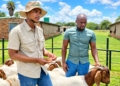
Later, under work package three, the project is focused on “farmer’s participatory research”, Emmabux explains. InnoFoodAfrica is working with farmers from the Timbali Technology incubator in Mbombela, Mpumalanga, where the farmers are introduced to different types of climate-smart, indigenous crops.
The purpose of the introduction? To improve smallholder farming practices.
“These farmers generally only used to plant fresh fruits and vegetables, mostly vegetables, and then they packaged the vegetables and sent it to the market. [We] want to show they can use these indigenous, well-suited crops to improve their farming capacity.”
Access to information
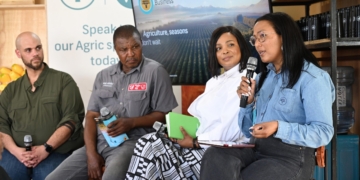
Research is often difficult for laymen to decipher, which is why InnoFoodAfrica has also partnered with the UP’s Centre for Augmentative and Alternative Communication. Professor Shakila Dada, centre director, says the focus of their work is to ensure that the knowledge is translated effectively.
“When translating knowledge from the sciences or from research, so that people can actually understand it, there’s a couple of things that we try to do. [Firstly] we’re looking at the level of language. We try to make reading materials at a Grade 6 reading level.”

Dada explains that they use methodologies that borrow from the field of disability education, like the use of graphics. The graphics are catered specifically to people with low literacy levels.
Translation, how-to videos, audio clips, and animations are all included in their work to make the information accessible to the people it is aimed at, says Dada.
“These are the various ways that we’re looking at making the information more accessible, and actually impacting the communities that we are working with, and are direct or indirect stakeholders in the project.”
ALSO READ: ‘Coalition governments must prioritise food security’
Sign up for Mzansi Today: Your daily take on the news and happenings from the agriculture value chain.