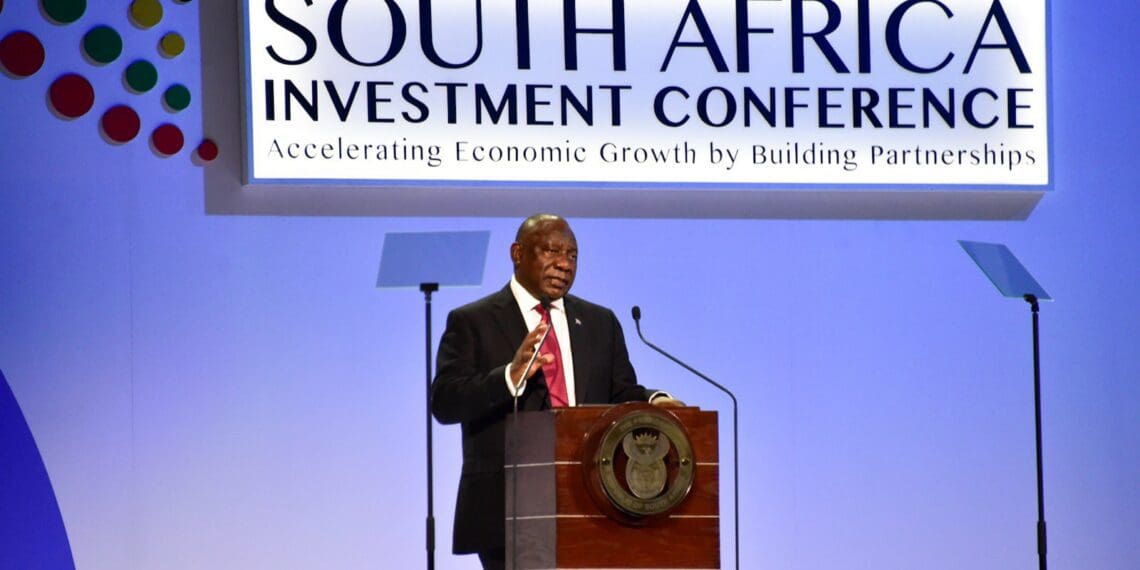
Eskom board chairperson Mpho Makwana told investors during the fifth South Africa Investment Conference that the power utility is working towards having a healthy electricity supply by March 2025.
Over 1 200 delegates attended the conference at the Sandton Convention Centre in Johannesburg, which saw investment pledges in economic sectors like agriculture, energy, and infrastructure.
The poultry industry, one of the agricultural sub-sectors mostly affected by the energy crisis, saw an investment of R620 million from RCL Foods in expanding their facilities in KwaZulu-Natal.
Makwana told delegates that the non-availability of electricity was not only affecting the credibility of Eskom but was pushing investors away.
“We want to bring back the investor confidence in the country, but first we must deal with fixing the culture of Eskom, deal with corruption and mismanagement, loss of talent, and push for a goal-driven attitude, that is what we are looking at,” he said.
Improving power supply
Meanwhile, President Cyril Ramaphosa said despite the country being plunged into darkness, investors continue to see potential in investing in South Africa.
“South Africa’s first country investment strategy is being finalised. It will outline priority areas and sectors to advance our country’s economic interest and will be driven at the highest level with oversight provided by the Presidency.
“Investment in our economy is not just about the amounts you have seen on this stage over the years. When we expand the lens and take in the aggregate picture, we see some encouraging trends too,” he said.
Ramaphosa said the immediate focus was on improving the performance of the country’s existing coal-fired power stations as they continue to provide the baseload of SA’s energy.
“Demand-side management initiatives will receive elevated attention, including through consumer behaviour, rooftop solar, and facilitating embedded generation.
“We have been implementing wide-ranging reforms in the electricity sector to enable private investment in electricity generation and accelerate the procurement of new generation capacity from solar, wind, gas, and battery storage,” he said.
Farmers are concerned
Martin van Rooi of Boerdery Onderbegin, a grape farmer in Upington in the Northern Cape, said investment in the sector means nothing if there is no power.
“Six-hour load shedding, which we are currently experiencing sometimes twice a day, is a drawback. It’s a loss of production, time and money.
“Instead of investing in expanding the production, we are investing in generators with the same amount of production or at times less, which leads to profit margins shrinking. Investment without a stable power supply is pointless,” he said.
Commercial poultry farmer Kgaogelo Mogashwa from North West said while they appreciate the investment conference and its potential, the reality on the ground is that they are struggling to make ends meet as farmers.
A never-ending loss
“Eskom has played us dirty. We have never experienced losses like this since we started our business. And it’s taking a lot from us to recover because the issue of electricity is never-ending, it’s continuing daily,” she said.
Mogoshwa said the quality of their chickens has been affected by load shedding which has seen some key customers going elsewhere.
A small-scale poultry farmer in the Northern Cape, Nqobile Khumalo, called on the government to invest money to ensure that the country has a stable power supply.
“The are no jobs for young people and we have to start our own establishments to create jobs and put food on the table. We are faced with load shedding and if this crisis is not addressed urgently, then there will be no economy to talk about,” she said.
ALSO READ: SA’s wine industry looks forward to silver lining
Sign up for Mzansi Today: Your daily take on the news and happenings from the agriculture value chain.