Despite a bleak economic picture, South Africa’s wine industry has succeeded in contributing significantly to the Western and Northern Cape economies.
With load shedding expected to be Mzansi’s fate for at least a few more years, wine industry players are worried that Eskom’s power cuts will hold the industry back.
The country was introduced to stage 6 in 2019 for a short space of time but in 2023, already in the first month we have seen more than in previous years.
According to Nedbank senior economist Isaac Matshego, the country has seen the worst of stage 6 load shedding in 2023.
Delayed recovery as dark times persist
“Sustained recovery will be delayed as the power outages persist. Load shedding will be with us for a few years. Clearly, the damage at Eskom is much deeper,” he said.
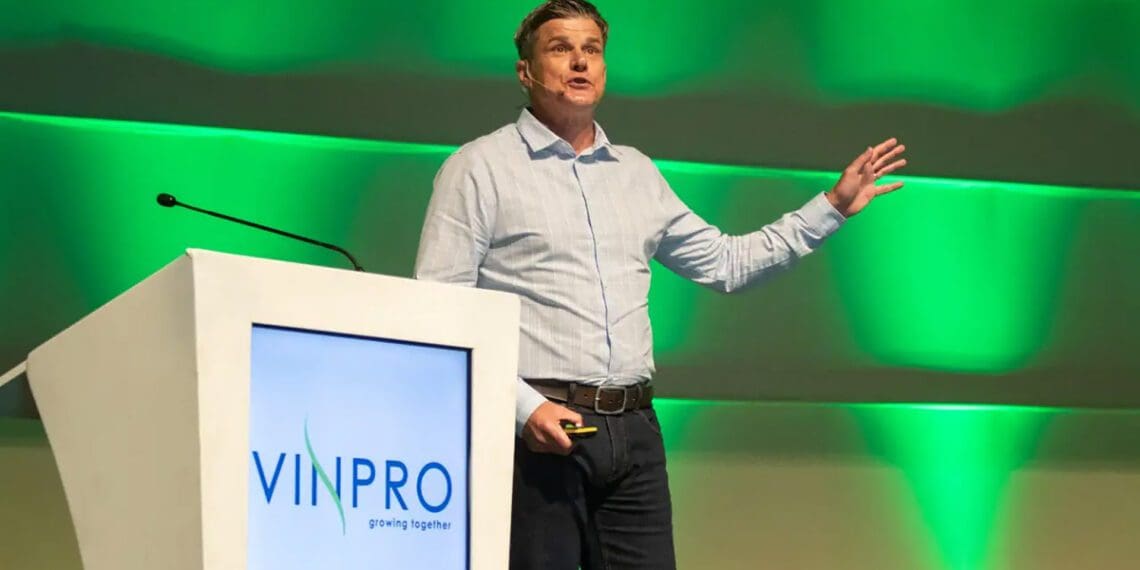
Matshego was speaking during the Nedbank Vinpro Information Day hosted at the CTICC in Cape Town earlier today. The event was attended by 500 leading wine industry role players under the theme, “Connect and Grow”.
It was an opportunity to explore and discuss the wine industry’s current state and equip itself with the insights and tools needed for the industry’s future.
“I am going to be realistic,” Matshego told attendees. “Judging from what the minister of finance said, we would likely go to stage 2 next year and have stage 4 as a norm.”
Convinced that Eskom is holding the agricultural sector hostage, Matshego said slow economic growth is to be expected for a period of three to five years.
Returning to 2019 levels will take time
“It is going to take time to put the economy back where it was in 2019; the global and local shocks are impacting everyone. The infrastructure, unemployment, and electricity tariff hikes are making it difficult for businesses, big or small.”
Two interest hikes are likely on the cards for 2023 and Matshego anticipates even tougher times ahead.
South Africa is in desperate need of a stable economy and Matshego is positive that despite the very high increases in electricity, Mzansi will find a way to survive and thrive.

There is light at the end of the tunnel
In his address, managing director of Vinpro Rico Basson pointed out that although the country and the sector were faced with several challenges, they expect the sector to show signs of recovery between 2023 and 2024.
“Continued profitability decline at farm level means 38% of wine farms operate at a loss. But there is a silver lining,” he said.
“That silver lining includes recovery in domestic and global sales volumes, wine tourism recovery, consolidation, investment, and new business models. It also includes advocacy inroads such as the master plan that was signed with organised agriculture and combatting illicit trade.”
While conditions prove difficult for especially farmers, Basson is positive of a full recovery for the wine industry by 2030.
“Only 9% of [our] wine farmers are earning sustainable incomes. 50% are making low profits, 3% only break even and 38% [of them] make a loss.
“Even though we still have a number of challenges, South African wine still wins international awards across every level from wine, wine tourism, vineyards, technical experts to producers,” he pointed out.

Committed to help the industry
Meanwhile, Herman de Kock, Nedbank’s executive head of commercial banking for sales and service, said the wine industry has had it tough since the country’s Covid-19 lockdown. However, the industry has worked hard to recover and reduce high stock levels.
“2022 was small in terms of harvest but exceptional quality was produced. Agriculture is a vital contributor to the economy, exports, creating jobs, and improving food security while reducing the poverty burden,’ he said.
De Kock reassured the wine industry that they remained committed to partnering with the agriculture sector to ensure economic growth.
ALSO READ: Meet the godmother of black winemakers
Sign up for Mzansi Today: Your daily take on the news and happenings from the agriculture value chain.