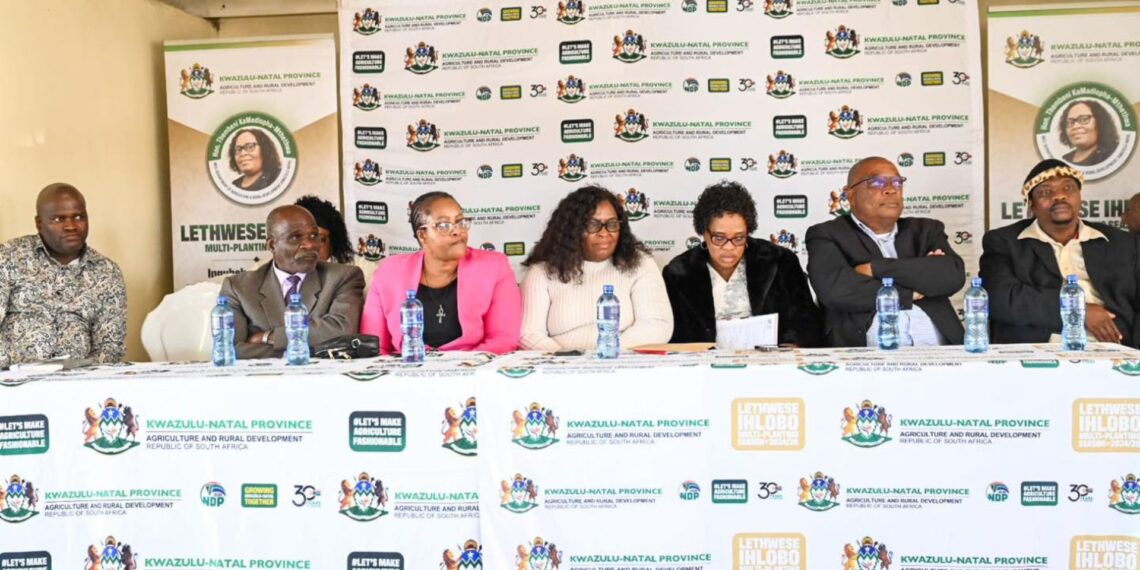
In the quest to make land accessible to as many people as possible, the KwaZulu-Natal MEC for agriculture and rural development, Thembeni kaMadlopha-Mthethwa, has urged traditional leaders to facilitate access to land, particularly for youth and women.
The MEC said approximately 2.8 million hectares of land in KwaZulu-Natal are administered by the Ingonyama Trust, with amakhosi playing a significant role in allocating land and issuing leases for purposes such as agricultural activities, building homes, shopping malls, schools, and service stations.
She called for collaboration between traditional leaders and the government to ensure that the land benefits all those who want to farm, with the key focus on ensuring food security for community members.
Demand for land and resources
“Through amakhosi managing and controlling the land on behalf of the people of KwaZulu-Natal, we have seen leases of land approved for community upliftment under traditional councils. We will dispatch a team from the department to assess the area so that it will be used for agricultural activities.
“There is also a significant demand for dip tanks and dipping chemicals, which we will endeavour to revive and provide. Amakhosi have also requested fencing for their grazing land. We are pleased to have amakhosi championing community development and partnering with the government,” she said.

Related stories
- KZN smallholder farmers battle drought, disease, and poverty
- Foot-and-mouth disease spreads, KZN remains hotspot
KaMadlopha-Mthethwa also thanked and encouraged traditional leaders to make land available for vulnerable groups, including women, youth, and persons living with disabilities.
“A report by the Human Sciences Research Council revealed that rural communities in KwaZulu-Natal, specifically in King Cetshwayo, Zululand, and uMkhanyakude, are languishing in poverty despite having vast tracts of land.
“We encourage amakhosi, as recommended by the council, to facilitate access to land for women, youth, and other vulnerable groups to cultivate and address food insecurity. We are encouraged by the presence of traditional leaders who initiate community development,” she said.

Meanwhile, acting inkosi Philisiwe Zondi of the Zondi Clan in Nkandla said traditional leaders are committed to providing land to those who want to farm.
“We provide land to our communities for agricultural activities. As women, we are used to working the land, and we appreciate the department of agriculture and rural development’s support,” she said.
Zondi called on those who have the land to utilise it effectively, which can help struggling communities. She committed that traditional leaders will work with communities to make sure that the land is available.
READ NEXT: One year later: Rural farmers left behind in GNU promises
Sign up for Mzansi Today: Your daily take on the news and happenings from the agriculture value chain.