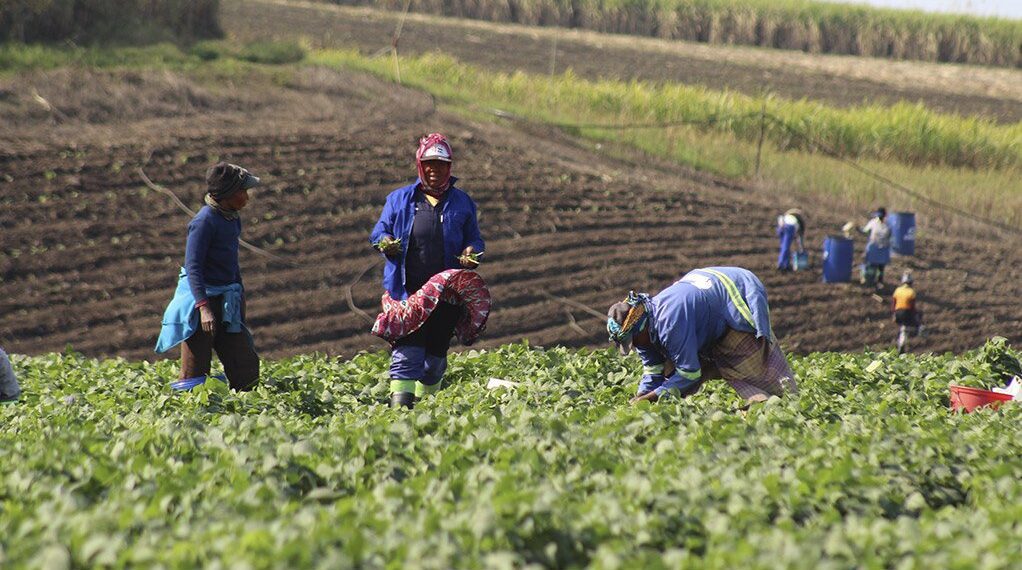
The challenges faced by communal farmers in South Africa are too many to count one hand. Dr Siphe Zantsi, agricultural economist at the Agricultural Research Council’s economic analysis unit, analyses these complex challenges and suggests a multi-faceted approach involving education, resource allocation, and community-driven initiatives.
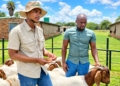
Communal farmers represent the largest share of South African farmers and are mostly found in the former homelands where they share grazing resources and dip tanks. As part of the Agricultural Research Council’s Kaonofatso ya Digkomo (affectionately known as KyD), we held several farmers’ day meetings where we educated farmers and discussed a range of issues with them.
KyD is funded by the department of agriculture, land reform and rural development (DALRRD) and executed by the Agricultural Research Council (ARC) to develop communal livestock farming through educating farmers about branding animals, record-keeping for decision making, animal health, as well as animal feed and nutrition, and the requirements of livestock markets.

Likewise, during these farmers’ days, we discussed similar issues such as poisonous plants found in rangelands, market access, animal nutrition, assisted reproduction, and the like. In almost all districts, during the question-and-answer sessions, farmers would agitably ask about acaricides the government used to supply to communal dip tanks.
Apparently, in many parts of the country this service has stopped or slowed down in other parts due to a shortage of funds from the state.
Communal farmer concerns
What was observed during the KyD farmers’ days was that farmers were deeply concerned about tick infestation in their livestock, which leads to numerous tick-borne diseases. They also mentioned that the pour-on dip is not as effective as the acaricides used in the dip tanks. While farmers believe that the state is failing them in this regard, this also amplifies the role of local farmers’ associations.
Members could join hands in contributing a fee to purchase acaricides and vaccines. Each member could contribute a fee based on his or her number of animals. On one hand, for example, some vaccines such as the one for lumpy skin, should be finished once they’re opened. On the other hand, many communal farmers keep fewer animals than the number of doses in each bottle of vaccine.
Another concern for communal farmers at this time of year is feed shortage. In some areas, such as Msinga and Jozini, rangelands were fully overgrazed, yet it was still March.
This situation can be understood because part of what used to be rangelands in the former homelands is now used for residential purposes, further shrinking the rangeland area while animal populations may increase with the human population.
Related stories
- Broken promises? Limpopo farmers evicted from communal land
- Business mastermind Magida aims to be one-stop-shop for farmers
One-Household-One-Hectare failure
Also, most communal rangelands management is open access, where every user has no limit on the use of the rangeland, but the cost of rangeland degradation is shared by all users. This is different from common property management, where there are rules and regulations of use to avoid exploitation of the resource in question.
Thus, this open access employed in most communal rangelands, tends to benefit the rural elites at the expense of the poor as the large herds or flocks tend to be owned by elites, while the poor have very small herds or flocks.
This further amplifies the fact that the need for land is not only for individual commercial farming but also for residential and communal grazing. Land redistribution policies such as the One-Household-One-Hectare, introduced a few years ago, tend to be helpful in cases where communal land is not sufficient to cater for the needs of all its population.
During my survey in Kokstad around 2018, under the guidance of extension officers, I had the privilege of visiting a small village that was formed on approximately a 12 000-hectare farm redistributed under the One-Household-One-Hectare programme of the department of agriculture, land reform and rural development.
The village was simply a mirror of the former homeland villages, where you find residential plots with a garden of about a hectare on one side and on the other, shared grazing land and arable fields. Sadly, there is no evidence that this One-Household-One-Hectare programme is still running.
Use rangelands efficiently to supplement feed
Some of the government initiatives aimed at addressing the shortage of grazing land include the Animal and Veld Management Programme of the DALRRD. This programme sought to ease pressure on communal rangelands by allocating households with larger livestock herds to commercial farms intended for land redistribution. This initiative too does not seem to be still active.
Although such initiatives may be dormant, we should not throw out the baby with the bath water. There is also a need to use the communal rangeland that we have more efficiently. Of course, rotational grazing won’t be possible in some communities because rangelands are not even fenced, and the area of land is too small to allow subdivisions into camps.
However, in good years and in rainy seasons when grass grows taller and faster, it can be harvested (mowed) and stored as hay bales for use in winter.
The government, especially local municipalities, could spearhead this process by availing tractors and training members of the community or farmers’ association on how to drive tractors and make bales. This could save communal farmers a lot of money that goes into purchasing winter feed and prevent stock loss due to feed shortages. In turn, this means more profit for communal farmers and reduced poverty.
Susan Vetter’s doctoral thesis in Herschel has shown that communal farmers in the former homelands manage to keep large herds through supplementary feeding.
- Dr Siphe Zantsi is an agricultural economist at the Agricultural Research Council’s economic analysis unit. The views and opinions expressed in this article are those of the author and do not necessarily reflect the views or positions of Food For Mzansi.
READ NEXT: Wool exports rebound amid industry transformation
Sign up for Mzansi Today: Your daily take on the news and happenings from the agriculture value chain.