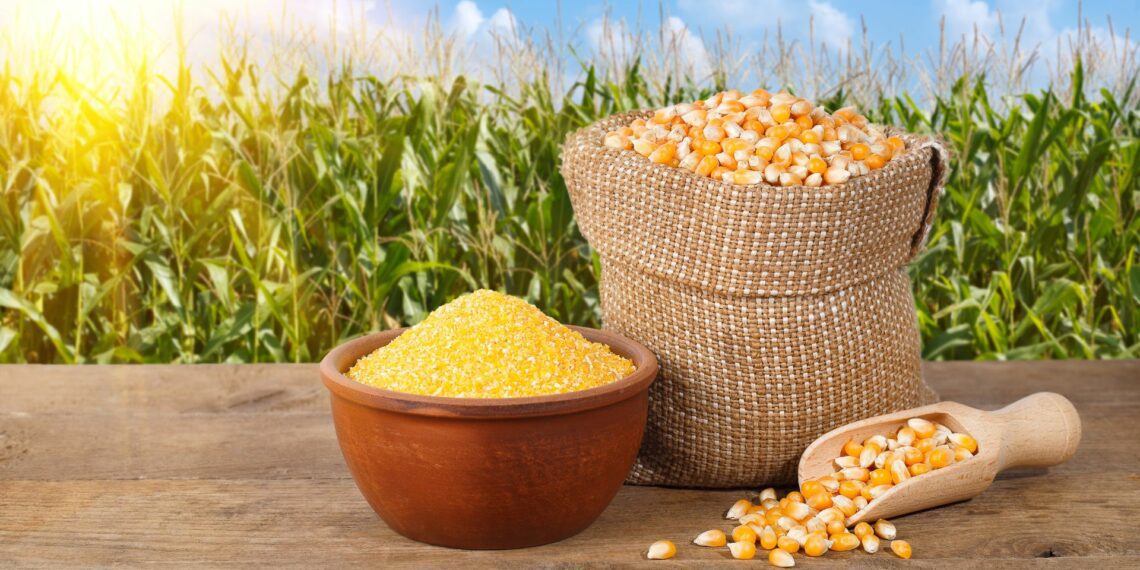
As farmers start preparing for planting summer crops, the country faces challenges such as water scarcity and changing weather patterns. Sustainable practices are becoming increasingly important in summer crop production and farmers face a major challenge of adopting conservation agriculture techniques, including reduced tillage and crop rotation for survival.
Free State maize farmer Reggie Nkambule said while the planting season in the northeast of Free State will only kick off in November, they have started with preparations.
“With regard to the preparation, only the business plan of things is in place so that when we are ready, we can kick start the action plan such as ensuring that there is enough seed, fertiliser and all other things we could need.”
Hopeful for good rainfall
“This season I am planting soya for 38 hectares and 30 hectares of yellow maize meal. In terms of weather patterns, it is true we had one of the most difficult seasons with regard to rainfall, considering that Free State does not really enjoy a lot of rainfall as compared to other provinces. However, we pray and are hopeful that we will have rain,” he said.
Welkom-based maize and sunflower farmer Happy Letsitsa said they are planning and preparing, however, they are concerned with the weather pattern change as it has started to be cold in the Free State.
“We will be planting sunflowers and maize and soya beans on about +- 800 hectares of dry land. As a farmer, we remain in faith that good rains are on the way, and as La Niña strikes, we are positive that we will have better yields this season,” he said.
According to maize and sunflower farmer in North West, Minky Kgopa, it has not been wet enough but they got 10mm of rain in September and tried their best to capitalise on that.
“I am scared but I am hopeful. And I have this thing that even if we don’t get regular rain when we get it, it will come in volumes. I will be planting sunflowers. And due to resources, I will only do 75 hectares of land,” she said.
Related stories
- SA to import yellow maize from Brazil amid shortfall
- Harvest hell: Late, foreign maize seedlings devastate NC farmers
Meanwhile, Agbiz chief economist Wandile Sihlobo said that the 2023-24 summer grains and oilseed harvest took a major hit from the mid-summer drought.
“The current production estimate is 15.69 million tonnes, down 22% from the 2022-23 season. There are significant crop declines in maize, soybeans, and sunflower seeds, amongst other grains.
“And to be clear, the 15.69 million tonnes estimate is for all summer grains and oilseeds – maize, soybeans, sunflower seed, sorghum, groundnuts, and dry beans,” he said.
‘We are not doing too bad’
Sihlobo said the weather forecasts remained optimistic, with prospects of La Niña which could bring much-needed rains and support agricultural production for the 2024-25 season.
“The harvest from this particular season will be critical for the food security conditions in 2025 and 2026,” he said.
Sihlobo added that South Africa is fortunate to have been able to meet its local needs and have a surplus for the neighbouring countries in dire need of maize supplies.
“I must highlight that we continue to see relatively lower deliveries to commercial silos, which at this point, we don’t know if it’s because of relatively high on-farm storage or if there are challenges with the crop that are yet to unfold,” he said.
The Bureau for Food and Agricultural Policy (BFAP) August 2024 South African food prices and food inflation report indicated that yellow and white maize registered an increase.
“Yellow maize prices went up by 11.9%, and white maize surged by a substantial 48%, rising from R3 616 per ton last year to R5 357 per ton to date in 2024.”
BFAP
“This significant increase is a result of drought-induced production declines, which have impacted white maize more severely, due to its concentration in the Western parts of the summer rainfall region, where the drought was most severe,” the report stated.
According to the report, white maize prices were further bolstered by strong demand for this basic food staple in South Africa.
“We expect white maize prices to trade at current levels with a premium of more than R1000/ton above yellow maize for the current marketing year,” the report stated.
READ NEXT: Manopole pledges focus on funding and food security in NC
Sign up for Mzansi Today: Your daily take on the news and happenings from the agriculture value chain