Saturday, October 24, 2026
SUBSCRIBE
22 GLOBAL MEDIA AWARDS
Food For Mzansi
  • News
  • Changemakers
  • Lifestyle
  • Farmer’s Inside Track
  • Food for Thought
No Result
View All Result
  • News
  • Changemakers
  • Lifestyle
  • Farmer’s Inside Track
  • Food for Thought
No Result
View All Result
Food For Mzansi
No Result
View All Result
in News

Livestock decline: Why you’re paying more for meat

by Duncan Masiwa
14th June 2021
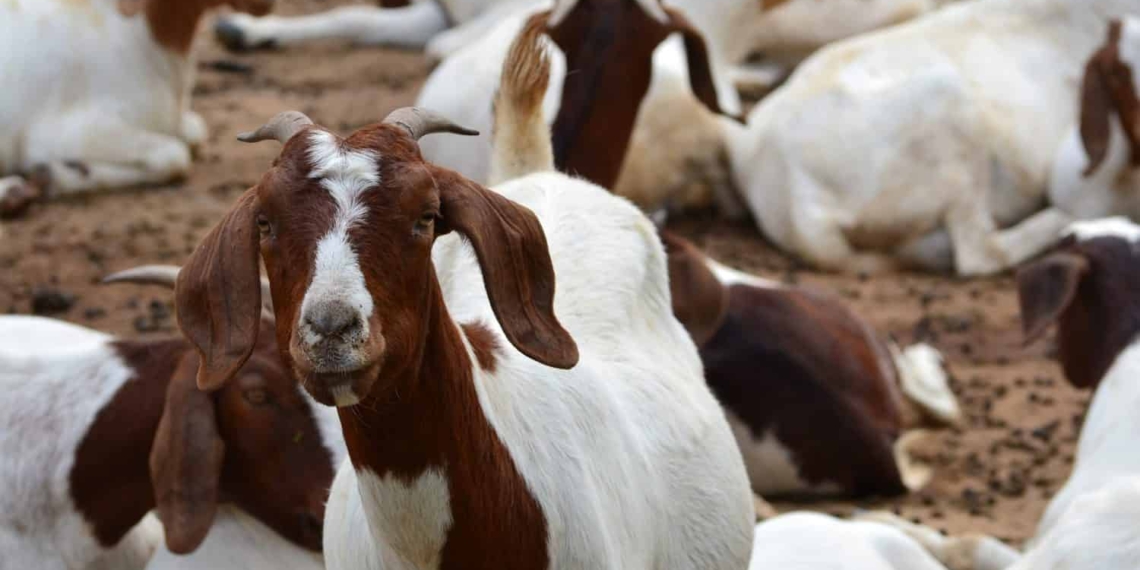
between August 2019 and August 2020 South Africa’s livestock numbers declined for cattle, sheep and goats. Photo: Pexels/Food For Mzansi

between August 2019 and August 2020 South Africa’s livestock numbers declined for cattle, sheep and goats. Photo: Pexels/Food For Mzansi

Share on FacebookShare on TwitterShare on WhatsApp

An alarming decline in Mzansi’s livestock numbers could be a key reason why consumers are having to pay more for meat products than they have in years. This is the warning of experts in livestock production and the red meat industry.

Statistics from the department of agriculture, land reform, and rural development point to a drop in the number of livestock that can be found grazing the country’s agricultural fields.

The number of cattle, sheep and goats decreased by between 1.54% and 2% between August 2019 and August 2020, says the department. For cattle, this is a drop of 261 014 from 12 558 635 in August 2019 to 12 297 621 in August 2020.

Over the same period, the number of sheep farmed plummeted from 22 085 207 to 21 604 708, while goat numbers dropped to 5 170 127 from 5 251 039.

Livestock numbers: Dr Frikkie Maré, academic departmental head of agricultural economics at the University of the Free State. Photo: Supplied/Food For Mzansi
Dr Frikkie Maré, academic departmental head of agricultural economics at the University of the Free State. Photo: Supplied/Food For Mzansi

However, these declines in livestock numbers are nothing new. According to Dr Frikkie Maré, academic departmental head of agricultural economics at the University of the Free State, the downward trend in livestock has been noted for almost a decade now.

“There was a large decrease in numbers from November 2012. It can mainly be ascribed to the drought conditions for cattle, while the sheep numbers decrease due to drought as well as factors like predation and theft that forced these farmers to convert to game or cattle farming,” Maré explains.

In November 2012, livestock numbers were estimated at 14 098 077 and this estimate dwindled to 13 831 932 by November 2013.

ALSO READ: Here’s the top 10 list of livestock theft hotspots in SA

Further down the value chain

According to Daniël Minnaar, agricultural economist at Agri Western Cape, a decline in livestock numbers has a snowball effect on the greater agricultural value chain.

Giving an oversight of what economic theory suggests will happen given a decline, Minnaar explains that when the supply of a product drops, the price of that product will increase.

“With regards to the red meat industry, when the supply of slaughter animals decreases the producer price will increase. The increase in the producer price will then be passed on to the subsequent role-players down the value-chain,” Minnaar explains.  

Livestock numbers: Daniël Minnaar, agricultural economist at Agri Western Cape. Photo: Supplied/Food For Mzansi
Daniël Minnaar, agricultural economist at Agri Western Cape. Photo: Supplied/Food For Mzansi

These include wholesalers, cutting plants, production and packaging plants, retailers and more.

John Durr, an expert in the industry and member of the Red Meat Producers’ Organisation’s Western Cape branch says that in the red meat industry – as with any other industry – the principals of demand and supply rules strongly apply.  

Therefore, if the production of livestock decreases, then the supply of slaughter numbers of those animals also will decrease.

“When this happens the competition between the buyers of slaughter stock (red meat abattoirs) will get more intense and there will be an increase in the producer price,” he says.

“In the red meat industry there is a saying that an abattoir is like a crocodile. If you don’t feed it daily and properly it will start eating itself from the tail.”

For abattoirs to survive, they have to slaughter at full capacity each day, Durr points out. This is because of their high fixed overhead costs as well as the competition in the marketplace between abattoirs and other role players.

Meat prices higher than ever before

Eventually, all this trickles down to the consumer in the form of higher purchasing prices.

According to the Consumer Price Inflation for the period of August 2019 to August 2020, the average price for stewing beef rose by 36% from R76,01 to 103,48 per kilogram.

Livestock numbers: John Durr, chairperson at Red Meat Producer’s Organisation (RPO) Western Cape. Photo: Supplied/Food For Mzansi
John Durr, member of the Red Meat Producer’s Organisation (RPO) Western Cape. Photo: Supplied/Food For Mzansi

Consumers paid 9% more for beef offal – from R35,10 per kilogram in August 2019 to R38,22 per kilogram in August 2020. Meanwhile, the price of beef rump steak went from costing R127,81 per kilogram to R164,26.

The price of stewing lamb shot from  R108,67 in August 2019 to R132,02 per kilogram in August 2020. A leg of lamb, per kilogram, went for retailing at R135,37 per kilogram to R176,81,while lamb rib chops cost consumers R153,06 per kilogram in August 2019 and R186,49 in August 2020.

Minnaar says that it is, however, important to note that the changes in CPI can be due to many factors and is not necessarily correlated to a decline in livestock numbers.

He adds that consumers will respond to the higher prices by substituting red meat for either cheaper forms of protein such as chicken or for relatively cheaper cuts of red meat.

ALSO READ: Food price hike: We wish it was an April Fool’s joke

The boomerang effect

Meanwhile, Durr explains that there is longstanding debate about price increases being passed on by role players in the value chain.

“For many years, the debate in the industry – especially from the side of producers and abattoirs – are that not all the next in line value chain role players are passing on the same percentage to the next one and at the end of the chain to the consumer.”

This, he explains, is seen as a huge concern to livestock producers who are price takers, with only a small percentage involved downstream in the value chain.

“When producer prices drop during increases in supply, producers normally will accept it but they want to see that those same percentages being passed on to the consumer,” Durr says.

ALSO READ: Food prices: ‘No rest for poor mothers’

Duncan Masiwa

DUNCAN MASIWA is the assistant editor at Food For Mzansi, South Africa’s leading digital agriculture news publication. He cut his teeth in community newspapers, writing columns for Helderberg Gazette, a Media24 publication. Today, he leads a team of journalists who strive to set the agricultural news agenda. Besides being a journalist, he is also a television presenter, podcaster and performance poet who has shared stages with leading gospel artists.

Tags: Agri Western CapeDALRRDDepartment of Agriculture Land Reform and Rural DevelopmentLivestock farmers in South AfricaRed Meat Producers Organisation
Godongwana unveils fuel relief and R10 billion El Niño buffer
News

Godongwana unveils fuel relief and R10 billion El Niño buffer

by Tiisetso Manoko
21st October 2026

Finance minister Enoch Godongwana has announced key measures to buffer South Africa’s agricultural sector against global oil shocks and El...

Read moreDetails

Smart irrigation: Precision tools boost crop yields while cutting costs

21st October 2026
Record farm exports overshadowed by growing drought disaster

By-laws vs. livelihoods: Barriers facing WC smallholder farmers

21st October 2026

CPAs urged to register for free governance support toolkits

21st October 2026

Potatoes and tomatoes plunge while avocado prices soar

20th October 2026

Reality check: What SA agri interns really experience on the farm

Reluctant farmer scales EC cabbage enterprise to supply Spar

Fixing SA’s agricultural visa system to protect seasonal harvests

Agda conference to tackle finance, market access and agri growth

Karoo sheep tallow finds new purpose in Mzansi beauty brand

Join Food For Mzansi's WhatsApp channel for the latest updates!

JOIN NOW!
Next Post
Poor weather conditions across the globe are affecting the supply of peppers in many markets, however this wont affect Mzansi’s bell pepper prices. Photo: Supplied/Food For Mzansi

Global crisis ‘won’t affect Mzansi pepper prices’

THE NEW FACE OF SOUTH AFRICAN AGRICULTURE

With 21 global awards in the first six years of its existence, Food For Mzansi is much more than an agriculture publication. It is a movement, unashamedly saluting the unsung heroes of South African agriculture. We believe in the power of agriculture to promote nation building and social cohesion by telling stories that are often overlooked by broader society.

Agda conference: Why giving farmers land isn’t enough

Limpopo teen farmer turns dream into growing poultry business

How to protect poultry from damaging sticktight flea infestations

Eskort announces Herman Janse van Rensburg as group CEO

Agda pushes for pathways to commercialise emerging farmers

Karoo sheep tallow finds new purpose in Mzansi beauty brand

  • Awards & Global Impact
  • Our Story
  • Contact Us
  • Cookie Policy
  • Privacy Policy
  • Copyright

Contact us
Office: +27 21 879 1824
News: info@foodformzansi.co.za
Advertising: sales@foodformzansi.co.za

Contact us
Office: +27 21 879 1824
News: info@foodformzansi.co.za
Advertising: sales@foodformzansi.co.za

  • Awards & Global Impact
  • Our Story
  • Contact Us
  • Cookie Policy
  • Privacy Policy
  • Copyright

Chat Options

About this assistant

This feature generates automated answers summarised from Food For Mzansi articles. By using it, you are interacting with an AI system (provided by Google), not a human. AI can make mistakes. Please refer to the source articles for verification and citation purposes.

Our staff do not check or moderate Lerato’s answers in advance, but may review some later. Our journalists continue to write and edit all the articles Lerato uses as sources.

To estimate unique and returning web users, we store a random browser ID in this browser. WhatsApp users are counted by phone number. The same person using both channels may be counted twice.

I'm Lerato, your AI assistant!
No Result
View All Result
  • News
  • Changemakers
  • Lifestyle
  • Farmer’s Inside Track
  • Food for Thought

Copyright © 2026 Food for Mzansi