They say love is a beautiful thing, but when two hearts nurture it through a shared purpose, it blossoms into something even greater. Despite life’s many challenges, a small-scale farming couple in KwaNdaba, KwaZulu-Natal has turned their passion for agriculture into a thriving livelihood, proving that a couple who farms together, grows together.
Smallholder farmers in South Africa face numerous challenges, such as limited funding, poor market access, scarce resources, and a lack of knowledge to adopt modern farming practices. These obstacles are driving a decline in agricultural participation, threatening the sustainability of small-scale farming as a livelihood.
Despite the National Development Plan’s goal to revive small-scale agriculture and create more livelihoods by 2030, few smallholder households are able to sustain themselves solely through farming.
However, Thomas Masukwana and Ntombifuthi Tembe, a dedicated couple from KwaNdaba in Northern KwaZulu-Natal, stand as an inspiration and a testament that one can largely create a livelihood from farming.
“Farming together means spending time together,” says Tembe. “Ukulima is our family culture,” adds Masukwana.

Learning about technology
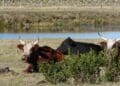
The couple has a herd of 19 cattle and 20 goats from which they sell castrated males occasionally within the village for ceremonies. A fully grown ox can fetch a price of R15 000.
The couple also cultivate maize and vegetables on four hectares. Maize is sold for R20 per dozen while cabbages and spinach are sold for R10 per head and R15 per bunch, respectively.
Their passion for agriculture has driven them to not only sustain their livelihood but also contribute to the growth of innovative farming solutions.
In 2020, they became part of an initiative led by the Agricultural Research Council (ARC) and the Divagri project to establish bio-based technologies in KwaNdaba. Recognising the potential of these technologies to enhance agricultural productivity, the couple welcomed the opportunity with both hands, without expecting any benefits.
“We learned about new ways to farm that are good for the soil. We were excited to see how much time these technologies (e.g SLECI) save us; instead of using a pipe to irrigate the technology does the job and it works wonders.
Related stories
- Farming smarter: Livestock, crops & game, Dwayne does it all
- My Big Little Farm: Lekgomo soars with quail success
“At first it was very foreign and we expected water to come out like normal sprinklers. To our surprise the technology worked very differently but works extremely well. We’re happy to be farming in a way that’s good for the land and our community,” says Tembe.
Through the project, they also learned the importance of record-keeping, which was challenging at first but improved with guidance from the ARC team.
Despite the many challenges faced by smallholder farming households, Masukwana and Tembe remain at the forefront of ensuring the successful implementation of technology. They actively motivate, encourage, and mobilise other farmers from their community to participate, fostering a culture of learning and adaptation.

“It’s better when we’re working together than when I work alone – it’s like the conversations we have off-load some of the drudgery of weeding,” says Tembe.
Demonstrating their deep commitment, the couple voluntarily allocated two hectares of their land as a pilot site for these technologies. Their belief in continuous learning and adopting new agricultural practices has been a driving force behind their efforts. Through bio-based technologies, they have discovered ways to optimise production, minimise input costs, and achieve higher yields – ultimately increasing their household income.
A way of life
For Masukwana and Tembe, agriculture is more than just a means of survival; it is a way of life that sustains their family. While many smallholder farming households and academic literature suggest that agriculture alone cannot provide a stable livelihood, this couple proves otherwise. With income generated from farming, they successfully support their household, including raising their five children.

By embracing new technologies and working together, they continue to grow – not only in agriculture but also in their love for each other and their farming community.
When a farming couple’s passion isn’t equally vested in farming, investing resources (money and time) can be a challenge. However, their journey highlights the potential for smallholder farmers to thrive when they combine passion, knowledge, and innovative solutions.
Looking ahead, the couple says they want to keep growing their farm and making it better. “We want to plant more crops and raise more animals, so we can sell more and make a good living.
“We also want to try new things, like growing different types of crops and using new techniques to make our farm more productive. We want to be able to take care of our family and our community, and to leave a good farm for our children to inherit one day,” says Masukwana.
READ NEXT: Kwakwa cracks the egg market and builds a growing poultry empire
Sign up for Mzansi Today: Your daily take on the news and happenings from the agriculture value chain.