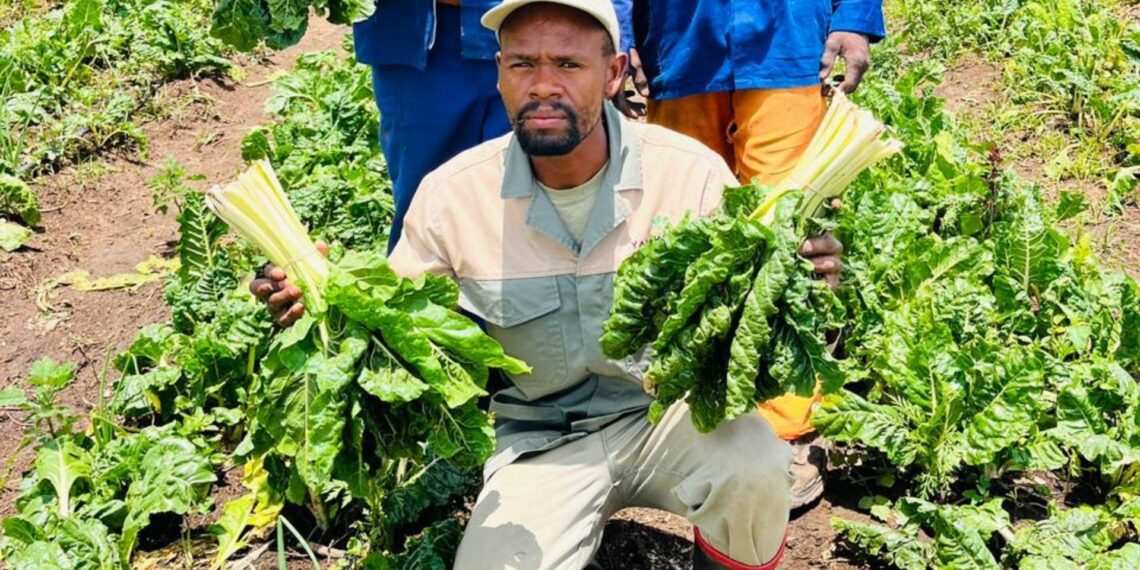
In the farming heartland of Mpumalanga’s Nhlazatshe, Njabulo Mabaso proves that passion from family soil, grit after job loss, and community ties can cultivate a backyard dream into a shop-ready harvest.
Unlike many who chase city jobs, even after retrenchment, Mabaso chose his childhood love of farming, feeding himself and creating jobs within his community.
His story unfolded long before his fields stretched wide. In Nhlazatshe village, young Njabulo watched his father, Rassie Wilson Mabaso, a subsistence farmer, draw life from the soil with vegetables and maize. When he later moved in with his grandmother, Minah Manyoni Nkosi-Mabaso, another steadfast subsistence farmer, her tough lessons rooted even deeper.
“In my family, there are a number of farmers, especially on my father’s side, as they farm to eat,” Mabaso reflects. “That’s where I learnt more about farming. Yes, my father taught us how to grow vegetables, but my grandmother was very tough when teaching us, unlike my father.”
The backyard plots that shaped him would later sustain him, though he didn’t see it then. High school was at Lindile Secondary in Ermelo, followed by marketing studies at Mangosuthu University of Technology. On the cusp of graduation, Mabaso got an internship at Izwi Lomzansi (98.0 FM), Durban’s community radio station, as a junior social media manager.
For a year, he shone, until 2020, when Covid-19 hit and swept the job away, unknowingly clearing ground for something greater.
Starting small bears fruit
That same year, with no job in hand, farming drew him back home to launch his venture, Yamhlamba.
“I always loved starting a garden; I’d plant one at home during school holidays. I think the love for farming comes from my father and grandmother. With no job secured, it became my way to stay busy while making money for myself.”
He began in his backyard, with around 100 square metres, using basic tools like a garden fork and spade. He sourced organic matter and manure locally to enrich the soil. “I didn’t know much about farming, but I told myself I would learn and keep growing.”

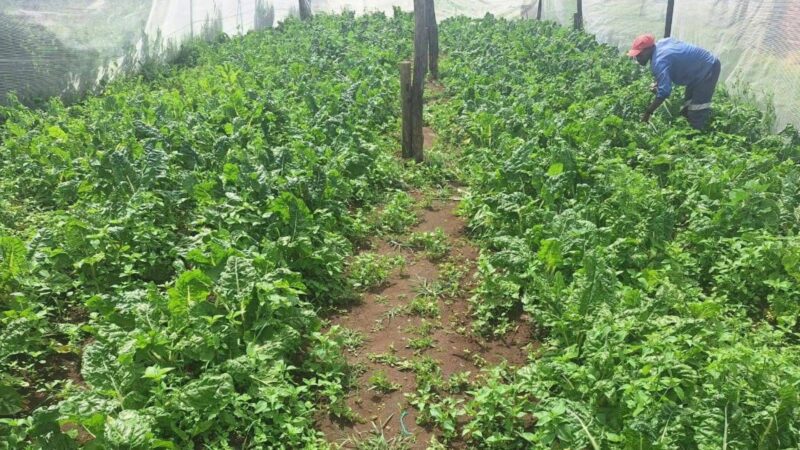
While tending that patch, he hunted for a bigger space and found it after four months. Since September 2020, he has farmed a full hectare of his own land, plus has access to another borrowed hectare. On the borrowed land, he cultivates 1 000 square metres of vibrant Swiss chard and 500 square metres of sturdy maize, with mustard, kale, and rape spinach planned for the rest come winter sales.
Today, those efforts bear fruit. He now supplies Boxer at least twice a week, Midway, Pick n Pay, and informal markets.
Related stories
- From backyard to 650 ha: Malete’s farm feeds more than families
- Trash to triumph: Sukazi transforms wasteland into farmland
- Farming friends turn lockdown losses into a permaculture haven
“The ability to start Yamhlaba was my greatest achievement,” Mabaso says, “and supplying retail shops with my produce is another huge win.”
That success has let him hire five part-timers, three men and two women, to share the soil’s demands. “It is my dream goal to have permanent employees, but because of funds, I can’t afford it yet.”
Learning, adapting, growing
Even after early hurdles, the path stays demanding. Mabaso still grapples with limited water and logistics. “What I do is harvest rainwater and use a drip irrigation system,” he explains.
“To get my produce to market, I collaborate with farmers who have transport. We plant together and harvest together, meeting demand while sharing the ride.”
Having walked that road himself, Mabaso has simple advice for those looking to follow in his footsteps. “For those who want to start farming, they should do thorough research on the different types of farming and choose the ones they relate to, not forgetting to start small.”
This resourcefulness draws strength from his marketing days. Those skills set him apart, helping him master branding, advertising, direct sales, and social media tactics he implemented in the short term and plans to commit to for the long term.
They also pave the way for his future expansion. “I want to add different farming enterprises like livestock and grains, not forgetting our long-term dream of growing cannabis.”
As he looks towards his future, Mabaso’s journey shows that with grit, a backyard dream can grow into a life-changing harvest.
READ NEXT: Paarl plant positions SA as fruit packhouse tech hub