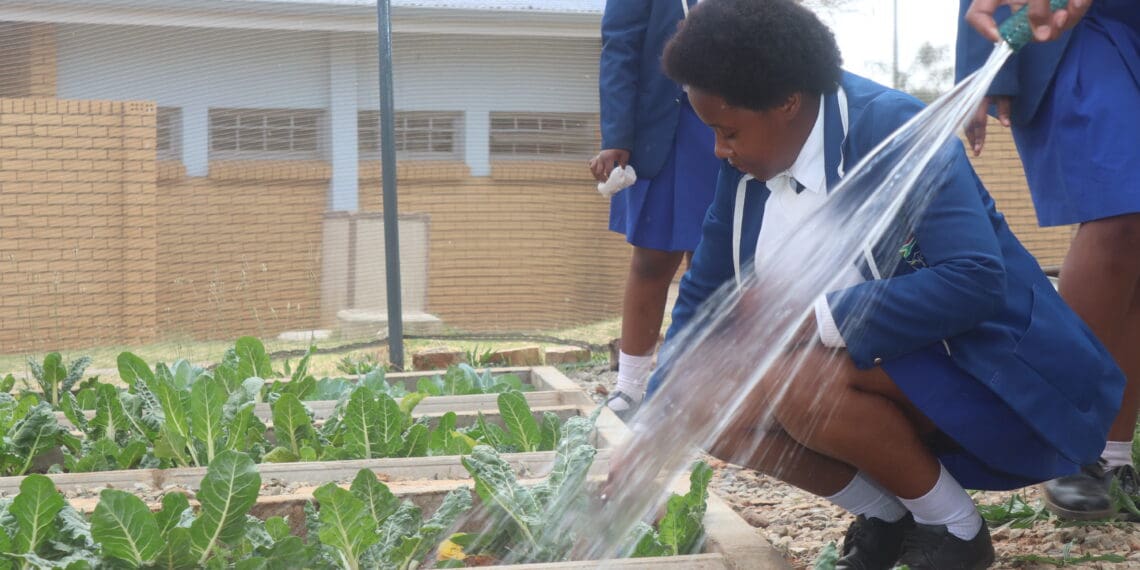
It is all about making a positive impact in the food garden of Soweto’s Curtis Nkondo School of Specialisation, with invaluable support from McDonald’s South Africa. Whether you seek solace or a sanctuary from the pressures of life, this is the place to be.
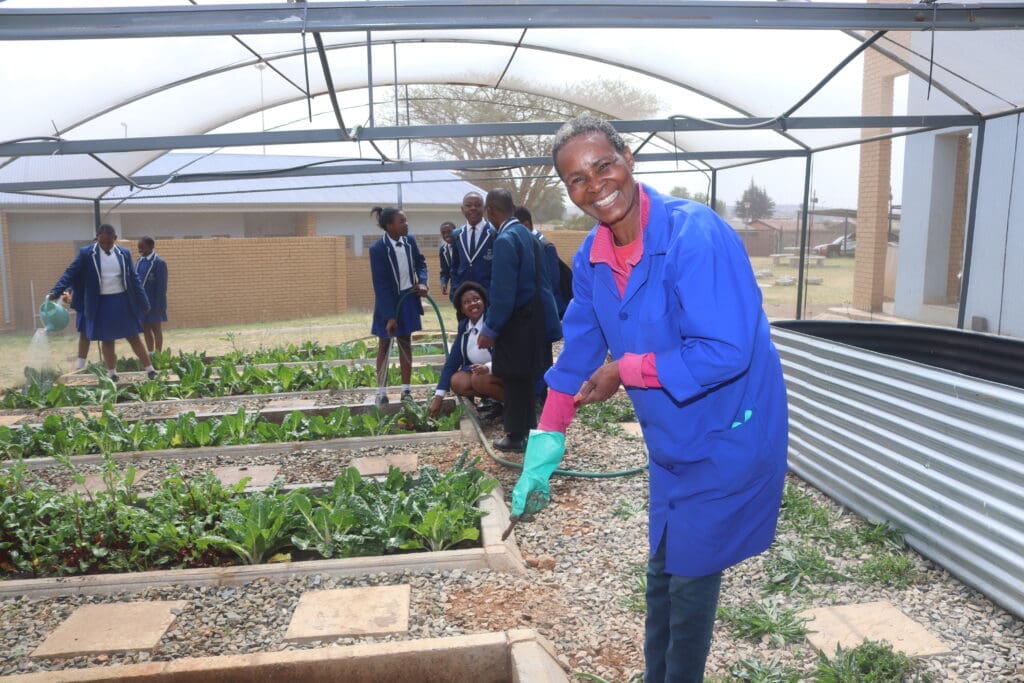
Located at the far back end of the school, a perfect spot for a backyard garden stands a lone structure amidst the raised roofs of the school buildings. When the bell rings for recess or after school, a few students excitedly make their way to it.
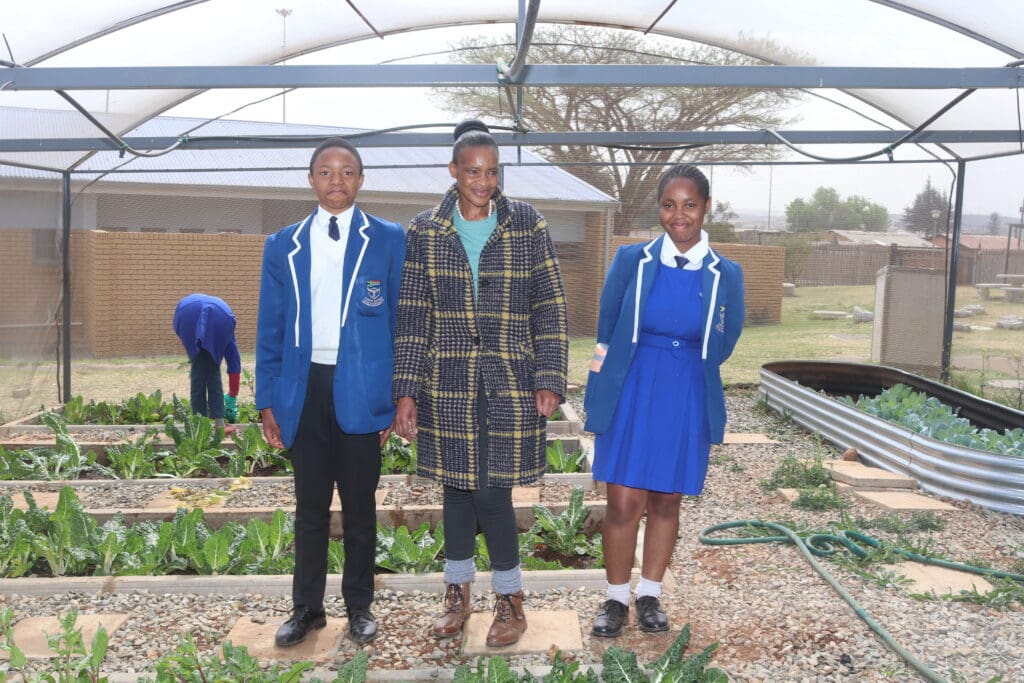
Zodwa Ndlovu, the grade 8 economics and management sciences teacher, has strategically integrated gardening into her syllabus for the year, explaining that it helps the students realise the need to provide food. “The students really love it here,” says Ndlovu.
“Now we see that we cannot live without food, and in our country, we are actually struggling with food. Food is very expensive; vegetables are expensive, and these are foods that you can grow in a garden. It is so nice to eat food that you have started and grown yourself,” she adds.
“The garden assists needy children because we have realised that most of the children are orphans; others are raised by their grandparents, and sometimes some of our students do not have proper food. So, having a food garden helps us tend to these needs.”
READ NEXT: Kensington High School’s food garden thrives with the support of McDonald’s SA
The school’s food garden was formally established in 2020 when the grade 8 learners of that year showed an interest in cultivating plants. They were noticed by McDonald’s South Africa, which later led to their entry into a gardening competition. The school was awarded a newly built vegetable garden, with seedlings of beetroot, carrots, cabbage, and parsley. The school continues to receive seeds as part of this partnership.
A different way of learning
“At the beginning of the year, we clean everything and then give the students the seeds, and they plant them themselves. They nurture and water them. I told them the garden is their child, so they have it as a responsibility.
“Because they see the mistakes they made previously and learn from them. They also learn different techniques and tend to it themselves. We stay connected with them and regularly check if the garden is still in good condition.”
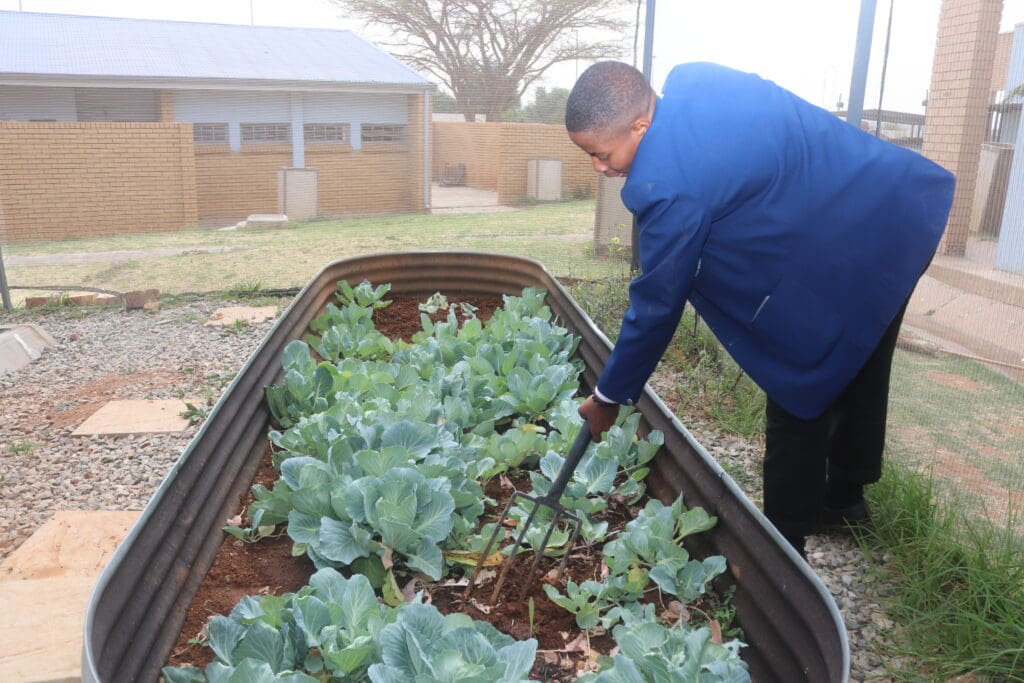
The school also received provisions for a shade net, waste barrels, and concrete bordering around the seedlings.
Providing for the community
Zodwa explains that the food garden is not only about gardening but also about providing for both the children and community members in need. She adds that through fundraising schemes and profits from the garden, they can also fund the purchase of school uniforms for students who lack them.
“As small as our community is right now, we want to give back to it and identify families in need and provide for a children’s home near the school,” says Ndlovu.
“We feel that we need to cultivate the giving spirit in our students so that they learn it at this young age. Most of the time, we are always receiving, but it is good that they learn how to give as well.”
‘The garden is a fun place at school’
For grade 8 learner, Mbali Khanyi, the garden is a helpful resource that has helped her learn more about agriculture.
“What I like to do is water the plants, and I have experienced a lot of peace when I do it. But I also learned patience as the plants grow because I noticed it takes a while,” she says.
And for fellow grade 8 classmate, Busisiwe Morukanela, the garden is the only place she feels at peace.
“At home when I was younger, my grandmother used to have a garden, so I do relate, and it’s also very peaceful for me,” she says.
“I have learned patience because seeds do not grow fast; I have learned patience in life as well. I am allergic to soil, so when I touch it, I get a rash, but it does not stop me from doing what I love because I really enjoy it. It has been a part of me since a young age.”
Fellow learner Lindokuhle Zwane explains that he has always loved food, and as a fan of beetroot, it has been fascinating for him to see how beetroot is grown and where it comes from.
“I have learned that it takes time, and I learned how to take care of different plants in the garden. When there are plants or roots that get ruined or rotten, now I know how to take them out and treat them properly and start again,” he says.
“I love food, and that is why I wanted to join the garden; I wanted to learn how it works and how they grow. I really wanted to see where the food that fills me when I am hungry comes from.”
Passing on the baton
Meanwhile, Mabatho Tshidisikani works in the garden and oversees the students who come to learn from it every day. As an experienced gardener and elderly member of the community, this is more than a job but an impartation of knowledge.
She teaches the students how to plant, and transfer weeds, and shows them what pests are, encouraging them on pest management. But she also teaches them about good insects.
“I just speak nicely to them, and we get along with them,” she says.
“I come from a rural background, raised by my grandmother who taught me how to plant, so it is important for me to share this knowledge with these young ones. I did not get a chance to do much with myself, but I am so proud to be sharing it with them. It is even better when you see how much the children actually enjoy the garden.”
In the long term, Ndlovu would like to see the garden growing bigger and would like to see a token of appreciation being awarded to the students who take part in its care.
“I wish certificates could be given to the active students that can be accredited to them, even if they did not go to tertiary, even a certificate that confirms that they have knowledge about gardening,” she says.
ALSO READ: Augsburg breeds hope in farming community
Get Stories of Change: Inspirational stories from the people that feed Mzansi.